Exploration of the mechanism of Qinglongyi-Buguzhi drug pair in treating vitiligo based on network pharmacology, molecular docking and experimental verification
Lele Chen , Shuguang Chen , Pengze Li , Xiangfeng Zhao , Peng Sun , Xinyue Liu , Hong Wei , Xiaolong Jiang , Zhaoshuang Zhan , Jiafeng Wang
{"title":"Exploration of the mechanism of Qinglongyi-Buguzhi drug pair in treating vitiligo based on network pharmacology, molecular docking and experimental verification","authors":"Lele Chen , Shuguang Chen , Pengze Li , Xiangfeng Zhao , Peng Sun , Xinyue Liu , Hong Wei , Xiaolong Jiang , Zhaoshuang Zhan , Jiafeng Wang","doi":"10.1016/j.jep.2024.118595","DOIUrl":null,"url":null,"abstract":"<div><h3>Ethnopharmacological relevance</h3><p>The Qinglongyi-Buguzhi herbal pair (QB) is one of commonly used herbal combinations for treating vitiligo in traditional Chinese medicine, consisting of the exocarp of the immature fruit of <em>Juglans regia</em> L. or <em>Juglans mandshurica</em> Maxim., and dried, mature fruit of <em>Psoralea corylifolia</em> L. However, the active components and potential mechanisms of QB in the treatment of vitiligo are still unclear.</p></div><div><h3>Aim of the study</h3><p>The purpose of this study is to clarify the effects and mechanisms of QB on vitiligo treatment through integration of network pharmacology and empirical examinations.</p></div><div><h3>Materials and methods</h3><p>The active components and targets of QB as well as the targets linked to vitiligo were obtained from network databases. Visualization networks were constructed with Cytoscape 3.9.1. GO and KEGG enrichment analysis were conducted to investigate the possible mechanism. Molecular docking was employed to evaluate the binding affinities between the primary active ingredients of QB and essential targets of the PI3K/Akt/Nrf2 pathway. In vivo and in vitro experiments were carried out to confirm the results of network pharmacology.</p></div><div><h3>Results</h3><p>We evaluated 44 active compounds and 602 genes from QB, and 107 of these genes linked to vitiligo. GO analysis suggested QB might lessen vitiligo by regulating oxidative stress. KEGG pathway analysis indicated the PI3K/Akt pathway may be crucial for treating vitiligo. Molecular docking results demonstrated the key active ingredients of QB had good binding activity with the major targets in the PI3K/Akt/Nrf2 pathway. In vivo, QB significantly ameliorated vitiligo model mouse's skin pathologies by reducing ROS, elevating CAT and SOD levels. Western blot showed that QB increased the phosphorylation of PI3K and Akt and the expressions of Nrf2 and HO-1 in the skin. In vitro, QB reversed H<sub>2</sub>O<sub>2</sub>-induced oxidative injury of melanocytes, enhanced cell survival rate, reduced ROS level, upregulated SOD and CAT activities, and raised the content of melanin. Moreover, QB upregulated the expression levels of Akt, Nrf2, HO-1 mRNA, Akt phosphorylation, HO-1, and nuclear Nrf2 proteins, and also encouraged the nuclear translocation of Nrf2. However, LY294002 treatment significantly reversed the regulatory effect of QB on oxidative damage of melanocytes.</p></div><div><h3>Conclusions</h3><p>This study revealed that the therapeutic effect of QB on vitiligo was achieved through multiple components, targets and pathways. Experimental investigation demonstrated that QB could improve vitiligo via reducing oxidative stress, which was probably accomplished by activating the PI3K/Akt/Nrf2 signaling pathway.</p></div>","PeriodicalId":15761,"journal":{"name":"Journal of ethnopharmacology","volume":"334 ","pages":"Article 118595"},"PeriodicalIF":5.4000,"publicationDate":"2024-07-20","publicationTypes":"Journal Article","fieldsOfStudy":null,"isOpenAccess":false,"openAccessPdf":"","citationCount":"0","resultStr":null,"platform":"Semanticscholar","paperid":null,"PeriodicalName":"Journal of ethnopharmacology","FirstCategoryId":"3","ListUrlMain":"https://www.sciencedirect.com/science/article/pii/S0378874124008948","RegionNum":2,"RegionCategory":"医学","ArticlePicture":[],"TitleCN":null,"AbstractTextCN":null,"PMCID":null,"EPubDate":"","PubModel":"","JCR":"Q1","JCRName":"CHEMISTRY, MEDICINAL","Score":null,"Total":0}
引用次数: 0
Abstract
Ethnopharmacological relevance
The Qinglongyi-Buguzhi herbal pair (QB) is one of commonly used herbal combinations for treating vitiligo in traditional Chinese medicine, consisting of the exocarp of the immature fruit of Juglans regia L. or Juglans mandshurica Maxim., and dried, mature fruit of Psoralea corylifolia L. However, the active components and potential mechanisms of QB in the treatment of vitiligo are still unclear.
Aim of the study
The purpose of this study is to clarify the effects and mechanisms of QB on vitiligo treatment through integration of network pharmacology and empirical examinations.
Materials and methods
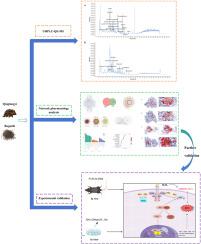
The active components and targets of QB as well as the targets linked to vitiligo were obtained from network databases. Visualization networks were constructed with Cytoscape 3.9.1. GO and KEGG enrichment analysis were conducted to investigate the possible mechanism. Molecular docking was employed to evaluate the binding affinities between the primary active ingredients of QB and essential targets of the PI3K/Akt/Nrf2 pathway. In vivo and in vitro experiments were carried out to confirm the results of network pharmacology.
Results
We evaluated 44 active compounds and 602 genes from QB, and 107 of these genes linked to vitiligo. GO analysis suggested QB might lessen vitiligo by regulating oxidative stress. KEGG pathway analysis indicated the PI3K/Akt pathway may be crucial for treating vitiligo. Molecular docking results demonstrated the key active ingredients of QB had good binding activity with the major targets in the PI3K/Akt/Nrf2 pathway. In vivo, QB significantly ameliorated vitiligo model mouse's skin pathologies by reducing ROS, elevating CAT and SOD levels. Western blot showed that QB increased the phosphorylation of PI3K and Akt and the expressions of Nrf2 and HO-1 in the skin. In vitro, QB reversed H2O2-induced oxidative injury of melanocytes, enhanced cell survival rate, reduced ROS level, upregulated SOD and CAT activities, and raised the content of melanin. Moreover, QB upregulated the expression levels of Akt, Nrf2, HO-1 mRNA, Akt phosphorylation, HO-1, and nuclear Nrf2 proteins, and also encouraged the nuclear translocation of Nrf2. However, LY294002 treatment significantly reversed the regulatory effect of QB on oxidative damage of melanocytes.
Conclusions
This study revealed that the therapeutic effect of QB on vitiligo was achieved through multiple components, targets and pathways. Experimental investigation demonstrated that QB could improve vitiligo via reducing oxidative stress, which was probably accomplished by activating the PI3K/Akt/Nrf2 signaling pathway.
期刊介绍:
The Journal of Ethnopharmacology is dedicated to the exchange of information and understandings about people''s use of plants, fungi, animals, microorganisms and minerals and their biological and pharmacological effects based on the principles established through international conventions. Early people confronted with illness and disease, discovered a wealth of useful therapeutic agents in the plant and animal kingdoms. The empirical knowledge of these medicinal substances and their toxic potential was passed on by oral tradition and sometimes recorded in herbals and other texts on materia medica. Many valuable drugs of today (e.g., atropine, ephedrine, tubocurarine, digoxin, reserpine) came into use through the study of indigenous remedies. Chemists continue to use plant-derived drugs (e.g., morphine, taxol, physostigmine, quinidine, emetine) as prototypes in their attempts to develop more effective and less toxic medicinals.




 京公网安备 11010802042870号
京ICP备2023020795号-1
京公网安备 11010802042870号
京ICP备2023020795号-1

 分享
分享
 求助内容:
求助内容: 应助结果提醒方式:
 扫码关注我们
