{"title":"Dynamics of postnatal depressive symptoms in early parenthood.","authors":"Nora Skjerdingstad, Lydia G Speyer, Adela-Maria Isvoranu, Vibeke Moe, Eivor Fredriksen","doi":"10.1186/s12888-024-05934-6","DOIUrl":null,"url":null,"abstract":"<p><strong>Background: </strong>New mothers and fathers are at risk of developing postnatal depressive problems. To understand how postnatal depressive symptoms unfold over time, analyses at the within-person level are necessary. Inspecting postnatal depressive problems at the symptom level provides a novel perspective, ultimately offering insight into which symptoms contribute to the elevation of other symptoms over time.</p><p><strong>Methods: </strong>Panel graphical vector-autoregression (GVAR) models were applied to analyze the within-person temporal and contemporaneous relations between depressive symptoms across the postnatal period in new mothers and fathers (at T1; N<sub>mothers</sub> = 869, N<sub>fathers</sub> = 579). Depressive symptoms were assessed at 6-, 12-, and 18-months postpartum, using the Edinburgh Postnatal Depression Scale.</p><p><strong>Results: </strong>The results revealed that for mothers, sadness was a key symptom predicting symptom increases in multiple other depressive symptoms and itself (autoregressive effect) over time. Furthermore, anxiousness and feeling scared predicted each other across the postnatal period in mothers. For fathers, the most central predicting symptom in the overall network of symptoms was being anxious, while self-blame and being overwhelmed had strong self-maintaining roles in the fathers' symptomatology, indicating that these could be key features in fathers experiencing postnatal depressive problems. The pattern of symptoms that mothers and fathers experienced within the same time window (contemporaneous associations), shared many of the same characteristics compared to the temporal structure.</p><p><strong>Conclusions: </strong>This study suggests that across the postnatal period, from 6- to 18-months postpartum, depressive symptoms in mothers and fathers contribute differently to the pattern of depressive problems, highlighting sadness as a key feature in maternal symptomatology and anxiousness components in paternal symptomatology.</p>","PeriodicalId":9029,"journal":{"name":"BMC Psychiatry","volume":"24 1","pages":"523"},"PeriodicalIF":3.4000,"publicationDate":"2024-07-23","publicationTypes":"Journal Article","fieldsOfStudy":null,"isOpenAccess":false,"openAccessPdf":"https://www.ncbi.nlm.nih.gov/pmc/articles/PMC11264399/pdf/","citationCount":"0","resultStr":null,"platform":"Semanticscholar","paperid":null,"PeriodicalName":"BMC Psychiatry","FirstCategoryId":"3","ListUrlMain":"https://doi.org/10.1186/s12888-024-05934-6","RegionNum":2,"RegionCategory":"医学","ArticlePicture":[],"TitleCN":null,"AbstractTextCN":null,"PMCID":null,"EPubDate":"","PubModel":"","JCR":"Q2","JCRName":"PSYCHIATRY","Score":null,"Total":0}
引用次数: 0
Abstract
Background: New mothers and fathers are at risk of developing postnatal depressive problems. To understand how postnatal depressive symptoms unfold over time, analyses at the within-person level are necessary. Inspecting postnatal depressive problems at the symptom level provides a novel perspective, ultimately offering insight into which symptoms contribute to the elevation of other symptoms over time.
Methods: Panel graphical vector-autoregression (GVAR) models were applied to analyze the within-person temporal and contemporaneous relations between depressive symptoms across the postnatal period in new mothers and fathers (at T1; Nmothers = 869, Nfathers = 579). Depressive symptoms were assessed at 6-, 12-, and 18-months postpartum, using the Edinburgh Postnatal Depression Scale.
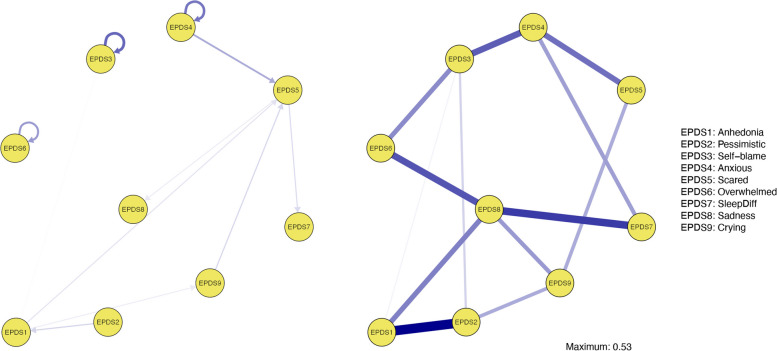
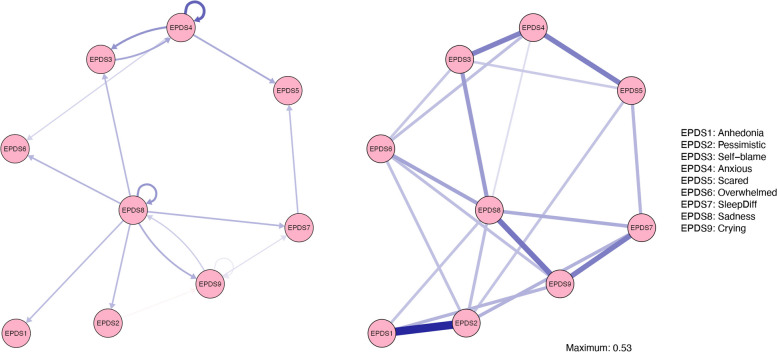
Results: The results revealed that for mothers, sadness was a key symptom predicting symptom increases in multiple other depressive symptoms and itself (autoregressive effect) over time. Furthermore, anxiousness and feeling scared predicted each other across the postnatal period in mothers. For fathers, the most central predicting symptom in the overall network of symptoms was being anxious, while self-blame and being overwhelmed had strong self-maintaining roles in the fathers' symptomatology, indicating that these could be key features in fathers experiencing postnatal depressive problems. The pattern of symptoms that mothers and fathers experienced within the same time window (contemporaneous associations), shared many of the same characteristics compared to the temporal structure.
Conclusions: This study suggests that across the postnatal period, from 6- to 18-months postpartum, depressive symptoms in mothers and fathers contribute differently to the pattern of depressive problems, highlighting sadness as a key feature in maternal symptomatology and anxiousness components in paternal symptomatology.
期刊介绍:
BMC Psychiatry is an open access, peer-reviewed journal that considers articles on all aspects of the prevention, diagnosis and management of psychiatric disorders, as well as related molecular genetics, pathophysiology, and epidemiology.




 京公网安备 11010802042870号
京ICP备2023020795号-1
京公网安备 11010802042870号
京ICP备2023020795号-1

 分享
分享
 求助内容:
求助内容: 应助结果提醒方式:
 扫码关注我们
