Adrian Talamantes-Roman, Graciela Ramirez-Alonso, Fernando Gaxiola, Olanda Prieto-Ordaz, David R. Lopez-Flores
{"title":"A TransUNet model with an adaptive fuzzy focal loss for medical image segmentation","authors":"Adrian Talamantes-Roman, Graciela Ramirez-Alonso, Fernando Gaxiola, Olanda Prieto-Ordaz, David R. Lopez-Flores","doi":"10.1007/s00500-024-09953-z","DOIUrl":null,"url":null,"abstract":"<p>Segmentation of medical images is a critical step in assisting doctors in making accurate diagnoses and planning appropriate treatments. Deep learning architectures often serve as the basis for computer models used for this task. However, a common challenge faced by segmentation models is class imbalance, which leads to a bias towards classes with a larger number of pixels, resulting in reduced accuracy for the minority-class regions. To address this problem, the <span>\\(\\alpha \\)</span>-balanced variant of the focal loss function introduces a <span>\\(\\alpha \\)</span> modulation factor that reduces the weight assigned to majority classes and gives greater weight to minority classes. This study proposes the use of a fuzzy inference system to automatically adjust the <span>\\(\\alpha \\)</span> factor, rather than maintaining a fixed value as commonly implemented. The adaptive fuzzy focal loss (AFFL) achieves an appropriate adjustment in <span>\\(\\alpha \\)</span> by employing fifteen fuzzy rules. To evaluate the effectiveness of AFFL, we implement an encoder-decoder segmentation model based on the UNet and Transformer architectures (AFFL-TransUNet) using the CHAOS dataset. We compare the performance of seven segmentation models implemented using the same data partition and hardware equipment. A statistical analysis, considering the DICE coefficient metric, demonstrates that AFFL-TransUNet outperforms four baseline models and performs comparably to the remaining models. Remarkably, AFFL-TransUNet achieves this high performance while significantly reducing training processing time by 66.31–72.39%. This reduction is attributed to the fuzzy system that effectively adapts the <span>\\(\\alpha \\)</span> value of the loss function, stabilizing the model within just a few epochs.</p>","PeriodicalId":22039,"journal":{"name":"Soft Computing","volume":"62 1","pages":""},"PeriodicalIF":2.5000,"publicationDate":"2024-07-24","publicationTypes":"Journal Article","fieldsOfStudy":null,"isOpenAccess":false,"openAccessPdf":"","citationCount":"0","resultStr":null,"platform":"Semanticscholar","paperid":null,"PeriodicalName":"Soft Computing","FirstCategoryId":"94","ListUrlMain":"https://doi.org/10.1007/s00500-024-09953-z","RegionNum":3,"RegionCategory":"计算机科学","ArticlePicture":[],"TitleCN":null,"AbstractTextCN":null,"PMCID":null,"EPubDate":"","PubModel":"","JCR":"Q2","JCRName":"COMPUTER SCIENCE, ARTIFICIAL INTELLIGENCE","Score":null,"Total":0}
引用次数: 0
Abstract
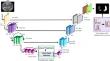
Segmentation of medical images is a critical step in assisting doctors in making accurate diagnoses and planning appropriate treatments. Deep learning architectures often serve as the basis for computer models used for this task. However, a common challenge faced by segmentation models is class imbalance, which leads to a bias towards classes with a larger number of pixels, resulting in reduced accuracy for the minority-class regions. To address this problem, the \(\alpha \)-balanced variant of the focal loss function introduces a \(\alpha \) modulation factor that reduces the weight assigned to majority classes and gives greater weight to minority classes. This study proposes the use of a fuzzy inference system to automatically adjust the \(\alpha \) factor, rather than maintaining a fixed value as commonly implemented. The adaptive fuzzy focal loss (AFFL) achieves an appropriate adjustment in \(\alpha \) by employing fifteen fuzzy rules. To evaluate the effectiveness of AFFL, we implement an encoder-decoder segmentation model based on the UNet and Transformer architectures (AFFL-TransUNet) using the CHAOS dataset. We compare the performance of seven segmentation models implemented using the same data partition and hardware equipment. A statistical analysis, considering the DICE coefficient metric, demonstrates that AFFL-TransUNet outperforms four baseline models and performs comparably to the remaining models. Remarkably, AFFL-TransUNet achieves this high performance while significantly reducing training processing time by 66.31–72.39%. This reduction is attributed to the fuzzy system that effectively adapts the \(\alpha \) value of the loss function, stabilizing the model within just a few epochs.
期刊介绍:
Soft Computing is dedicated to system solutions based on soft computing techniques. It provides rapid dissemination of important results in soft computing technologies, a fusion of research in evolutionary algorithms and genetic programming, neural science and neural net systems, fuzzy set theory and fuzzy systems, and chaos theory and chaotic systems.
Soft Computing encourages the integration of soft computing techniques and tools into both everyday and advanced applications. By linking the ideas and techniques of soft computing with other disciplines, the journal serves as a unifying platform that fosters comparisons, extensions, and new applications. As a result, the journal is an international forum for all scientists and engineers engaged in research and development in this fast growing field.




 京公网安备 11010802042870号
京ICP备2023020795号-1
京公网安备 11010802042870号
京ICP备2023020795号-1

 分享
分享
 求助内容:
求助内容: 应助结果提醒方式:
 扫码关注我们
