Jie Chen, Wenting Zhao, Lei Cao, Rute S T Martins, Adelino V M Canário
{"title":"Somatostatin signalling coordinates energy metabolism allocation to reproduction in zebrafish.","authors":"Jie Chen, Wenting Zhao, Lei Cao, Rute S T Martins, Adelino V M Canário","doi":"10.1186/s12915-024-01961-7","DOIUrl":null,"url":null,"abstract":"<p><strong>Background: </strong>Energy allocation between growth and reproduction determines puberty onset and fertility. In mammals, peripheral hormones such as leptin, insulin and ghrelin signal metabolic information to the higher centres controlling gonadotrophin-releasing hormone neurone activity. However, these observations could not be confirmed in lower vertebrates, suggesting that other factors may mediate the energetic trade-off between growth and reproduction. A bioinformatic and experimental study suggested co-regulation of the circadian clock, reproductive axis and growth-regulating genes in zebrafish. While loss-of-function of most of the identified co-regulated genes had no effect or only had mild effects on reproduction, no such information existed about the co-regulated somatostatin, well-known for its actions on growth and metabolism.</p><p><strong>Results: </strong>We show that somatostatin signalling is pivotal in regulating fecundity and metabolism. Knock-out of zebrafish somatostatin 1.1 (sst1.1) and somatostatin 1.2 (sst1.2) caused a 20-30% increase in embryonic primordial germ cells, and sst1.2<sup>-/-</sup> adults laid 40% more eggs than their wild-type siblings. The sst1.1<sup>-/-</sup> and sst1.2<sup>-/-</sup> mutants had divergent metabolic phenotypes: the former had 25% more pancreatic α-cells, were hyperglycaemic and glucose intolerant, and had increased adipocyte mass; the latter had 25% more pancreatic β-cells, improved glucose clearance and reduced adipocyte mass.</p><p><strong>Conclusions: </strong>We conclude that somatostatin signalling regulates energy metabolism and fecundity through anti-proliferative and modulatory actions on primordial germ cells, pancreatic insulin and glucagon cells and the hypothalamus. The ancient origin of the somatostatin system suggests it could act as a switch linking metabolism and reproduction across vertebrates. The results raise the possibility of applications in human and animal fertility.</p>","PeriodicalId":9339,"journal":{"name":"BMC Biology","volume":"22 1","pages":"163"},"PeriodicalIF":4.5000,"publicationDate":"2024-07-29","publicationTypes":"Journal Article","fieldsOfStudy":null,"isOpenAccess":false,"openAccessPdf":"https://www.ncbi.nlm.nih.gov/pmc/articles/PMC11288053/pdf/","citationCount":"0","resultStr":null,"platform":"Semanticscholar","paperid":null,"PeriodicalName":"BMC Biology","FirstCategoryId":"99","ListUrlMain":"https://doi.org/10.1186/s12915-024-01961-7","RegionNum":1,"RegionCategory":"生物学","ArticlePicture":[],"TitleCN":null,"AbstractTextCN":null,"PMCID":null,"EPubDate":"","PubModel":"","JCR":"Q1","JCRName":"BIOLOGY","Score":null,"Total":0}
引用次数: 0
Abstract
Background: Energy allocation between growth and reproduction determines puberty onset and fertility. In mammals, peripheral hormones such as leptin, insulin and ghrelin signal metabolic information to the higher centres controlling gonadotrophin-releasing hormone neurone activity. However, these observations could not be confirmed in lower vertebrates, suggesting that other factors may mediate the energetic trade-off between growth and reproduction. A bioinformatic and experimental study suggested co-regulation of the circadian clock, reproductive axis and growth-regulating genes in zebrafish. While loss-of-function of most of the identified co-regulated genes had no effect or only had mild effects on reproduction, no such information existed about the co-regulated somatostatin, well-known for its actions on growth and metabolism.
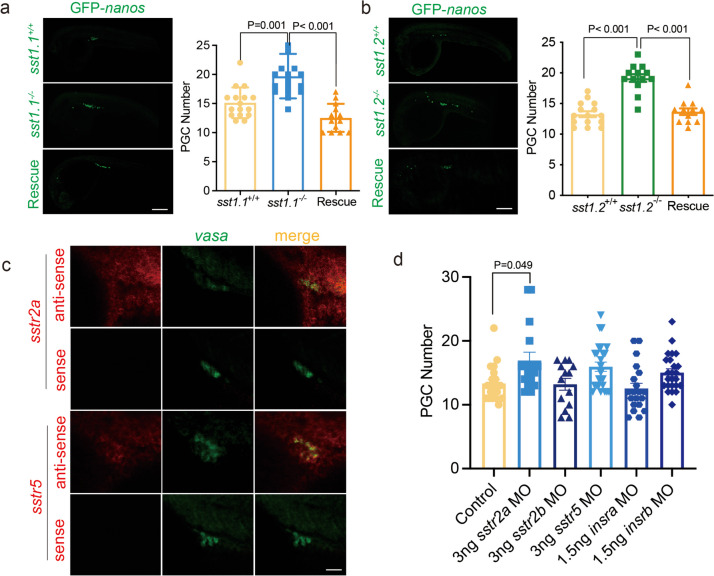
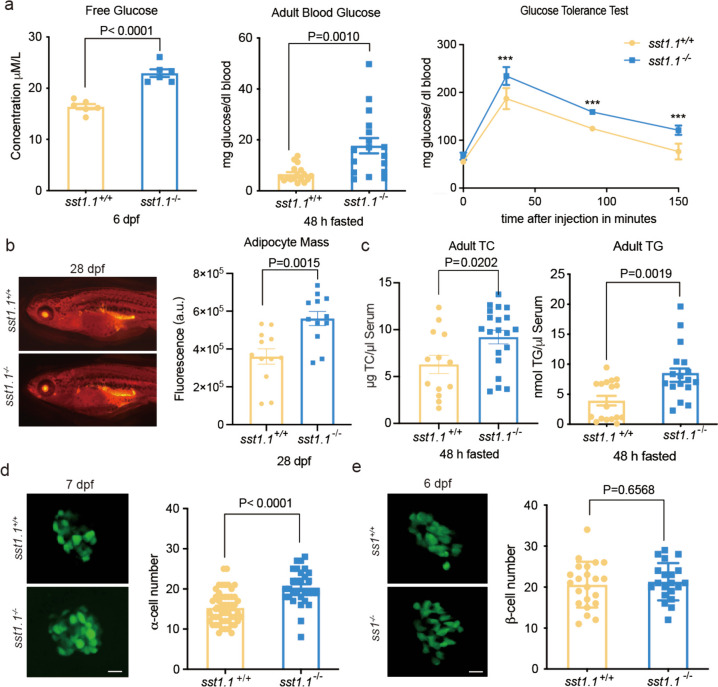
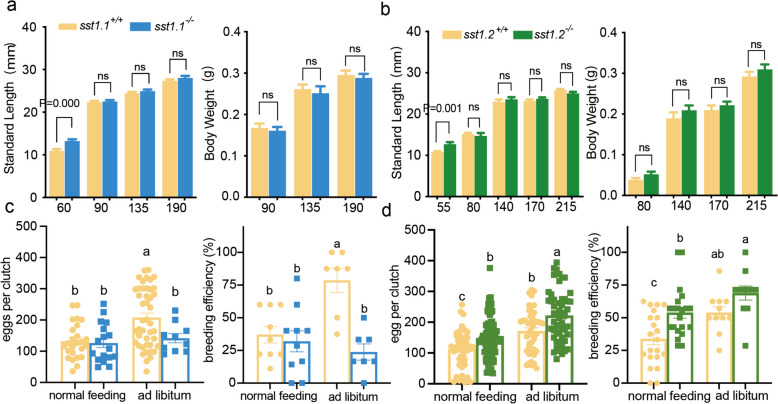
Results: We show that somatostatin signalling is pivotal in regulating fecundity and metabolism. Knock-out of zebrafish somatostatin 1.1 (sst1.1) and somatostatin 1.2 (sst1.2) caused a 20-30% increase in embryonic primordial germ cells, and sst1.2-/- adults laid 40% more eggs than their wild-type siblings. The sst1.1-/- and sst1.2-/- mutants had divergent metabolic phenotypes: the former had 25% more pancreatic α-cells, were hyperglycaemic and glucose intolerant, and had increased adipocyte mass; the latter had 25% more pancreatic β-cells, improved glucose clearance and reduced adipocyte mass.
Conclusions: We conclude that somatostatin signalling regulates energy metabolism and fecundity through anti-proliferative and modulatory actions on primordial germ cells, pancreatic insulin and glucagon cells and the hypothalamus. The ancient origin of the somatostatin system suggests it could act as a switch linking metabolism and reproduction across vertebrates. The results raise the possibility of applications in human and animal fertility.
期刊介绍:
BMC Biology is a broad scope journal covering all areas of biology. Our content includes research articles, new methods and tools. BMC Biology also publishes reviews, Q&A, and commentaries.




 京公网安备 11010802042870号
京ICP备2023020795号-1
京公网安备 11010802042870号
京ICP备2023020795号-1

 分享
分享
 求助内容:
求助内容: 应助结果提醒方式:
 扫码关注我们
