Jiaqi Xu, Xiaofei Tang, Hongxia Lin, Yong (Eddie) Luo
{"title":"The Impact of Recommender Type on Tourist Price Sensitivity to Travel Plans","authors":"Jiaqi Xu, Xiaofei Tang, Hongxia Lin, Yong (Eddie) Luo","doi":"10.1177/00472875241261633","DOIUrl":null,"url":null,"abstract":"Artificial intelligence (AI) has increasingly replaced humans in providing travel recommendations to tourists. Previous research has predominantly focused on investigating tourists’ willingness to adopt AI. Given the perceived differences in recommendation capabilities between AI and human service providers, tourists may react differently to the prices of AI- and human-recommended travel plans. This study, therefore, examines how tourist price sensitivity to travel plans is influenced by each recommender. The study hypotheses were tested through four experiments. The results show that tourists have lower price sensitivity to travel plans recommended by AI (vs. human). This effect is mediated by tourists’ illusion of understanding, wherein they perceive themselves to be more capable of understanding humans than AI. Furthermore, tourists’ sense of uniqueness of travel needs moderates the effect of recommender type on price sensitivity, whereby the effect diminishes with an increase in tourists’ sense of uniqueness. This study contributes to the reconsideration of tourist responses to AI recommendations from a price sensitivity perspective. By further exploring the shaping mechanism of tourists’ different price sensitivities to AI and human recommendations, we also contribute to the understanding of tourists’ comprehension processes regarding AI.","PeriodicalId":8,"journal":{"name":"ACS Biomaterials Science & Engineering","volume":"12 12","pages":""},"PeriodicalIF":5.5000,"publicationDate":"2024-07-25","publicationTypes":"Journal Article","fieldsOfStudy":null,"isOpenAccess":false,"openAccessPdf":"","citationCount":"0","resultStr":null,"platform":"Semanticscholar","paperid":null,"PeriodicalName":"ACS Biomaterials Science & Engineering","FirstCategoryId":"91","ListUrlMain":"https://doi.org/10.1177/00472875241261633","RegionNum":2,"RegionCategory":"医学","ArticlePicture":[],"TitleCN":null,"AbstractTextCN":null,"PMCID":null,"EPubDate":"","PubModel":"","JCR":"Q2","JCRName":"MATERIALS SCIENCE, BIOMATERIALS","Score":null,"Total":0}
引用次数: 0
Abstract
Artificial intelligence (AI) has increasingly replaced humans in providing travel recommendations to tourists. Previous research has predominantly focused on investigating tourists’ willingness to adopt AI. Given the perceived differences in recommendation capabilities between AI and human service providers, tourists may react differently to the prices of AI- and human-recommended travel plans. This study, therefore, examines how tourist price sensitivity to travel plans is influenced by each recommender. The study hypotheses were tested through four experiments. The results show that tourists have lower price sensitivity to travel plans recommended by AI (vs. human). This effect is mediated by tourists’ illusion of understanding, wherein they perceive themselves to be more capable of understanding humans than AI. Furthermore, tourists’ sense of uniqueness of travel needs moderates the effect of recommender type on price sensitivity, whereby the effect diminishes with an increase in tourists’ sense of uniqueness. This study contributes to the reconsideration of tourist responses to AI recommendations from a price sensitivity perspective. By further exploring the shaping mechanism of tourists’ different price sensitivities to AI and human recommendations, we also contribute to the understanding of tourists’ comprehension processes regarding AI.
期刊介绍:
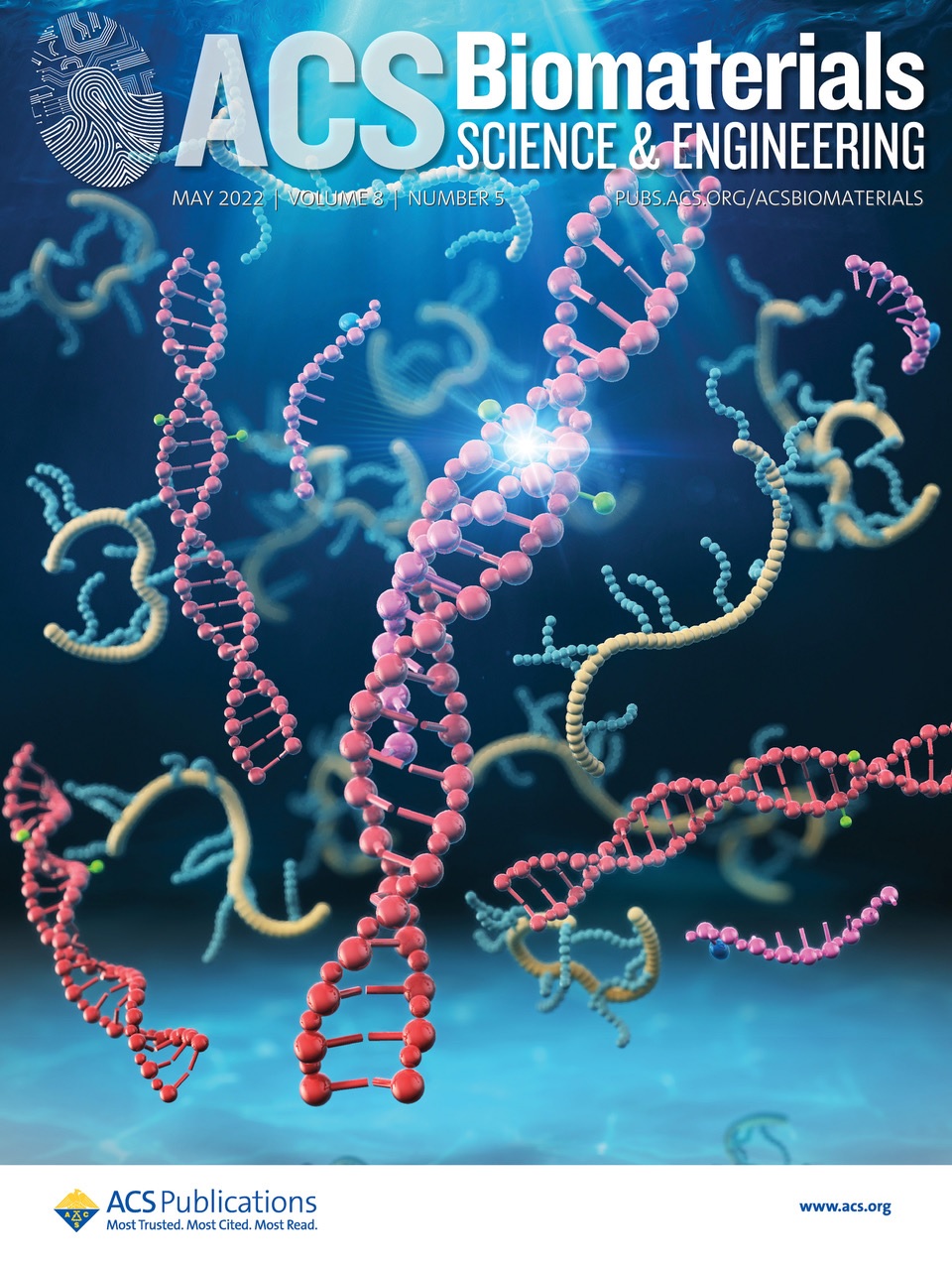
ACS Biomaterials Science & Engineering is the leading journal in the field of biomaterials, serving as an international forum for publishing cutting-edge research and innovative ideas on a broad range of topics:
Applications and Health – implantable tissues and devices, prosthesis, health risks, toxicology
Bio-interactions and Bio-compatibility – material-biology interactions, chemical/morphological/structural communication, mechanobiology, signaling and biological responses, immuno-engineering, calcification, coatings, corrosion and degradation of biomaterials and devices, biophysical regulation of cell functions
Characterization, Synthesis, and Modification – new biomaterials, bioinspired and biomimetic approaches to biomaterials, exploiting structural hierarchy and architectural control, combinatorial strategies for biomaterials discovery, genetic biomaterials design, synthetic biology, new composite systems, bionics, polymer synthesis
Controlled Release and Delivery Systems – biomaterial-based drug and gene delivery, bio-responsive delivery of regulatory molecules, pharmaceutical engineering
Healthcare Advances – clinical translation, regulatory issues, patient safety, emerging trends
Imaging and Diagnostics – imaging agents and probes, theranostics, biosensors, monitoring
Manufacturing and Technology – 3D printing, inks, organ-on-a-chip, bioreactor/perfusion systems, microdevices, BioMEMS, optics and electronics interfaces with biomaterials, systems integration
Modeling and Informatics Tools – scaling methods to guide biomaterial design, predictive algorithms for structure-function, biomechanics, integrating bioinformatics with biomaterials discovery, metabolomics in the context of biomaterials
Tissue Engineering and Regenerative Medicine – basic and applied studies, cell therapies, scaffolds, vascularization, bioartificial organs, transplantation and functionality, cellular agriculture



 京公网安备 11010802042870号
京ICP备2023020795号-1
京公网安备 11010802042870号
京ICP备2023020795号-1

 分享
分享
 求助内容:
求助内容: 应助结果提醒方式:
 扫码关注我们
