Li‐Qing Jiang, Tim P. Boyer, C. Paver, Hyelim Yoo, James R. Reagan, Simone R. Alin, L. Barbero, Brendan R. Carter, Richard A. Feely, Rik Wanninkhof
{"title":"Climatological distribution of ocean acidification variables along the North American ocean margins","authors":"Li‐Qing Jiang, Tim P. Boyer, C. Paver, Hyelim Yoo, James R. Reagan, Simone R. Alin, L. Barbero, Brendan R. Carter, Richard A. Feely, Rik Wanninkhof","doi":"10.5194/essd-16-3383-2024","DOIUrl":null,"url":null,"abstract":"Abstract. Climatologies, which depict mean fields of oceanographic variables on a regular geographic grid, and atlases, which provide graphical depictions of specific areas, play pivotal roles in comprehending the societal vulnerabilities linked to ocean acidification (OA). This significance is particularly pronounced in coastal regions where most economic activities, such as commercial and recreational fisheries and aquaculture industries, occur. In this paper, we unveil a comprehensive data product featuring coastal ocean acidification climatologies and atlases, encompassing the fugacity of carbon dioxide, pH on the total scale, total hydrogen ion content, free hydrogen ion content, carbonate ion content, aragonite saturation state, calcite saturation state, Revelle factor, total dissolved inorganic carbon content, and total alkalinity content. These variables are provided on 1° × 1° spatial grids at 14 standardized depth levels, ranging from the surface to a depth of 500 m, along the North American ocean margins, defined as the region between the coastline and a distance of 200 nautical miles (∼370 km) offshore. The climatologies and atlases were developed using the World Ocean Atlas (WOA) gridding methods of the NOAA National Centers for Environmental Information (NCEI) based on the recently released Coastal Ocean Data Analysis Product in North America (CODAP-NA), along with the 2021 update to the Global Ocean Data Analysis Project version 2 (GLODAPv2.2021) data product. The relevant variables were adjusted to the index year of 2010. The data product is available in NetCDF (https://doi.org/10.25921/g8pb-zy76, Jiang et al., 2022b) on the NOAA Ocean Carbon and Acidification Data System: https://www.ncei.noaa.gov/data/oceans/ncei/ocads/metadata/0270962.html (last access: 15 July 2024). It is recommended to use the objectively analyzed mean fields (with “_an” suffix) for each variable. The atlases can be accessed at https://www.ncei.noaa.gov/access/ocean-carbon-acidification-data-system/synthesis/nacoastal.html (last access: 15 July 2024).\n","PeriodicalId":11,"journal":{"name":"ACS Chemical Biology","volume":"96 6","pages":""},"PeriodicalIF":3.8000,"publicationDate":"2024-07-24","publicationTypes":"Journal Article","fieldsOfStudy":null,"isOpenAccess":false,"openAccessPdf":"","citationCount":"0","resultStr":null,"platform":"Semanticscholar","paperid":null,"PeriodicalName":"ACS Chemical Biology","FirstCategoryId":"89","ListUrlMain":"https://doi.org/10.5194/essd-16-3383-2024","RegionNum":2,"RegionCategory":"生物学","ArticlePicture":[],"TitleCN":null,"AbstractTextCN":null,"PMCID":null,"EPubDate":"","PubModel":"","JCR":"Q2","JCRName":"BIOCHEMISTRY & MOLECULAR BIOLOGY","Score":null,"Total":0}
引用次数: 0
Abstract
Abstract. Climatologies, which depict mean fields of oceanographic variables on a regular geographic grid, and atlases, which provide graphical depictions of specific areas, play pivotal roles in comprehending the societal vulnerabilities linked to ocean acidification (OA). This significance is particularly pronounced in coastal regions where most economic activities, such as commercial and recreational fisheries and aquaculture industries, occur. In this paper, we unveil a comprehensive data product featuring coastal ocean acidification climatologies and atlases, encompassing the fugacity of carbon dioxide, pH on the total scale, total hydrogen ion content, free hydrogen ion content, carbonate ion content, aragonite saturation state, calcite saturation state, Revelle factor, total dissolved inorganic carbon content, and total alkalinity content. These variables are provided on 1° × 1° spatial grids at 14 standardized depth levels, ranging from the surface to a depth of 500 m, along the North American ocean margins, defined as the region between the coastline and a distance of 200 nautical miles (∼370 km) offshore. The climatologies and atlases were developed using the World Ocean Atlas (WOA) gridding methods of the NOAA National Centers for Environmental Information (NCEI) based on the recently released Coastal Ocean Data Analysis Product in North America (CODAP-NA), along with the 2021 update to the Global Ocean Data Analysis Project version 2 (GLODAPv2.2021) data product. The relevant variables were adjusted to the index year of 2010. The data product is available in NetCDF (https://doi.org/10.25921/g8pb-zy76, Jiang et al., 2022b) on the NOAA Ocean Carbon and Acidification Data System: https://www.ncei.noaa.gov/data/oceans/ncei/ocads/metadata/0270962.html (last access: 15 July 2024). It is recommended to use the objectively analyzed mean fields (with “_an” suffix) for each variable. The atlases can be accessed at https://www.ncei.noaa.gov/access/ocean-carbon-acidification-data-system/synthesis/nacoastal.html (last access: 15 July 2024).
期刊介绍:
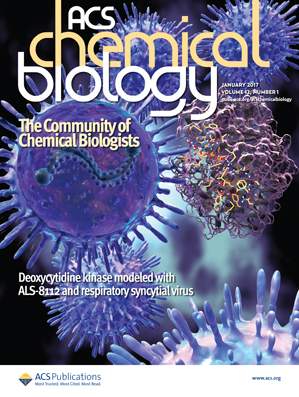
ACS Chemical Biology provides an international forum for the rapid communication of research that broadly embraces the interface between chemistry and biology.
The journal also serves as a forum to facilitate the communication between biologists and chemists that will translate into new research opportunities and discoveries. Results will be published in which molecular reasoning has been used to probe questions through in vitro investigations, cell biological methods, or organismic studies.
We welcome mechanistic studies on proteins, nucleic acids, sugars, lipids, and nonbiological polymers. The journal serves a large scientific community, exploring cellular function from both chemical and biological perspectives. It is understood that submitted work is based upon original results and has not been published previously.



 京公网安备 11010802042870号
京ICP备2023020795号-1
京公网安备 11010802042870号
京ICP备2023020795号-1

 分享
分享
 求助内容:
求助内容: 应助结果提醒方式:
 扫码关注我们
