C. E. Cantrall, S. Mrak, L. J. Paxton, Y. Zhang, R. Nikoukar, R. K. Schaefer, J. H. Yee
{"title":"Source of the Observed Enhancements in Thermospheric ΣO/N2 During Two Solar Eclipses in 2023","authors":"C. E. Cantrall, S. Mrak, L. J. Paxton, Y. Zhang, R. Nikoukar, R. K. Schaefer, J. H. Yee","doi":"10.1029/2024JA032542","DOIUrl":null,"url":null,"abstract":"<p>Two solar eclipse events in 2023 appeared to produce considerable enhancements in the thermospheric column density ratio of monatomic oxygen to molecular nitrogen (ΣO/N<sub>2</sub>) as measured by TIMED GUVI. We quantify potential sources for eclipse-induced ΣO/N<sub>2</sub> changes and find that the observed enhancements arise from the ionospheric O<sup>+</sup> radiative recombination contribution to the OI 135.6 nm emission from which ΣO/N<sub>2</sub> is derived. Variations in the solar Extreme Ultra Violet (EUV) and X-ray spectrum, due to the difference between the disk spectrum and the coronal spectrum, are also considered but shown to have negligible contributions to the ΣO/N<sub>2</sub> enhancements. After accounting for the radiative recombination contribution, we constrain the real thermospheric compositional change to the uncertainty level of the measurements of 5%–10%. These results are valuable for the interpretation of eclipse-induced ΣO/N<sub>2</sub> changes that will further first-principle model comparisons and lead to a better understanding of the response of the thermosphere to localized variations in solar EUV and X-ray forcing.</p>","PeriodicalId":15894,"journal":{"name":"Journal of Geophysical Research: Space Physics","volume":"129 7","pages":""},"PeriodicalIF":2.9000,"publicationDate":"2024-07-26","publicationTypes":"Journal Article","fieldsOfStudy":null,"isOpenAccess":false,"openAccessPdf":"https://onlinelibrary.wiley.com/doi/epdf/10.1029/2024JA032542","citationCount":"0","resultStr":null,"platform":"Semanticscholar","paperid":null,"PeriodicalName":"Journal of Geophysical Research: Space Physics","FirstCategoryId":"89","ListUrlMain":"https://agupubs.onlinelibrary.wiley.com/doi/10.1029/2024JA032542","RegionNum":2,"RegionCategory":"地球科学","ArticlePicture":[],"TitleCN":null,"AbstractTextCN":null,"PMCID":null,"EPubDate":"","PubModel":"","JCR":"Q2","JCRName":"ASTRONOMY & ASTROPHYSICS","Score":null,"Total":0}
引用次数: 0
Abstract
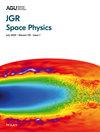
Two solar eclipse events in 2023 appeared to produce considerable enhancements in the thermospheric column density ratio of monatomic oxygen to molecular nitrogen (ΣO/N2) as measured by TIMED GUVI. We quantify potential sources for eclipse-induced ΣO/N2 changes and find that the observed enhancements arise from the ionospheric O+ radiative recombination contribution to the OI 135.6 nm emission from which ΣO/N2 is derived. Variations in the solar Extreme Ultra Violet (EUV) and X-ray spectrum, due to the difference between the disk spectrum and the coronal spectrum, are also considered but shown to have negligible contributions to the ΣO/N2 enhancements. After accounting for the radiative recombination contribution, we constrain the real thermospheric compositional change to the uncertainty level of the measurements of 5%–10%. These results are valuable for the interpretation of eclipse-induced ΣO/N2 changes that will further first-principle model comparisons and lead to a better understanding of the response of the thermosphere to localized variations in solar EUV and X-ray forcing.





 京公网安备 11010802042870号
京ICP备2023020795号-1
京公网安备 11010802042870号
京ICP备2023020795号-1

 分享
分享
 求助内容:
求助内容: 应助结果提醒方式:
 扫码关注我们
