{"title":"Effect of coaching the sit-to-stand motion and attentional focus.","authors":"Rei Odagiri","doi":"10.1589/jpts.36.425","DOIUrl":null,"url":null,"abstract":"<p><p>[Purpose] The present study investigated whether (1) \"standing up while bowing\" is effective for promoting the sit-to-stand (STS) motion and (2) whether this coaching promotes internal focus. [Participants and Methods] The participants included 17 healthy adults who performed the 30-s chair stand test with two sets of verbal instructions. The verbal instructions were as follows: \"Please stand up as many times as possible for 30 s\" (control condition) and \"Please stand up while bowing as many times as possible for 30 s\" (bowing condition). The participants performed the tests successively under the two conditions. In the 30-s chair stand test, a three-axis accelerometer was attached to the participants and the sagittal STS motion was filmed using a video camera. After the 30-s chair stand test, we used the modified Movement-Specific Reinvestment Scale (MSRS) to evaluate attentional focus. Differences in the measurements were analyzed using the Wilcoxon signed-rank test or paired t-test for each condition. [Results] Statistical analysis revealed significant differences in the CS-30 count, time from sitting to standing, time from sitting to lift-off, time from lift-off to standing, and the trunk tilt angle on lift-off. Regarding the questionnaire, Statistical analysis revealed significant differences in the MSRS and \"conscious motor processing\". [Conclusion] These results suggest that \"standing up while bowing\" has limited effectiveness in promoting the STS motion because the coaching promotes internal focus.</p>","PeriodicalId":16834,"journal":{"name":"Journal of Physical Therapy Science","volume":"36 8","pages":"425-429"},"PeriodicalIF":0.0000,"publicationDate":"2024-08-01","publicationTypes":"Journal Article","fieldsOfStudy":null,"isOpenAccess":false,"openAccessPdf":"https://www.ncbi.nlm.nih.gov/pmc/articles/PMC11290866/pdf/","citationCount":"0","resultStr":null,"platform":"Semanticscholar","paperid":null,"PeriodicalName":"Journal of Physical Therapy Science","FirstCategoryId":"1085","ListUrlMain":"https://doi.org/10.1589/jpts.36.425","RegionNum":0,"RegionCategory":null,"ArticlePicture":[],"TitleCN":null,"AbstractTextCN":null,"PMCID":null,"EPubDate":"","PubModel":"","JCR":"","JCRName":"","Score":null,"Total":0}
引用次数: 0
Abstract
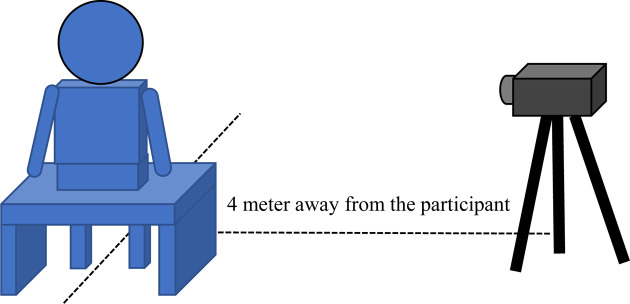
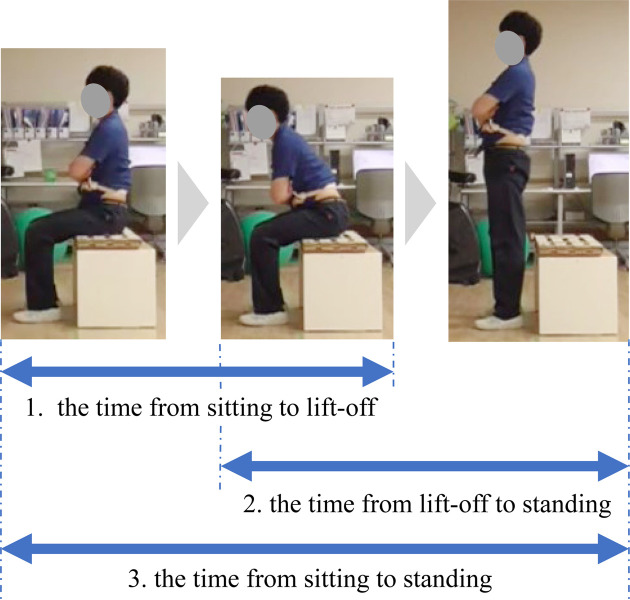
[Purpose] The present study investigated whether (1) "standing up while bowing" is effective for promoting the sit-to-stand (STS) motion and (2) whether this coaching promotes internal focus. [Participants and Methods] The participants included 17 healthy adults who performed the 30-s chair stand test with two sets of verbal instructions. The verbal instructions were as follows: "Please stand up as many times as possible for 30 s" (control condition) and "Please stand up while bowing as many times as possible for 30 s" (bowing condition). The participants performed the tests successively under the two conditions. In the 30-s chair stand test, a three-axis accelerometer was attached to the participants and the sagittal STS motion was filmed using a video camera. After the 30-s chair stand test, we used the modified Movement-Specific Reinvestment Scale (MSRS) to evaluate attentional focus. Differences in the measurements were analyzed using the Wilcoxon signed-rank test or paired t-test for each condition. [Results] Statistical analysis revealed significant differences in the CS-30 count, time from sitting to standing, time from sitting to lift-off, time from lift-off to standing, and the trunk tilt angle on lift-off. Regarding the questionnaire, Statistical analysis revealed significant differences in the MSRS and "conscious motor processing". [Conclusion] These results suggest that "standing up while bowing" has limited effectiveness in promoting the STS motion because the coaching promotes internal focus.




 京公网安备 11010802042870号
京ICP备2023020795号-1
京公网安备 11010802042870号
京ICP备2023020795号-1

 分享
分享
 求助内容:
求助内容: 应助结果提醒方式:
 扫码关注我们
