A P Landry, J A Zuccato, V Patil, M R Voisin, J Z Wang, Y Ellenbogen, C Gui, A Ajisebutu, T Kislinger, F Nassiri, G Zadeh
{"title":"Establishing the utility of multi-platform liquid biopsy by integrating the CSF methylome and proteome in CNS tumours.","authors":"A P Landry, J A Zuccato, V Patil, M R Voisin, J Z Wang, Y Ellenbogen, C Gui, A Ajisebutu, T Kislinger, F Nassiri, G Zadeh","doi":"10.1007/s11060-024-04695-2","DOIUrl":null,"url":null,"abstract":"<p><strong>Background: </strong>Liquid biopsy represents a major development in cancer research, with significant translational potential. Similarly, it is increasingly recognized that multi-omic molecular approaches are a powerful avenue through which to understand complex and heterogeneous disease biology. We hypothesize that merging these two promising frontiers of cancer research will improve the discriminatory capacity of current models and allow for improved clinical utility.</p><p><strong>Methods: </strong>We have compiled a cohort of patients with glioblastoma, brain metastasis, and primary central nervous system lymphoma. Cell-free methylated DNA immunoprecipitation (cfMeDIP) and shotgun proteomic profiling was obtained from the cerebrospinal fluid (CSF) of each patient and used to build tumour-specific classifiers.</p><p><strong>Results: </strong>We show that the DNA methylation and protein profiles of cerebrospinal fluid can be integrated to fully discriminate lymphoma from its diagnostic counterparts with perfect AUC of 1 (95% confidence interval 1-1) and 100% specificity, significantly outperforming single-platform classifiers.</p><p><strong>Conclusions: </strong>We present the most specific and accurate CNS lymphoma classifier to date and demonstrates the synergistic capability of multi-platform liquid biopsies. This has far-reaching translational utility for patients with newly diagnosed intra-axial brain tumours.</p>","PeriodicalId":16425,"journal":{"name":"Journal of Neuro-Oncology","volume":" ","pages":"233-239"},"PeriodicalIF":3.1000,"publicationDate":"2024-09-01","publicationTypes":"Journal Article","fieldsOfStudy":null,"isOpenAccess":false,"openAccessPdf":"https://www.ncbi.nlm.nih.gov/pmc/articles/PMC11915530/pdf/","citationCount":"0","resultStr":null,"platform":"Semanticscholar","paperid":null,"PeriodicalName":"Journal of Neuro-Oncology","FirstCategoryId":"3","ListUrlMain":"https://doi.org/10.1007/s11060-024-04695-2","RegionNum":2,"RegionCategory":"医学","ArticlePicture":[],"TitleCN":null,"AbstractTextCN":null,"PMCID":null,"EPubDate":"2024/8/5 0:00:00","PubModel":"Epub","JCR":"Q2","JCRName":"CLINICAL NEUROLOGY","Score":null,"Total":0}
引用次数: 0
Abstract
Background: Liquid biopsy represents a major development in cancer research, with significant translational potential. Similarly, it is increasingly recognized that multi-omic molecular approaches are a powerful avenue through which to understand complex and heterogeneous disease biology. We hypothesize that merging these two promising frontiers of cancer research will improve the discriminatory capacity of current models and allow for improved clinical utility.
Methods: We have compiled a cohort of patients with glioblastoma, brain metastasis, and primary central nervous system lymphoma. Cell-free methylated DNA immunoprecipitation (cfMeDIP) and shotgun proteomic profiling was obtained from the cerebrospinal fluid (CSF) of each patient and used to build tumour-specific classifiers.
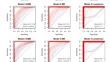
Results: We show that the DNA methylation and protein profiles of cerebrospinal fluid can be integrated to fully discriminate lymphoma from its diagnostic counterparts with perfect AUC of 1 (95% confidence interval 1-1) and 100% specificity, significantly outperforming single-platform classifiers.
Conclusions: We present the most specific and accurate CNS lymphoma classifier to date and demonstrates the synergistic capability of multi-platform liquid biopsies. This has far-reaching translational utility for patients with newly diagnosed intra-axial brain tumours.
期刊介绍:
The Journal of Neuro-Oncology is a multi-disciplinary journal encompassing basic, applied, and clinical investigations in all research areas as they relate to cancer and the central nervous system. It provides a single forum for communication among neurologists, neurosurgeons, radiotherapists, medical oncologists, neuropathologists, neurodiagnosticians, and laboratory-based oncologists conducting relevant research. The Journal of Neuro-Oncology does not seek to isolate the field, but rather to focus the efforts of many disciplines in one publication through a format which pulls together these diverse interests. More than any other field of oncology, cancer of the central nervous system requires multi-disciplinary approaches. To alleviate having to scan dozens of journals of cell biology, pathology, laboratory and clinical endeavours, JNO is a periodical in which current, high-quality, relevant research in all aspects of neuro-oncology may be found.



 京公网安备 11010802042870号
京ICP备2023020795号-1
京公网安备 11010802042870号
京ICP备2023020795号-1

 分享
分享
 求助内容:
求助内容: 应助结果提醒方式:
 扫码关注我们
