Vincent Moya Quiros MD, Ahmed Adham MD, Philippe Convers MD, Gaetan Lesca MD, PhD, François Mauguiere MD, PhD, Hugo Soulier MD, Alexis Arzimanoglou MD, PhD, Allan Bayat MD, PhD, Hilde Braakman MD, PhD, Jean-Philippe Camdessanche MD, PhD, Philippe Casenave MD, Laurence Chaton MD, Yves Chaix MD, PhD, Maxime Chochoi MD, Christel Depienne PhD, Vincent Desportes MD, PhD, Jessie De Ridder MD, Vera Dinkelacker MD, PhD, Elena Gardella MD, PhD, Gerhard J. Kluger MD, PhD, Julien Jung MD, PhD, Martine Lemesle Martin MD, Maria Margherita Mancardi MD, PhD, Markus Mueller MD, Anne-Lise Poulat MD, Konrad Platzer MD, Agathe Roubertie MD, PhD, Marijn F. Stokman MD, PhD, Anneke T. Vulto-van Silfhout MD, PhD, Gert Wiegand MD, PhD, Laure Mazzola MD, PhD
{"title":"Electro-Clinical Features and Functional Connectivity Analysis in SYN1-Related Epilepsy","authors":"Vincent Moya Quiros MD, Ahmed Adham MD, Philippe Convers MD, Gaetan Lesca MD, PhD, François Mauguiere MD, PhD, Hugo Soulier MD, Alexis Arzimanoglou MD, PhD, Allan Bayat MD, PhD, Hilde Braakman MD, PhD, Jean-Philippe Camdessanche MD, PhD, Philippe Casenave MD, Laurence Chaton MD, Yves Chaix MD, PhD, Maxime Chochoi MD, Christel Depienne PhD, Vincent Desportes MD, PhD, Jessie De Ridder MD, Vera Dinkelacker MD, PhD, Elena Gardella MD, PhD, Gerhard J. Kluger MD, PhD, Julien Jung MD, PhD, Martine Lemesle Martin MD, Maria Margherita Mancardi MD, PhD, Markus Mueller MD, Anne-Lise Poulat MD, Konrad Platzer MD, Agathe Roubertie MD, PhD, Marijn F. Stokman MD, PhD, Anneke T. Vulto-van Silfhout MD, PhD, Gert Wiegand MD, PhD, Laure Mazzola MD, PhD","doi":"10.1002/ana.27063","DOIUrl":null,"url":null,"abstract":"<div>\n \n <section>\n \n <h3> Objective</h3>\n \n <p>There is currently scarce data on the electroclinical characteristics of epilepsy associated with synapsin 1 (<i>SYN1</i>) pathogenic variations. We examined clinical and electro-encephalographic (EEG) features in patients with epilepsy and <i>SYN1</i> variants, with the aim of identifying a distinctive electroclinical pattern.</p>\n </section>\n \n <section>\n \n <h3> Methods</h3>\n \n <p>In this retrospective multicenter study, we collected and reviewed demographic, genetic, and epilepsy data of 19 male patients with <i>SYN1</i> variants. Specifically, we analyzed interictal EEG data for all patients, and electro-clinical data from 10 epileptic seizures in 5 patients, using prolonged video-EEG monitoring recordings. Inter-ictal EEG functional connectivity parameters and frequency spectrum of the 10 patients over 12 years of age, were computed and compared with those of 56 age- and sex-matched controls.</p>\n </section>\n \n <section>\n \n <h3> Results</h3>\n \n <p>The main electroclinical features of epilepsy in patients with <i>SYN1</i> were (1) EEG background and organization mainly normal; (2) interictal abnormalities are often rare or not visible on EEG; (3) more than 60% of patients had reflex seizures (cutaneous contact with water and defecation being the main triggers) isolated or associated with spontaneous seizures; (4) electro-clinical semiology of seizures was mainly temporal or temporo-insulo/perisylvian with a notable autonomic component; and (5) ictal EEG showed a characteristic rhythmic theta/delta activity predominating in temporo-perisylvian regions at the beginning of most seizures. Comparing patients with <i>SYN1</i> to healthy subjects, we observed a shift to lower frequency bands in power spectrum of interictal EEG and an increased connectivity in both temporal regions.</p>\n </section>\n \n <section>\n \n <h3> Interpretation</h3>\n \n <p>A distinct epilepsy syndrome emerges in patients with <i>SYN1</i>, with a rather characteristic clinical and EEG pattern suggesting predominant temporo-insular involvement. ANN NEUROL 2025;97:34–50</p>\n </section>\n </div>","PeriodicalId":127,"journal":{"name":"Annals of Neurology","volume":"97 1","pages":"34-50"},"PeriodicalIF":7.7000,"publicationDate":"2024-08-23","publicationTypes":"Journal Article","fieldsOfStudy":null,"isOpenAccess":false,"openAccessPdf":"https://www.ncbi.nlm.nih.gov/pmc/articles/PMC11683167/pdf/","citationCount":"0","resultStr":null,"platform":"Semanticscholar","paperid":null,"PeriodicalName":"Annals of Neurology","FirstCategoryId":"3","ListUrlMain":"https://onlinelibrary.wiley.com/doi/10.1002/ana.27063","RegionNum":1,"RegionCategory":"医学","ArticlePicture":[],"TitleCN":null,"AbstractTextCN":null,"PMCID":null,"EPubDate":"","PubModel":"","JCR":"Q1","JCRName":"CLINICAL NEUROLOGY","Score":null,"Total":0}
引用次数: 0
Abstract
Objective
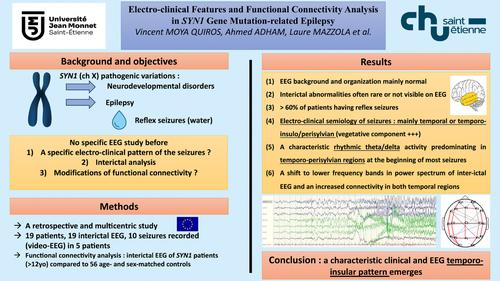
There is currently scarce data on the electroclinical characteristics of epilepsy associated with synapsin 1 (SYN1) pathogenic variations. We examined clinical and electro-encephalographic (EEG) features in patients with epilepsy and SYN1 variants, with the aim of identifying a distinctive electroclinical pattern.
Methods
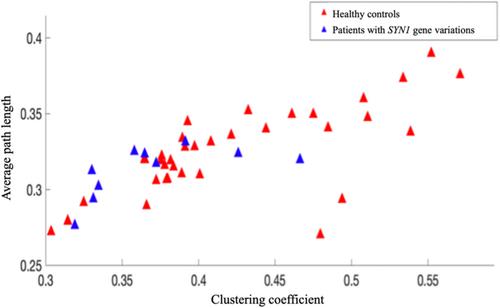
In this retrospective multicenter study, we collected and reviewed demographic, genetic, and epilepsy data of 19 male patients with SYN1 variants. Specifically, we analyzed interictal EEG data for all patients, and electro-clinical data from 10 epileptic seizures in 5 patients, using prolonged video-EEG monitoring recordings. Inter-ictal EEG functional connectivity parameters and frequency spectrum of the 10 patients over 12 years of age, were computed and compared with those of 56 age- and sex-matched controls.
Results
The main electroclinical features of epilepsy in patients with SYN1 were (1) EEG background and organization mainly normal; (2) interictal abnormalities are often rare or not visible on EEG; (3) more than 60% of patients had reflex seizures (cutaneous contact with water and defecation being the main triggers) isolated or associated with spontaneous seizures; (4) electro-clinical semiology of seizures was mainly temporal or temporo-insulo/perisylvian with a notable autonomic component; and (5) ictal EEG showed a characteristic rhythmic theta/delta activity predominating in temporo-perisylvian regions at the beginning of most seizures. Comparing patients with SYN1 to healthy subjects, we observed a shift to lower frequency bands in power spectrum of interictal EEG and an increased connectivity in both temporal regions.
Interpretation
A distinct epilepsy syndrome emerges in patients with SYN1, with a rather characteristic clinical and EEG pattern suggesting predominant temporo-insular involvement. ANN NEUROL 2025;97:34–50
期刊介绍:
Annals of Neurology publishes original articles with potential for high impact in understanding the pathogenesis, clinical and laboratory features, diagnosis, treatment, outcomes and science underlying diseases of the human nervous system. Articles should ideally be of broad interest to the academic neurological community rather than solely to subspecialists in a particular field. Studies involving experimental model system, including those in cell and organ cultures and animals, of direct translational relevance to the understanding of neurological disease are also encouraged.



 京公网安备 11010802042870号
京ICP备2023020795号-1
京公网安备 11010802042870号
京ICP备2023020795号-1

 分享
分享
 求助内容:
求助内容: 应助结果提醒方式:
 扫码关注我们
