Specific Activation of Dopamine Receptor D1 Expressing Neurons in the PrL Alleviates CSDS-Induced Anxiety-Like Behavior Comorbidity with Postoperative Hyperalgesia in Male Mice.
{"title":"Specific Activation of Dopamine Receptor D1 Expressing Neurons in the PrL Alleviates CSDS-Induced Anxiety-Like Behavior Comorbidity with Postoperative Hyperalgesia in Male Mice.","authors":"Wang Wang, Weizhen Liu, Sufang Liu, Dongxiao Duan, Yajing Ma, Zijuan Zhang, Changsheng Li, Yuanyuan Tang, Zhiju Wang, Ying Xing","doi":"10.1007/s12035-024-04444-6","DOIUrl":null,"url":null,"abstract":"<p><p>Postoperative pain is a type of pain that occurs in clinical patients after surgery. Among the factors influencing the transition from acute postoperative pain to chronic postoperative pain, chronic stress has received much attention in recent years. Here, we investigated the role of dopamine receptor D1/D2 expressing pyramidal neurons in the prelimbic cortex (PrL) in modulating chronic social defeat stress (CSDS)-induced anxiety-like behavior comorbidity with postoperative hyperalgesia in male mice. Our results showed that preoperative CSDS induced anxiety-like behavior and significantly prolonged postoperative pain caused by plantar incision, but did not affect plantar wound recovery and inflammation. Reduced activation of dopamine receptor D1 or D2 expressing neurons in the PrL is a remarkable feature of male mice after CSDS, and chronic inhibition of dopamine receptor D1 or D2 expressing neurons in the PrL induced anxiety-like behavior and persistent postoperative pain. Further studies found that activation of D1 expressing but not D2 expressing neurons in the PrL ameliorated CSDS-induced anxiety-like behavior and postoperative hyperalgesia. Our results suggest that dopamine receptor D1 expressing neurons in the PrL play a crucial role in CSDS-induced anxiety-like behavior comorbidity with postoperative hyperalgesia in male mice.</p>","PeriodicalId":18762,"journal":{"name":"Molecular Neurobiology","volume":" ","pages":"2817-2834"},"PeriodicalIF":4.3000,"publicationDate":"2025-03-01","publicationTypes":"Journal Article","fieldsOfStudy":null,"isOpenAccess":false,"openAccessPdf":"","citationCount":"0","resultStr":null,"platform":"Semanticscholar","paperid":null,"PeriodicalName":"Molecular Neurobiology","FirstCategoryId":"3","ListUrlMain":"https://doi.org/10.1007/s12035-024-04444-6","RegionNum":2,"RegionCategory":"医学","ArticlePicture":[],"TitleCN":null,"AbstractTextCN":null,"PMCID":null,"EPubDate":"2024/8/23 0:00:00","PubModel":"Epub","JCR":"Q1","JCRName":"NEUROSCIENCES","Score":null,"Total":0}
引用次数: 0
Abstract
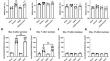
Postoperative pain is a type of pain that occurs in clinical patients after surgery. Among the factors influencing the transition from acute postoperative pain to chronic postoperative pain, chronic stress has received much attention in recent years. Here, we investigated the role of dopamine receptor D1/D2 expressing pyramidal neurons in the prelimbic cortex (PrL) in modulating chronic social defeat stress (CSDS)-induced anxiety-like behavior comorbidity with postoperative hyperalgesia in male mice. Our results showed that preoperative CSDS induced anxiety-like behavior and significantly prolonged postoperative pain caused by plantar incision, but did not affect plantar wound recovery and inflammation. Reduced activation of dopamine receptor D1 or D2 expressing neurons in the PrL is a remarkable feature of male mice after CSDS, and chronic inhibition of dopamine receptor D1 or D2 expressing neurons in the PrL induced anxiety-like behavior and persistent postoperative pain. Further studies found that activation of D1 expressing but not D2 expressing neurons in the PrL ameliorated CSDS-induced anxiety-like behavior and postoperative hyperalgesia. Our results suggest that dopamine receptor D1 expressing neurons in the PrL play a crucial role in CSDS-induced anxiety-like behavior comorbidity with postoperative hyperalgesia in male mice.
期刊介绍:
Molecular Neurobiology is an exciting journal for neuroscientists needing to stay in close touch with progress at the forefront of molecular brain research today. It is an especially important periodical for graduate students and "postdocs," specifically designed to synthesize and critically assess research trends for all neuroscientists hoping to stay active at the cutting edge of this dramatically developing area. This journal has proven to be crucial in departmental libraries, serving as essential reading for every committed neuroscientist who is striving to keep abreast of all rapid developments in a forefront field. Most recent significant advances in experimental and clinical neuroscience have been occurring at the molecular level. Until now, there has been no journal devoted to looking closely at this fragmented literature in a critical, coherent fashion. Each submission is thoroughly analyzed by scientists and clinicians internationally renowned for their special competence in the areas treated.




 京公网安备 11010802042870号
京ICP备2023020795号-1
京公网安备 11010802042870号
京ICP备2023020795号-1

 分享
分享
 求助内容:
求助内容: 应助结果提醒方式:
 扫码关注我们
