Melanie L Rose, Erika Moen, Bryan Ager, Benjamin Bajaj, Matthew Poppe, Gregory Russo, Torunn I Yock
{"title":"Radiotherapy dosing in intracranial ependymoma using the national cancer database.","authors":"Melanie L Rose, Erika Moen, Bryan Ager, Benjamin Bajaj, Matthew Poppe, Gregory Russo, Torunn I Yock","doi":"10.1007/s11060-024-04805-0","DOIUrl":null,"url":null,"abstract":"<p><strong>Purpose: </strong>To determine the dose-dependent effect of adjuvant radiotherapy on survival for pediatric intracranial ependymomas and explore patient and disease characteristics that experience survival benefit from higher doses.</p><p><strong>Methods: </strong>Data was accessed from the National Cancer Database. Inclusion criteria was comprised of a diagnosis of non-metastatic intracranial ependymoma, World Health Organization (WHO) grade 2 or 3, surgical resection, adjuvant radiotherapy between 4500-6300 cGy, and non-missing survivorship data. Crude and adjusted Cox proportional hazard ratios (HRs) were calculated to estimate the associations of patient, tumor, and treatment characteristics with overall survival (OS). Kaplan-Meier (KM) estimations were used to visualize survival curves for dosing for the general cohort and by subgroups (age, resection extent, and grade).</p><p><strong>Results: </strong>Of the 1154 patients who met inclusion criteria, 405 received ≤ 5400 cGy and 749 received > 5400 cGy. We found no difference in OS crude (0.95, 95% CI 0.72-1.06) or adjusted (0.88, 95% CI 0.46-1.69) HR for those receiving ≤ 5400 cGy. KM curves showed no difference in OS for dosing for the general cohort based on age, surgical extent, and grade. However, there was better OS in those with WHO grade 2 tumors compared to grade 3 regardless of dose received.</p><p><strong>Conclusions: </strong>There was no difference in OS between patients who received ≤ 5400 cGy compared to > 5400 cGy. We found improved OS in those with grade 2 tumors compared to grade 3, however there was no difference in OS based on dose received by tumor grade, age, or resection extent. Limitations in data available prevent exploring other outcomes or toxicity.</p>","PeriodicalId":16425,"journal":{"name":"Journal of Neuro-Oncology","volume":" ","pages":"387-395"},"PeriodicalIF":3.4000,"publicationDate":"2024-11-01","publicationTypes":"Journal Article","fieldsOfStudy":null,"isOpenAccess":false,"openAccessPdf":"https://www.ncbi.nlm.nih.gov/pmc/articles/PMC12666876/pdf/","citationCount":"0","resultStr":null,"platform":"Semanticscholar","paperid":null,"PeriodicalName":"Journal of Neuro-Oncology","FirstCategoryId":"3","ListUrlMain":"https://doi.org/10.1007/s11060-024-04805-0","RegionNum":2,"RegionCategory":"医学","ArticlePicture":[],"TitleCN":null,"AbstractTextCN":null,"PMCID":null,"EPubDate":"2024/8/28 0:00:00","PubModel":"Epub","JCR":"Q2","JCRName":"CLINICAL NEUROLOGY","Score":null,"Total":0}
引用次数: 0
Abstract
Purpose: To determine the dose-dependent effect of adjuvant radiotherapy on survival for pediatric intracranial ependymomas and explore patient and disease characteristics that experience survival benefit from higher doses.
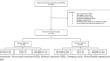
Methods: Data was accessed from the National Cancer Database. Inclusion criteria was comprised of a diagnosis of non-metastatic intracranial ependymoma, World Health Organization (WHO) grade 2 or 3, surgical resection, adjuvant radiotherapy between 4500-6300 cGy, and non-missing survivorship data. Crude and adjusted Cox proportional hazard ratios (HRs) were calculated to estimate the associations of patient, tumor, and treatment characteristics with overall survival (OS). Kaplan-Meier (KM) estimations were used to visualize survival curves for dosing for the general cohort and by subgroups (age, resection extent, and grade).
Results: Of the 1154 patients who met inclusion criteria, 405 received ≤ 5400 cGy and 749 received > 5400 cGy. We found no difference in OS crude (0.95, 95% CI 0.72-1.06) or adjusted (0.88, 95% CI 0.46-1.69) HR for those receiving ≤ 5400 cGy. KM curves showed no difference in OS for dosing for the general cohort based on age, surgical extent, and grade. However, there was better OS in those with WHO grade 2 tumors compared to grade 3 regardless of dose received.
Conclusions: There was no difference in OS between patients who received ≤ 5400 cGy compared to > 5400 cGy. We found improved OS in those with grade 2 tumors compared to grade 3, however there was no difference in OS based on dose received by tumor grade, age, or resection extent. Limitations in data available prevent exploring other outcomes or toxicity.
期刊介绍:
The Journal of Neuro-Oncology is a multi-disciplinary journal encompassing basic, applied, and clinical investigations in all research areas as they relate to cancer and the central nervous system. It provides a single forum for communication among neurologists, neurosurgeons, radiotherapists, medical oncologists, neuropathologists, neurodiagnosticians, and laboratory-based oncologists conducting relevant research. The Journal of Neuro-Oncology does not seek to isolate the field, but rather to focus the efforts of many disciplines in one publication through a format which pulls together these diverse interests. More than any other field of oncology, cancer of the central nervous system requires multi-disciplinary approaches. To alleviate having to scan dozens of journals of cell biology, pathology, laboratory and clinical endeavours, JNO is a periodical in which current, high-quality, relevant research in all aspects of neuro-oncology may be found.




 京公网安备 11010802042870号
京ICP备2023020795号-1
京公网安备 11010802042870号
京ICP备2023020795号-1

 分享
分享
 求助内容:
求助内容: 应助结果提醒方式:
 扫码关注我们
