Melissa M Lane, Nikolaj Travica, Elizabeth Gamage, Skye Marshall, Gina L Trakman, Claire Young, Scott B Teasdale, Thusharika Dissanayaka, Samantha L Dawson, Rebecca Orr, Felice N Jacka, Adrienne O'Neil, Mark Lawrence, Phillip Baker, Casey M Rebholz, Shutong Du, Wolfgang Marx
{"title":"Sugar-Sweetened Beverages and Adverse Human Health Outcomes: An Umbrella Review of Meta-Analyses of Observational Studies.","authors":"Melissa M Lane, Nikolaj Travica, Elizabeth Gamage, Skye Marshall, Gina L Trakman, Claire Young, Scott B Teasdale, Thusharika Dissanayaka, Samantha L Dawson, Rebecca Orr, Felice N Jacka, Adrienne O'Neil, Mark Lawrence, Phillip Baker, Casey M Rebholz, Shutong Du, Wolfgang Marx","doi":"10.1146/annurev-nutr-062322-020650","DOIUrl":null,"url":null,"abstract":"<p><p>Our aim was to conduct an umbrella review of evidence from meta-analyses of observational studies investigating the link between sugar-sweetened beverage consumption and human health outcomes. Using predefined evidence classification criteria, we evaluated evidence from 47 meta-analyses encompassing 22,055,269 individuals. Overall, 79% of these analyses indicated direct associations between greater sugar-sweetened beverage consumption and higher risks of adverse health outcomes. Convincing evidence (class I) supported direct associations between sugar-sweetened beverage consumption and risks of depression, cardiovascular disease, nephrolithiasis, type 2 diabetes mellitus, and higher uric acid concentrations. Highly suggestive evidence (class II) supported associations with risks of nonalcoholic fatty liver disease and dental caries. Out of the remaining 40 meta-analyses, 29 were graded as suggestive or weak in the strength of evidence (classes III and IV), and 11 showed no evidence (class V). These findings inform and provide support for population-based and public health strategies aimed at reducing sugary drink consumption for improved health.</p>","PeriodicalId":8009,"journal":{"name":"Annual review of nutrition","volume":"44 1","pages":"383-404"},"PeriodicalIF":13.4000,"publicationDate":"2024-08-01","publicationTypes":"Journal Article","fieldsOfStudy":null,"isOpenAccess":false,"openAccessPdf":"","citationCount":"0","resultStr":null,"platform":"Semanticscholar","paperid":null,"PeriodicalName":"Annual review of nutrition","FirstCategoryId":"3","ListUrlMain":"https://doi.org/10.1146/annurev-nutr-062322-020650","RegionNum":2,"RegionCategory":"医学","ArticlePicture":[],"TitleCN":null,"AbstractTextCN":null,"PMCID":null,"EPubDate":"","PubModel":"","JCR":"Q1","JCRName":"NUTRITION & DIETETICS","Score":null,"Total":0}
引用次数: 0
Abstract
Our aim was to conduct an umbrella review of evidence from meta-analyses of observational studies investigating the link between sugar-sweetened beverage consumption and human health outcomes. Using predefined evidence classification criteria, we evaluated evidence from 47 meta-analyses encompassing 22,055,269 individuals. Overall, 79% of these analyses indicated direct associations between greater sugar-sweetened beverage consumption and higher risks of adverse health outcomes. Convincing evidence (class I) supported direct associations between sugar-sweetened beverage consumption and risks of depression, cardiovascular disease, nephrolithiasis, type 2 diabetes mellitus, and higher uric acid concentrations. Highly suggestive evidence (class II) supported associations with risks of nonalcoholic fatty liver disease and dental caries. Out of the remaining 40 meta-analyses, 29 were graded as suggestive or weak in the strength of evidence (classes III and IV), and 11 showed no evidence (class V). These findings inform and provide support for population-based and public health strategies aimed at reducing sugary drink consumption for improved health.
期刊介绍:
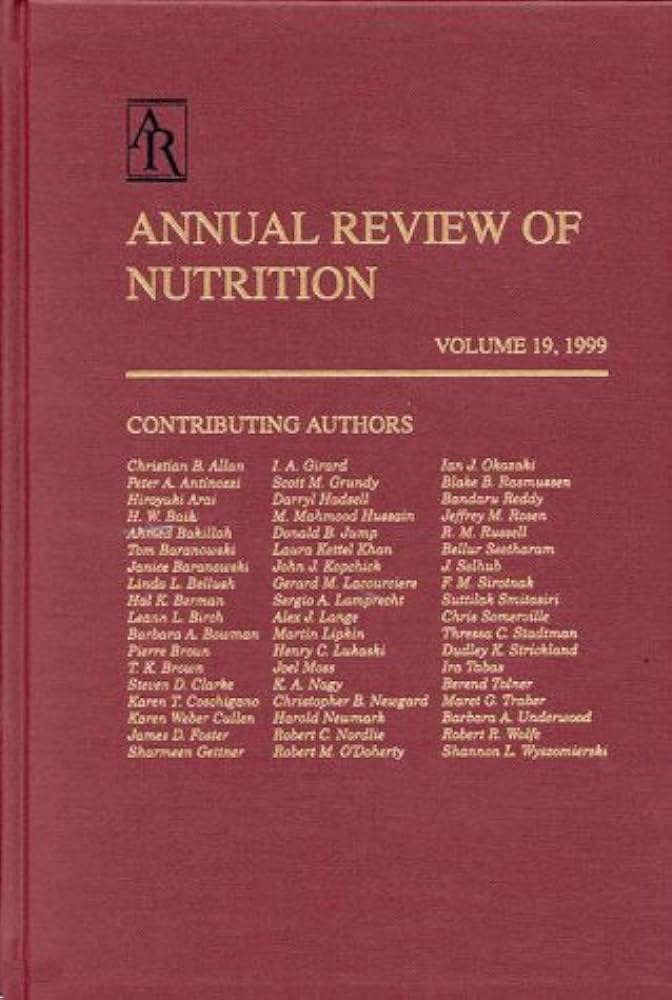
Annual Review of Nutrition
Publication History:In publication since 1981
Scope:Covers significant developments in the field of nutrition
Topics Covered Include:
Energy metabolism;
Carbohydrates;
Lipids;
Proteins and amino acids;
Vitamins;
Minerals;
Nutrient transport and function;
Metabolic regulation;
Nutritional genomics;
Molecular and cell biology;
Clinical nutrition;
Comparative nutrition;
Nutritional anthropology;
Nutritional toxicology;
Nutritional microbiology;
Epidemiology;
Public health nutrition



 京公网安备 11010802042870号
京ICP备2023020795号-1
京公网安备 11010802042870号
京ICP备2023020795号-1

 分享
分享
 求助内容:
求助内容: 应助结果提醒方式:
 扫码关注我们
