{"title":"Pulsed corneal crosslinking in the treatment of Keratoconus: a systematic review and meta-analysis.","authors":"Maria Qureshi, Stephanie L Watson, Himal Kandel","doi":"10.1007/s00417-024-06622-7","DOIUrl":null,"url":null,"abstract":"<p><strong>Purpose: </strong>Corneal crosslinking (CXL) procedures are the treatment of choice in halting progressive corneal ectasia and preserving visual acuity due to keratoconus. Pulsed crosslinking (P-CXL) was developed using intermittent pulsing ultraviolet (UV) light to mitigate the depletion of oxygen levels that occurs with continuous UV exposure in standard crosslinking protocols (C-CXL). This study aimed to explore the use of P-CXL in the treatment of keratoconus and determine whether the availability of oxygen in P-CXL carries superior efficacy outcomes as an alternative to C-CXL modalities.</p><p><strong>Methods: </strong>This review was undertaken in accordance with PRISMA guidelines. A search of several databases conducted with two separate reviewers resulted in 29 papers meeting inclusion criteria for the review, 14 selected for meta-analysis. Primary outcomes assessed by the included papers included maximum keratometry (Kmax), corrected and uncorrected distance visual acuity (CDVA, UDVA), and secondary outcomes included central corneal thickness (CCT), endothelial cell count and demarcation line. Statistical analyses were carried out on Review Manager 5.4 and the meta-analysis employed a random-effects model, which estimated the weighted effect size of raw means using inverse variance weights.</p><p><strong>Results: </strong>At 12 months P-CXL showed statistically significant reductions in Kmax (-0.75 D; p < 0.001) and improvement in CDVA (-0.10 logMAR; p < 0.001) compared to baseline. The meta-analysis of comparative studies determined that mean differences in Kmax, CDVA, UDVA, Kmean and CCT after 12 months were not statistically significant between pulsed and continuous crosslinking groups.</p><p><strong>Conclusions: </strong>Overall, P-CXL is effective in improving visual acuity and keratometry outcomes in keratoconus. The meta-analysis did not show a statistically significant difference in Kmax and CDVA between P-CXL and C-CXL, indicating a non-inferiority of P-CXL. However, findings of the meta-analysis are limited by the fact that different energy levels and exposure times were used for P-CXL in comparison to C-CXL in some studies, making it unsuitable to determine whether the efficacy of CXL is improved by the use of pulsed light.</p><p><strong>Key messages: </strong>What is Known • Pulsed crosslinking (P-CXL) uses intermittent UV light to prevent oxygen depletion when using higher energy protocols, unlike continuous UV exposure in standard continuous crosslinking (C-CXL). • This should theoretically enhance the efficacy of the treatment by maintaining higher oxygen levels that are crucial to the cross-linking process. • There are no systematic reviews or meta-analyses directly comparing the efficacy or safety of P-CXL to C-CXL. What is New • Meta-analysis revealed differences in keratometry between P-CXL and C-CXL groups with equivalent fluence (7.2 J/cm<sup>2</sup>) at 12 months were not statistically significant (Kmax -0.04 dioptres; p = 0.84). • Meta-analysis revealed differences in visual acuity between P-CXL and C-CXL groups with equivalent fluence (7.2 J/cm<sup>2</sup>) at 12 months were not statistically significant (CDVA -0.01 logMAR letters; p = 0.57). • The use of intermittent pulsing in higher energy CXL protocols renders statistically similar outcomes as continuous light exposure at equivalent fluence (7.2 J/cm<sup>2</sup>).</p>","PeriodicalId":12795,"journal":{"name":"Graefe’s Archive for Clinical and Experimental Ophthalmology","volume":" ","pages":"589-601"},"PeriodicalIF":2.4000,"publicationDate":"2025-03-01","publicationTypes":"Journal Article","fieldsOfStudy":null,"isOpenAccess":false,"openAccessPdf":"https://www.ncbi.nlm.nih.gov/pmc/articles/PMC11953132/pdf/","citationCount":"0","resultStr":null,"platform":"Semanticscholar","paperid":null,"PeriodicalName":"Graefe’s Archive for Clinical and Experimental Ophthalmology","FirstCategoryId":"3","ListUrlMain":"https://doi.org/10.1007/s00417-024-06622-7","RegionNum":3,"RegionCategory":"医学","ArticlePicture":[],"TitleCN":null,"AbstractTextCN":null,"PMCID":null,"EPubDate":"2024/8/31 0:00:00","PubModel":"Epub","JCR":"Q2","JCRName":"OPHTHALMOLOGY","Score":null,"Total":0}
引用次数: 0
Abstract
Purpose: Corneal crosslinking (CXL) procedures are the treatment of choice in halting progressive corneal ectasia and preserving visual acuity due to keratoconus. Pulsed crosslinking (P-CXL) was developed using intermittent pulsing ultraviolet (UV) light to mitigate the depletion of oxygen levels that occurs with continuous UV exposure in standard crosslinking protocols (C-CXL). This study aimed to explore the use of P-CXL in the treatment of keratoconus and determine whether the availability of oxygen in P-CXL carries superior efficacy outcomes as an alternative to C-CXL modalities.
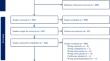
Methods: This review was undertaken in accordance with PRISMA guidelines. A search of several databases conducted with two separate reviewers resulted in 29 papers meeting inclusion criteria for the review, 14 selected for meta-analysis. Primary outcomes assessed by the included papers included maximum keratometry (Kmax), corrected and uncorrected distance visual acuity (CDVA, UDVA), and secondary outcomes included central corneal thickness (CCT), endothelial cell count and demarcation line. Statistical analyses were carried out on Review Manager 5.4 and the meta-analysis employed a random-effects model, which estimated the weighted effect size of raw means using inverse variance weights.
Results: At 12 months P-CXL showed statistically significant reductions in Kmax (-0.75 D; p < 0.001) and improvement in CDVA (-0.10 logMAR; p < 0.001) compared to baseline. The meta-analysis of comparative studies determined that mean differences in Kmax, CDVA, UDVA, Kmean and CCT after 12 months were not statistically significant between pulsed and continuous crosslinking groups.
Conclusions: Overall, P-CXL is effective in improving visual acuity and keratometry outcomes in keratoconus. The meta-analysis did not show a statistically significant difference in Kmax and CDVA between P-CXL and C-CXL, indicating a non-inferiority of P-CXL. However, findings of the meta-analysis are limited by the fact that different energy levels and exposure times were used for P-CXL in comparison to C-CXL in some studies, making it unsuitable to determine whether the efficacy of CXL is improved by the use of pulsed light.
Key messages: What is Known • Pulsed crosslinking (P-CXL) uses intermittent UV light to prevent oxygen depletion when using higher energy protocols, unlike continuous UV exposure in standard continuous crosslinking (C-CXL). • This should theoretically enhance the efficacy of the treatment by maintaining higher oxygen levels that are crucial to the cross-linking process. • There are no systematic reviews or meta-analyses directly comparing the efficacy or safety of P-CXL to C-CXL. What is New • Meta-analysis revealed differences in keratometry between P-CXL and C-CXL groups with equivalent fluence (7.2 J/cm2) at 12 months were not statistically significant (Kmax -0.04 dioptres; p = 0.84). • Meta-analysis revealed differences in visual acuity between P-CXL and C-CXL groups with equivalent fluence (7.2 J/cm2) at 12 months were not statistically significant (CDVA -0.01 logMAR letters; p = 0.57). • The use of intermittent pulsing in higher energy CXL protocols renders statistically similar outcomes as continuous light exposure at equivalent fluence (7.2 J/cm2).
期刊介绍:
Graefe''s Archive for Clinical and Experimental Ophthalmology is a distinguished international journal that presents original clinical reports and clini-cally relevant experimental studies. Founded in 1854 by Albrecht von Graefe to serve as a source of useful clinical information and a stimulus for discussion, the journal has published articles by leading ophthalmologists and vision research scientists for more than a century. With peer review by an international Editorial Board and prompt English-language publication, Graefe''s Archive provides rapid dissemination of clinical and clinically related experimental information.



 京公网安备 11010802042870号
京ICP备2023020795号-1
京公网安备 11010802042870号
京ICP备2023020795号-1

 分享
分享
 求助内容:
求助内容: 应助结果提醒方式:
 扫码关注我们
