{"title":"A Case of Spinal Cavernous Hemangioma with Rapidly Worsening Neurological Symptoms after COVID-19 Infection.","authors":"Nobuyuki Arai, Hiromasa Abe, Takashi Hiraoka, Kozo Hanayama","doi":"10.2490/prm.20240027","DOIUrl":null,"url":null,"abstract":"<p><strong>Background: </strong>: COVID-19 can cause respiratory symptoms, as well as various complications and sequelae. This report describes a patient with worsening neurological symptoms caused by a spinal cavernous hemangioma after infection with COVID-19. Cavernous hemangioma usually occurs in the upper part of the brain (70%-90%) and rarely occurs in the spinal cord (5%-7%). Approximately 65% of cases of intramedullary spinal cavernous hemangioma present with neurological symptoms, and more than half of these cases show a slow worsening of symptoms. This is a rare case of intramedullary spinal cavernous hemangioma with cysto-rectal involvement in which neurological symptoms rapidly worsened following COVID-19 infection.</p><p><strong>Case: </strong>: A woman in her 30s was admitted to the hospital because of the sudden onset of muscle weakness in both lower limbs and cysto-rectal disturbances after COVID-19 infection. She was diagnosed with a hemorrhage from a spinal cord tumor and underwent emergency resection. The pathological diagnosis was a spinal cavernous hemangioma. At first, she had a spinal cord injury (third thoracic vertebrae; American Spinal Injury Association Impairment Scale, C; Frankel classification, B; with cysto-rectal impairment), but 2 months later, she started walking with knee-ankle-foot orthoses and parallel bars. After 3 months, she could move independently around the ward using a wheelchair. Upon discharge, the patient could walk with ankle-foot orthoses and Lofstrand crutches.</p><p><strong>Discussion: </strong>: COVID-19 is associated with various extrapulmonary manifestations and may increase the risk of hemorrhage in cases of intramedullary spinal cavernous hemangioma.</p>","PeriodicalId":74584,"journal":{"name":"Progress in rehabilitation medicine","volume":"9 ","pages":"20240027"},"PeriodicalIF":1.5000,"publicationDate":"2024-08-29","publicationTypes":"Journal Article","fieldsOfStudy":null,"isOpenAccess":false,"openAccessPdf":"https://www.ncbi.nlm.nih.gov/pmc/articles/PMC11350290/pdf/","citationCount":"0","resultStr":null,"platform":"Semanticscholar","paperid":null,"PeriodicalName":"Progress in rehabilitation medicine","FirstCategoryId":"1085","ListUrlMain":"https://doi.org/10.2490/prm.20240027","RegionNum":0,"RegionCategory":null,"ArticlePicture":[],"TitleCN":null,"AbstractTextCN":null,"PMCID":null,"EPubDate":"2024/1/1 0:00:00","PubModel":"eCollection","JCR":"","JCRName":"","Score":null,"Total":0}
引用次数: 0
Abstract
Background: : COVID-19 can cause respiratory symptoms, as well as various complications and sequelae. This report describes a patient with worsening neurological symptoms caused by a spinal cavernous hemangioma after infection with COVID-19. Cavernous hemangioma usually occurs in the upper part of the brain (70%-90%) and rarely occurs in the spinal cord (5%-7%). Approximately 65% of cases of intramedullary spinal cavernous hemangioma present with neurological symptoms, and more than half of these cases show a slow worsening of symptoms. This is a rare case of intramedullary spinal cavernous hemangioma with cysto-rectal involvement in which neurological symptoms rapidly worsened following COVID-19 infection.
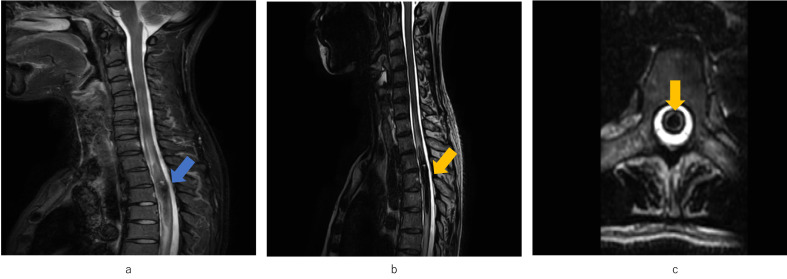
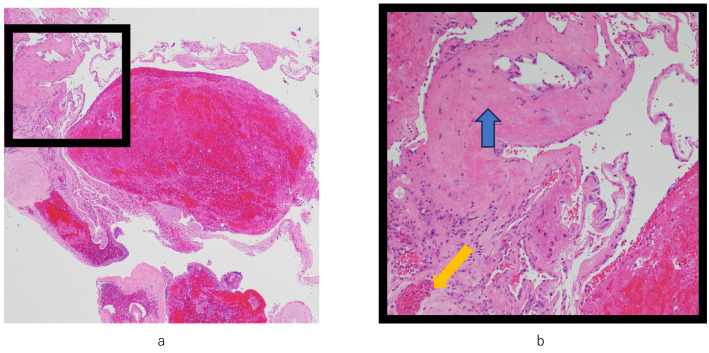
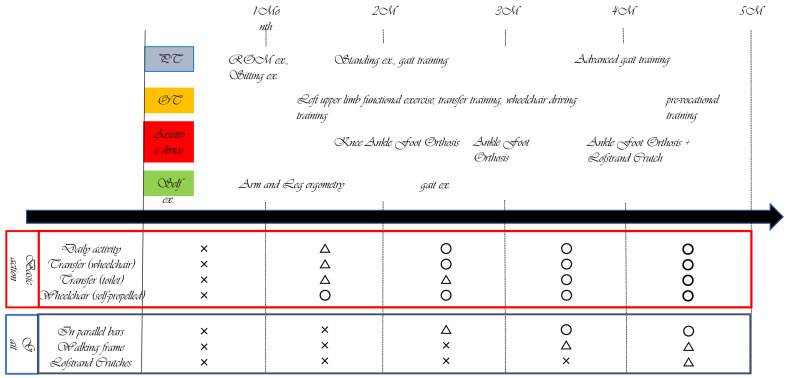
Case: : A woman in her 30s was admitted to the hospital because of the sudden onset of muscle weakness in both lower limbs and cysto-rectal disturbances after COVID-19 infection. She was diagnosed with a hemorrhage from a spinal cord tumor and underwent emergency resection. The pathological diagnosis was a spinal cavernous hemangioma. At first, she had a spinal cord injury (third thoracic vertebrae; American Spinal Injury Association Impairment Scale, C; Frankel classification, B; with cysto-rectal impairment), but 2 months later, she started walking with knee-ankle-foot orthoses and parallel bars. After 3 months, she could move independently around the ward using a wheelchair. Upon discharge, the patient could walk with ankle-foot orthoses and Lofstrand crutches.
Discussion: : COVID-19 is associated with various extrapulmonary manifestations and may increase the risk of hemorrhage in cases of intramedullary spinal cavernous hemangioma.



 京公网安备 11010802042870号
京ICP备2023020795号-1
京公网安备 11010802042870号
京ICP备2023020795号-1

 分享
分享

 求助内容:
求助内容: 应助结果提醒方式:
 扫码关注我们
