Kyle Keepers, Kelsey Peterson, Andrew Raduski, Kathryn M. Turner, David Van Tassel, Kevin Smith, Alex Harkess, James D. Bever, Yaniv Brandvain
{"title":"Disease resistance gene count increases with rainfall in Silphium integrifolium","authors":"Kyle Keepers, Kelsey Peterson, Andrew Raduski, Kathryn M. Turner, David Van Tassel, Kevin Smith, Alex Harkess, James D. Bever, Yaniv Brandvain","doi":"10.1002/ece3.11143","DOIUrl":null,"url":null,"abstract":"<p>Intracellular plant defense against pathogens is mediated by a class of disease resistance genes known as NB-LRRs or NLRs (R genes). Many of the diseases these genes protect against are more prevalent in regions of higher rainfall, which provide better growth conditions for the pathogens. As such, we expect a higher selective pressure for the maintenance and proliferation of R genes in plants adapted to wetter conditions. In this study, we enriched libraries for R genes using RenSeq from baits primarily developed from the common sunflower (<i>Helianthus annuus</i>) reference genome. We sequenced the R gene libraries of <i>Silphium integrifolium</i> Michx, a perennial relative of sunflower, from 12 prairie remnants across a rainfall gradient in the Central Plains of the United States, with both Illumina short-read (<i>n</i> = 99) and PacBio long-read (<i>n</i> = 10) approaches. We found a positive relationship between the mean effective annual precipitation of a plant's source prairie remnant and the number of R genes in its genome, consistent with intensity of plant pathogen coevolution increasing with precipitation. We show that RenSeq can be applied to the study of ecological hypotheses in non-model relatives of model organisms.</p>","PeriodicalId":11467,"journal":{"name":"Ecology and Evolution","volume":"14 9","pages":""},"PeriodicalIF":2.3000,"publicationDate":"2024-09-03","publicationTypes":"Journal Article","fieldsOfStudy":null,"isOpenAccess":false,"openAccessPdf":"https://www.ncbi.nlm.nih.gov/pmc/articles/PMC11371658/pdf/","citationCount":"0","resultStr":null,"platform":"Semanticscholar","paperid":null,"PeriodicalName":"Ecology and Evolution","FirstCategoryId":"99","ListUrlMain":"https://onlinelibrary.wiley.com/doi/10.1002/ece3.11143","RegionNum":2,"RegionCategory":"生物学","ArticlePicture":[],"TitleCN":null,"AbstractTextCN":null,"PMCID":null,"EPubDate":"","PubModel":"","JCR":"Q2","JCRName":"ECOLOGY","Score":null,"Total":0}
引用次数: 0
Abstract
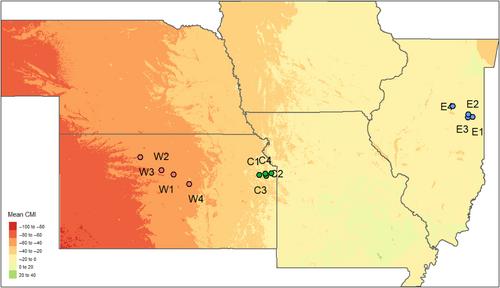
Intracellular plant defense against pathogens is mediated by a class of disease resistance genes known as NB-LRRs or NLRs (R genes). Many of the diseases these genes protect against are more prevalent in regions of higher rainfall, which provide better growth conditions for the pathogens. As such, we expect a higher selective pressure for the maintenance and proliferation of R genes in plants adapted to wetter conditions. In this study, we enriched libraries for R genes using RenSeq from baits primarily developed from the common sunflower (Helianthus annuus) reference genome. We sequenced the R gene libraries of Silphium integrifolium Michx, a perennial relative of sunflower, from 12 prairie remnants across a rainfall gradient in the Central Plains of the United States, with both Illumina short-read (n = 99) and PacBio long-read (n = 10) approaches. We found a positive relationship between the mean effective annual precipitation of a plant's source prairie remnant and the number of R genes in its genome, consistent with intensity of plant pathogen coevolution increasing with precipitation. We show that RenSeq can be applied to the study of ecological hypotheses in non-model relatives of model organisms.
期刊介绍:
Ecology and Evolution is the peer reviewed journal for rapid dissemination of research in all areas of ecology, evolution and conservation science. The journal gives priority to quality research reports, theoretical or empirical, that develop our understanding of organisms and their diversity, interactions between them, and the natural environment.
Ecology and Evolution gives prompt and equal consideration to papers reporting theoretical, experimental, applied and descriptive work in terrestrial and aquatic environments. The journal will consider submissions across taxa in areas including but not limited to micro and macro ecological and evolutionary processes, characteristics of and interactions between individuals, populations, communities and the environment, physiological responses to environmental change, population genetics and phylogenetics, relatedness and kin selection, life histories, systematics and taxonomy, conservation genetics, extinction, speciation, adaption, behaviour, biodiversity, species abundance, macroecology, population and ecosystem dynamics, and conservation policy.



 京公网安备 11010802042870号
京ICP备2023020795号-1
京公网安备 11010802042870号
京ICP备2023020795号-1

 分享
分享
 求助内容:
求助内容: 应助结果提醒方式:
 扫码关注我们
