Shengchao Jia, Wenke Zhao, Xiaohui Liu, Yong Guo, Yanqin Wang
{"title":"Upcycling of polyphenylene oxide into 2,6-dimethyl aniline via depolymerization and amination over a Pt/CeO2 catalyst","authors":"Shengchao Jia, Wenke Zhao, Xiaohui Liu, Yong Guo, Yanqin Wang","doi":"10.1007/s11426-024-2278-9","DOIUrl":null,"url":null,"abstract":"<div><p>Upcycling of plastic waste into N-containing compound is a novel and attractive strategy for its disposal and will opens up a promising direction for the production of value-added amines. Herein, an efficient strategy for the depolymerization-amination of polyphenylene oxide (PPO) into 2,6-dimethyl aniline is developed over a simple Pt/CeO<sub>2</sub> catalyst. The C–O linkages of PPO can be selectively broken, producing 2,6-dimethyl phenol and then hydrogenated and aminated to 2,6-dimethyl cyclohexylamine over the Pt/CeO<sub>2</sub> catalyst. Finally, 2,6-dimethyl aniline was produced with high selectivity through the dehydrogenation of 2,6-dimethyl cyclohexylamine in the same catalyst. Toluene can be used as the hydrogen-acceptor in the dehydrogenation step and enhance the selectivity of target product. Single N-containing compound, 2,6-dimethyl aniline, is obtained and separated after HCl treatment. Meanwhile, the Pt/CeO<sub>2</sub> catalyst exhibit remarkable stability and can sustainably catalyze the synthesis of 2,6-dimethyl aniline in several cycles.</p><div><figure><div><div><picture><source><img></source></picture></div></div></figure></div></div>","PeriodicalId":772,"journal":{"name":"Science China Chemistry","volume":"68 2","pages":"520 - 525"},"PeriodicalIF":9.7000,"publicationDate":"2024-09-05","publicationTypes":"Journal Article","fieldsOfStudy":null,"isOpenAccess":false,"openAccessPdf":"https://link.springer.com/content/pdf/10.1007/s11426-024-2278-9.pdf","citationCount":"0","resultStr":null,"platform":"Semanticscholar","paperid":null,"PeriodicalName":"Science China Chemistry","FirstCategoryId":"1","ListUrlMain":"https://link.springer.com/article/10.1007/s11426-024-2278-9","RegionNum":1,"RegionCategory":"化学","ArticlePicture":[],"TitleCN":null,"AbstractTextCN":null,"PMCID":null,"EPubDate":"","PubModel":"","JCR":"Q1","JCRName":"CHEMISTRY, MULTIDISCIPLINARY","Score":null,"Total":0}
引用次数: 0
Abstract
Upcycling of plastic waste into N-containing compound is a novel and attractive strategy for its disposal and will opens up a promising direction for the production of value-added amines. Herein, an efficient strategy for the depolymerization-amination of polyphenylene oxide (PPO) into 2,6-dimethyl aniline is developed over a simple Pt/CeO2 catalyst. The C–O linkages of PPO can be selectively broken, producing 2,6-dimethyl phenol and then hydrogenated and aminated to 2,6-dimethyl cyclohexylamine over the Pt/CeO2 catalyst. Finally, 2,6-dimethyl aniline was produced with high selectivity through the dehydrogenation of 2,6-dimethyl cyclohexylamine in the same catalyst. Toluene can be used as the hydrogen-acceptor in the dehydrogenation step and enhance the selectivity of target product. Single N-containing compound, 2,6-dimethyl aniline, is obtained and separated after HCl treatment. Meanwhile, the Pt/CeO2 catalyst exhibit remarkable stability and can sustainably catalyze the synthesis of 2,6-dimethyl aniline in several cycles.
期刊介绍:
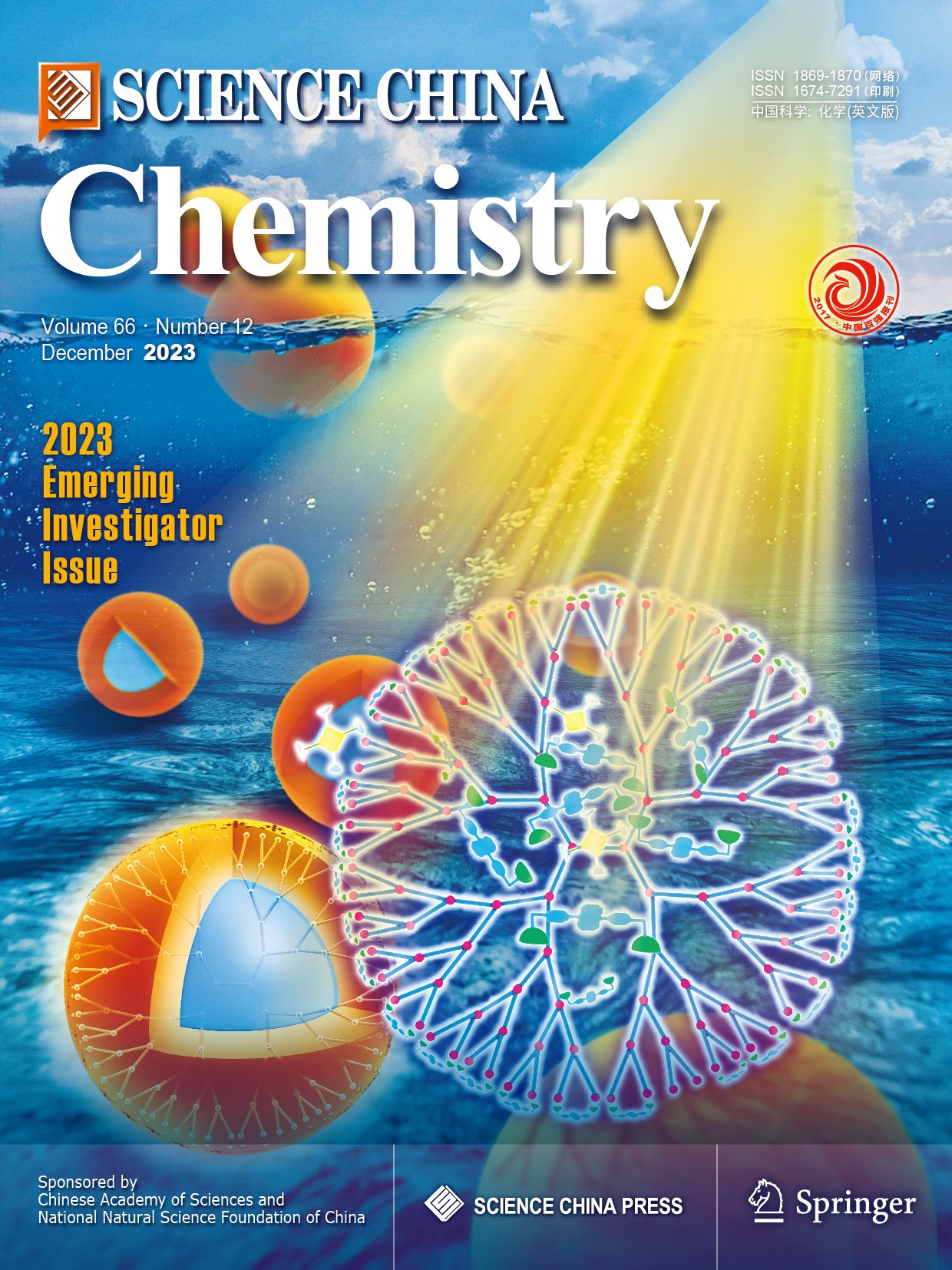
Science China Chemistry, co-sponsored by the Chinese Academy of Sciences and the National Natural Science Foundation of China and published by Science China Press, publishes high-quality original research in both basic and applied chemistry. Indexed by Science Citation Index, it is a premier academic journal in the field.
Categories of articles include:
Highlights. Brief summaries and scholarly comments on recent research achievements in any field of chemistry.
Perspectives. Concise reports on thelatest chemistry trends of interest to scientists worldwide, including discussions of research breakthroughs and interpretations of important science and funding policies.
Reviews. In-depth summaries of representative results and achievements of the past 5–10 years in selected topics based on or closely related to the research expertise of the authors, providing a thorough assessment of the significance, current status, and future research directions of the field.



 京公网安备 11010802042870号
京ICP备2023020795号-1
京公网安备 11010802042870号
京ICP备2023020795号-1

 分享
分享
 求助内容:
求助内容: 应助结果提醒方式:
 扫码关注我们
