{"title":"Fabrication of PPy/PANI/MnO2-based electrode and its electrochemical evaluation for supercapacitor applications","authors":"Priyanka Elumalai, Julie Charles, L. John Kennedy","doi":"10.1007/s11581-024-05794-w","DOIUrl":null,"url":null,"abstract":"<div><p>A new PPy/PANI/MnO<sub>2 </sub>polymer nanocomposite was synthesized through chemical oxidative polymerization process and fabricated as an efficient ternary electrode material for supercapacitors. All the synthesized nanomaterials were characterized using X-ray powder diffraction (XRD), Fourier transform infrared spectroscopy (FTIR), Field emission scanning electron microscopy with energy dispersive X-ray spectroscopy (FESEM/EDAX), High-resolution transmission electron microscopy (HR-TEM), Brunner-Emmett-Teller theory (BET), and X-ray photoelectron spectroscopy (XPS) analysis. The electrochemical behavior of ternary PPy/PANI/MnO<sub>2</sub> electrode was initially tested in neutral (1 M Na<sub>2</sub>SO<sub>4</sub>), alkaline (1 M KOH) and acidic (1 M H<sub>2</sub>SO<sub>4</sub>) electrolytes through cyclic voltammetry (CV) at a scan rate of 5 mV/s to fix the electrolyte. PPy/PANI/MnO<sub>2</sub>electrode exhibited the maximum specific capacitance of 303.92 Fg<sup>−1</sup> in 1 M Na<sub>2</sub>SO<sub>4</sub> electrolyte than in alkaline (82.93 Fg<sup>−1</sup>) and acidic (136.64 Fg<sup>−1</sup>) electrolytes. From GCD studies, PPy/PANI/MnO<sub>2</sub> exhibited a maximum specific capacitance of 309.61 Fg<sup>−1</sup> at a current density of 5 A/g with 84% capacitive retention after 2500 charge/discharge cycles. Further, symmetric supercapacitor fabricated using PPy/PANI/MnO<sub>2</sub> electrodes exhibited a specific capacitance of 181.5 Fg<sup>−1</sup>, energy density of 36.31 Wh/kg and power density of 2000 W/kg at 5 A/g. The low ESR (1.12 Ω) value exhibited by the fabricated supercapacitor and its capacitive retentivity of 79% at the end of 3000 charge/discharge cycles demonstrate its suitability for energy storage applications.</p></div>","PeriodicalId":599,"journal":{"name":"Ionics","volume":"30 11","pages":"7397 - 7420"},"PeriodicalIF":2.6000,"publicationDate":"2024-09-05","publicationTypes":"Journal Article","fieldsOfStudy":null,"isOpenAccess":false,"openAccessPdf":"","citationCount":"0","resultStr":null,"platform":"Semanticscholar","paperid":null,"PeriodicalName":"Ionics","FirstCategoryId":"92","ListUrlMain":"https://link.springer.com/article/10.1007/s11581-024-05794-w","RegionNum":4,"RegionCategory":"化学","ArticlePicture":[],"TitleCN":null,"AbstractTextCN":null,"PMCID":null,"EPubDate":"","PubModel":"","JCR":"Q3","JCRName":"CHEMISTRY, PHYSICAL","Score":null,"Total":0}
引用次数: 0
Abstract
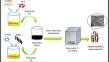
A new PPy/PANI/MnO2 polymer nanocomposite was synthesized through chemical oxidative polymerization process and fabricated as an efficient ternary electrode material for supercapacitors. All the synthesized nanomaterials were characterized using X-ray powder diffraction (XRD), Fourier transform infrared spectroscopy (FTIR), Field emission scanning electron microscopy with energy dispersive X-ray spectroscopy (FESEM/EDAX), High-resolution transmission electron microscopy (HR-TEM), Brunner-Emmett-Teller theory (BET), and X-ray photoelectron spectroscopy (XPS) analysis. The electrochemical behavior of ternary PPy/PANI/MnO2 electrode was initially tested in neutral (1 M Na2SO4), alkaline (1 M KOH) and acidic (1 M H2SO4) electrolytes through cyclic voltammetry (CV) at a scan rate of 5 mV/s to fix the electrolyte. PPy/PANI/MnO2electrode exhibited the maximum specific capacitance of 303.92 Fg−1 in 1 M Na2SO4 electrolyte than in alkaline (82.93 Fg−1) and acidic (136.64 Fg−1) electrolytes. From GCD studies, PPy/PANI/MnO2 exhibited a maximum specific capacitance of 309.61 Fg−1 at a current density of 5 A/g with 84% capacitive retention after 2500 charge/discharge cycles. Further, symmetric supercapacitor fabricated using PPy/PANI/MnO2 electrodes exhibited a specific capacitance of 181.5 Fg−1, energy density of 36.31 Wh/kg and power density of 2000 W/kg at 5 A/g. The low ESR (1.12 Ω) value exhibited by the fabricated supercapacitor and its capacitive retentivity of 79% at the end of 3000 charge/discharge cycles demonstrate its suitability for energy storage applications.
期刊介绍:
Ionics is publishing original results in the fields of science and technology of ionic motion. This includes theoretical, experimental and practical work on electrolytes, electrode, ionic/electronic interfaces, ionic transport aspects of corrosion, galvanic cells, e.g. for thermodynamic and kinetic studies, batteries, fuel cells, sensors and electrochromics. Fast solid ionic conductors are presently providing new opportunities in view of several advantages, in addition to conventional liquid electrolytes.



 京公网安备 11010802042870号
京ICP备2023020795号-1
京公网安备 11010802042870号
京ICP备2023020795号-1

 分享
分享
 求助内容:
求助内容: 应助结果提醒方式:
 扫码关注我们
