Giulia Severi, Enrico Ambrosini, Luca Caramanna, Luigi Monti, Pamela Magini, Giovanni Innella
{"title":"Familial DMRT1-related non-obstructive azoospermia: a case report","authors":"Giulia Severi, Enrico Ambrosini, Luca Caramanna, Luigi Monti, Pamela Magini, Giovanni Innella","doi":"10.1007/s10815-024-03250-2","DOIUrl":null,"url":null,"abstract":"<h3 data-test=\"abstract-sub-heading\">Purpose</h3><p>To report an exceptional case of male-to-male transmission of genetically based non-obstructive azoospermia (NOA) and varicocele through a naturally obtained pregnancy.</p><h3 data-test=\"abstract-sub-heading\">Subjects and methods</h3><p>A father and his son were both diagnosed with NOA after centrifugation and varicocele. The father has no other clinical concerns apart from infertility, detected after many attempts of having another child, but given his urological situation (bilateral varicocele and NOA) assisted reproductive techniques were discouraged. After genetic counseling, several genetic-chromosomal analyses were carried out in the son (karyotype, chromosome Y microdeletions, <i>CFTR</i> screening, NGS infertility panels, and finally array-CGH).</p><h3 data-test=\"abstract-sub-heading\">Results</h3><p>After a series of inconclusive tests, array-CGH detected a deletion of 224–283 kb (del9p24.3) involving part of the <i>KANK1</i> and <i>DMRT1</i> genes, inherited from the father. Haploinsufficiency of <i>DMRT1</i> was therefore considered the determining factor in the development of azoospermia in the family by a loss of function mechanism.</p><h3 data-test=\"abstract-sub-heading\">Conclusion</h3><p>The confirmation of father-to-son transmission of a deletion including <i>DMRT1</i> represents an important point for clinicians dealing with male infertility, even when complete azoospermia is repetitively detected, and must be of hope for a relevant portion of men. Inclusion criteria for the access to assisted reproductive techniques may also be reconsidered and worthy of a greater number of clinical insights. Finally, since <i>DMRT1</i> alterations have been associated with NOA and abnormal testicular development, but not specifically with varicocele, further studies are required to validate this issue, as varicocele may have played a crucial role in this case.</p>","PeriodicalId":15246,"journal":{"name":"Journal of Assisted Reproduction and Genetics","volume":"29 1","pages":""},"PeriodicalIF":2.7000,"publicationDate":"2024-09-11","publicationTypes":"Journal Article","fieldsOfStudy":null,"isOpenAccess":false,"openAccessPdf":"","citationCount":"0","resultStr":null,"platform":"Semanticscholar","paperid":null,"PeriodicalName":"Journal of Assisted Reproduction and Genetics","FirstCategoryId":"3","ListUrlMain":"https://doi.org/10.1007/s10815-024-03250-2","RegionNum":3,"RegionCategory":"医学","ArticlePicture":[],"TitleCN":null,"AbstractTextCN":null,"PMCID":null,"EPubDate":"","PubModel":"","JCR":"Q2","JCRName":"GENETICS & HEREDITY","Score":null,"Total":0}
引用次数: 0
Abstract
Purpose
To report an exceptional case of male-to-male transmission of genetically based non-obstructive azoospermia (NOA) and varicocele through a naturally obtained pregnancy.
Subjects and methods
A father and his son were both diagnosed with NOA after centrifugation and varicocele. The father has no other clinical concerns apart from infertility, detected after many attempts of having another child, but given his urological situation (bilateral varicocele and NOA) assisted reproductive techniques were discouraged. After genetic counseling, several genetic-chromosomal analyses were carried out in the son (karyotype, chromosome Y microdeletions, CFTR screening, NGS infertility panels, and finally array-CGH).
Results
After a series of inconclusive tests, array-CGH detected a deletion of 224–283 kb (del9p24.3) involving part of the KANK1 and DMRT1 genes, inherited from the father. Haploinsufficiency of DMRT1 was therefore considered the determining factor in the development of azoospermia in the family by a loss of function mechanism.
Conclusion
The confirmation of father-to-son transmission of a deletion including DMRT1 represents an important point for clinicians dealing with male infertility, even when complete azoospermia is repetitively detected, and must be of hope for a relevant portion of men. Inclusion criteria for the access to assisted reproductive techniques may also be reconsidered and worthy of a greater number of clinical insights. Finally, since DMRT1 alterations have been associated with NOA and abnormal testicular development, but not specifically with varicocele, further studies are required to validate this issue, as varicocele may have played a crucial role in this case.
期刊介绍:
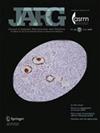
The Journal of Assisted Reproduction and Genetics publishes cellular, molecular, genetic, and epigenetic discoveries advancing our understanding of the biology and underlying mechanisms from gametogenesis to offspring health. Special emphasis is placed on the practice and evolution of assisted reproduction technologies (ARTs) with reference to the diagnosis and management of diseases affecting fertility. Our goal is to educate our readership in the translation of basic and clinical discoveries made from human or relevant animal models to the safe and efficacious practice of human ARTs. The scientific rigor and ethical standards embraced by the JARG editorial team ensures a broad international base of expertise guiding the marriage of contemporary clinical research paradigms with basic science discovery. JARG publishes original papers, minireviews, case reports, and opinion pieces often combined into special topic issues that will educate clinicians and scientists with interests in the mechanisms of human development that bear on the treatment of infertility and emerging innovations in human ARTs. The guiding principles of male and female reproductive health impacting pre- and post-conceptional viability and developmental potential are emphasized within the purview of human reproductive health in current and future generations of our species.
The journal is published in cooperation with the American Society for Reproductive Medicine, an organization of more than 8,000 physicians, researchers, nurses, technicians and other professionals dedicated to advancing knowledge and expertise in reproductive biology.



 京公网安备 11010802042870号
京ICP备2023020795号-1
京公网安备 11010802042870号
京ICP备2023020795号-1

 分享
分享
 求助内容:
求助内容: 应助结果提醒方式:
 扫码关注我们
