Bryan J. Ranger, Allison Lombardi, Susie Kwon, Mary Loeb, Hayoung Cho, Keshi He, Donglai Wei, Jinhee Park
{"title":"Ultrasound for assessing paediatric body composition and nutritional status: Scoping review and future directions","authors":"Bryan J. Ranger, Allison Lombardi, Susie Kwon, Mary Loeb, Hayoung Cho, Keshi He, Donglai Wei, Jinhee Park","doi":"10.1111/apa.17423","DOIUrl":null,"url":null,"abstract":"<div>\n \n \n <section>\n \n <h3> Aim</h3>\n \n <p>This scoping review aims to assess the utility of ultrasound as a prospective tool in measuring body composition and nutritional status in the paediatric population. We provide a comprehensive summary of the existing literature, identify gaps, and propose future research directions.</p>\n </section>\n \n <section>\n \n <h3> Methods</h3>\n \n <p>We conducted a systematic scoping review following the PRISMA Extension for Scoping Reviews guidelines. This involved screening titles and abstracts of relevant studies, followed by a detailed full-text review and extraction of pertinent data.</p>\n </section>\n \n <section>\n \n <h3> Results</h3>\n \n <p>We identified and synthesised 34 articles. The review revealed that while ultrasound has been used to assess body composition and bone properties in children, significant gaps remain in the literature. These include limited studies on ultrasound performance, insufficient attention to relevant sample characteristics, reliance on manual image measurements, and limited sample diversity.</p>\n </section>\n \n <section>\n \n <h3> Conclusion</h3>\n \n <p>Point-of-care ultrasound shows significant promise for assessing paediatric body composition and nutritional status. To validate and enhance its effectiveness, further research is needed. Future studies should include larger and more diverse patient cohorts and conduct longitudinal investigations to evaluate nutritional interventions. Additionally, developing artificial intelligence (AI) for standardising and automating data interpretation will be crucial in improving the accuracy and efficiency of ultrasound assessments.</p>\n </section>\n </div>","PeriodicalId":55562,"journal":{"name":"Acta Paediatrica","volume":"114 1","pages":"14-23"},"PeriodicalIF":2.1000,"publicationDate":"2024-09-18","publicationTypes":"Journal Article","fieldsOfStudy":null,"isOpenAccess":false,"openAccessPdf":"https://onlinelibrary.wiley.com/doi/epdf/10.1111/apa.17423","citationCount":"0","resultStr":null,"platform":"Semanticscholar","paperid":null,"PeriodicalName":"Acta Paediatrica","FirstCategoryId":"3","ListUrlMain":"https://onlinelibrary.wiley.com/doi/10.1111/apa.17423","RegionNum":4,"RegionCategory":"医学","ArticlePicture":[],"TitleCN":null,"AbstractTextCN":null,"PMCID":null,"EPubDate":"","PubModel":"","JCR":"Q1","JCRName":"PEDIATRICS","Score":null,"Total":0}
引用次数: 0
Abstract
Aim
This scoping review aims to assess the utility of ultrasound as a prospective tool in measuring body composition and nutritional status in the paediatric population. We provide a comprehensive summary of the existing literature, identify gaps, and propose future research directions.
Methods
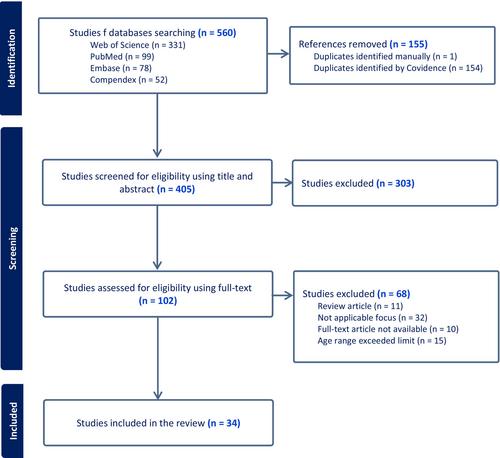
We conducted a systematic scoping review following the PRISMA Extension for Scoping Reviews guidelines. This involved screening titles and abstracts of relevant studies, followed by a detailed full-text review and extraction of pertinent data.
Results
We identified and synthesised 34 articles. The review revealed that while ultrasound has been used to assess body composition and bone properties in children, significant gaps remain in the literature. These include limited studies on ultrasound performance, insufficient attention to relevant sample characteristics, reliance on manual image measurements, and limited sample diversity.
Conclusion
Point-of-care ultrasound shows significant promise for assessing paediatric body composition and nutritional status. To validate and enhance its effectiveness, further research is needed. Future studies should include larger and more diverse patient cohorts and conduct longitudinal investigations to evaluate nutritional interventions. Additionally, developing artificial intelligence (AI) for standardising and automating data interpretation will be crucial in improving the accuracy and efficiency of ultrasound assessments.
期刊介绍:
Acta Paediatrica is a peer-reviewed monthly journal at the forefront of international pediatric research. It covers both clinical and experimental research in all areas of pediatrics including:
neonatal medicine
developmental medicine
adolescent medicine
child health and environment
psychosomatic pediatrics
child health in developing countries