Frankie J. Fair, Amy Furness, Gina Higginbottom, Sam J. Oddie, Hora Soltani
{"title":"Systematic review of Apgar scores & cyanosis in Black, Asian, and ethnic minority infants","authors":"Frankie J. Fair, Amy Furness, Gina Higginbottom, Sam J. Oddie, Hora Soltani","doi":"10.1038/s41390-024-03543-3","DOIUrl":null,"url":null,"abstract":"Apgar score and cyanosis assessment may disadvantage darker-skinned babies. This review explored cyanosis and Apgar score assessments in Black, Asian, or minority ethnic neonates compared to White neonates. Four databases were searched. Studies of any methodology were included. A narrative synthesis was undertaken. Ten studies were included. Three studies involving over 39 million neonates showed Apgar score ≤3 was predictive of neonatal mortality across all ethnicities. Black babies with Apgar score ≤3 had lower mortality rates before 28 days, however, variations in scoring practices were also observed. Three further studies (n = 39,290,014) associated low Apgar scores with poorer mental development up to 22 months, especially in mixed ethnicity and Black infants. One study reported inadequate training in assessing ethnic minority neonates. Cyanosis was the focus of three included studies (n = 455) revealing poor visual assessment of cyanosis across ethnicities. With pulse oximetry occult hypoxemia occurred slightly more frequently in Black neonates. Tongue color indicated oxygen requirement at birth, regardless of ethnicity. Apgar scores correlate well with neonatal mortality in all ethnicities, however scoring variations exist. Cyanosis assessment is challenging, with tongue and lips the best places to observe in the absence of pulse oximetry.","PeriodicalId":19829,"journal":{"name":"Pediatric Research","volume":"97 3","pages":"939-952"},"PeriodicalIF":3.1000,"publicationDate":"2024-09-14","publicationTypes":"Journal Article","fieldsOfStudy":null,"isOpenAccess":false,"openAccessPdf":"https://www.nature.com/articles/s41390-024-03543-3.pdf","citationCount":"0","resultStr":null,"platform":"Semanticscholar","paperid":null,"PeriodicalName":"Pediatric Research","FirstCategoryId":"3","ListUrlMain":"https://www.nature.com/articles/s41390-024-03543-3","RegionNum":3,"RegionCategory":"医学","ArticlePicture":[],"TitleCN":null,"AbstractTextCN":null,"PMCID":null,"EPubDate":"","PubModel":"","JCR":"Q1","JCRName":"PEDIATRICS","Score":null,"Total":0}
引用次数: 0
Abstract
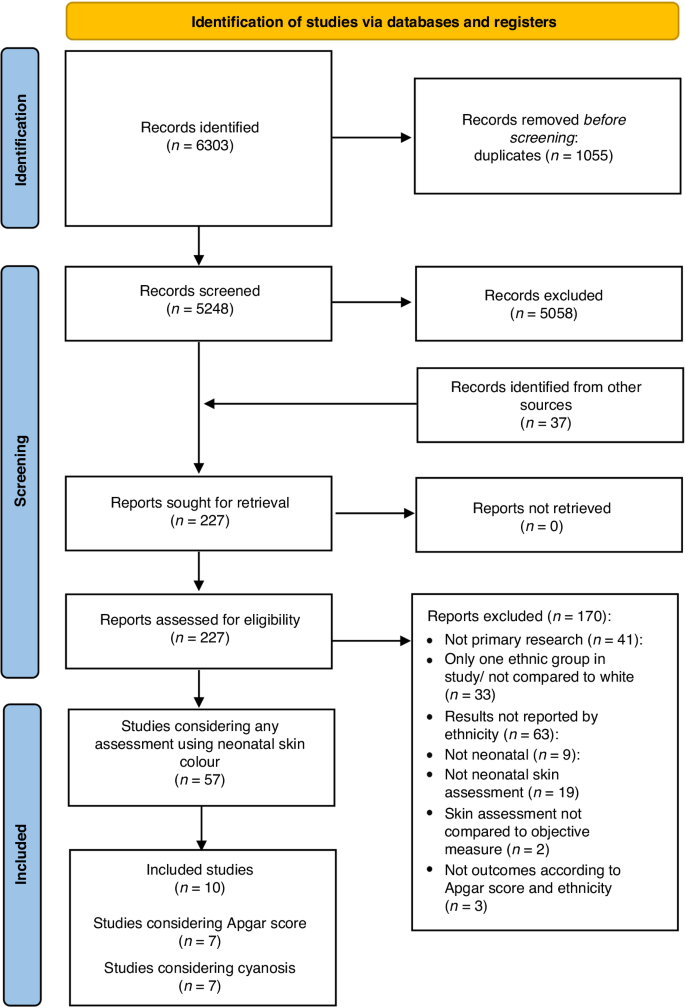
Apgar score and cyanosis assessment may disadvantage darker-skinned babies. This review explored cyanosis and Apgar score assessments in Black, Asian, or minority ethnic neonates compared to White neonates. Four databases were searched. Studies of any methodology were included. A narrative synthesis was undertaken. Ten studies were included. Three studies involving over 39 million neonates showed Apgar score ≤3 was predictive of neonatal mortality across all ethnicities. Black babies with Apgar score ≤3 had lower mortality rates before 28 days, however, variations in scoring practices were also observed. Three further studies (n = 39,290,014) associated low Apgar scores with poorer mental development up to 22 months, especially in mixed ethnicity and Black infants. One study reported inadequate training in assessing ethnic minority neonates. Cyanosis was the focus of three included studies (n = 455) revealing poor visual assessment of cyanosis across ethnicities. With pulse oximetry occult hypoxemia occurred slightly more frequently in Black neonates. Tongue color indicated oxygen requirement at birth, regardless of ethnicity. Apgar scores correlate well with neonatal mortality in all ethnicities, however scoring variations exist. Cyanosis assessment is challenging, with tongue and lips the best places to observe in the absence of pulse oximetry.
期刊介绍:
Pediatric Research publishes original papers, invited reviews, and commentaries on the etiologies of children''s diseases and
disorders of development, extending from molecular biology to epidemiology. Use of model organisms and in vitro techniques
relevant to developmental biology and medicine are acceptable, as are translational human studies





 京公网安备 11010802042870号
京ICP备2023020795号-1
京公网安备 11010802042870号
京ICP备2023020795号-1

 分享
分享
 求助内容:
求助内容: 应助结果提醒方式:
 扫码关注我们
