Mona Abdel-Rahman, Aida A. Hussein, Omar A. Ahmed-Farid, Abdullah A. Sawi, Ahmed Esmat Abdel Moneim
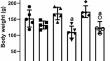
{"title":"Intermittent fasting alerts neurotransmitters and oxidant/antioxidant status in the brain of rats","authors":"Mona Abdel-Rahman, Aida A. Hussein, Omar A. Ahmed-Farid, Abdullah A. Sawi, Ahmed Esmat Abdel Moneim","doi":"10.1007/s11011-024-01415-7","DOIUrl":null,"url":null,"abstract":"<p>Several recent studies have attempted to understand how fasting has benefits for body health, especially the nervous system. To evaluate the impact of intermittent fasting on body weight, brain neurotransmitters, brain oxidative stress, and brain-derived neurotrophic factor (BDNF) in several areas of the brain, this study was conducted in rats. Thirty male Wistar rats were randomly divided into two groups. Group 1 (15 rats) served as the control and group 2 (15 rats) underwent intermittent fasting (IF; 24 h) for 1, 7, or 15 days. The findings demonstrated that intermittent fasting significantly reduced body weight. In this sense, brain monoamines and amino acids, namely dopamine, glutamate, aspartate, and oxidative stress markers (malondialdehyde and nitric oxide), decreased significantly after 1 day of IF. However, norepinephrine, serotonin, gamma-amino butyric acid, and glycine increased significantly. Additionally, glutathione levels were markedly elevated in IF. Surprisingly, the neuromodulatory effect of intermittent fasting fluctuates depending on the IF period. To support this fluctuation, BDNF levels increased after 1 day in the hippocampus and decreased after 15 days of intermittent fasting in all areas of the brain tested. In conclusion, our results show that intermittent fasting has beneficial influences on the brain; however, prolonged intermittent fasting can also induce some unfavorable physiological outcomes that prevent optimal neurological function.</p>","PeriodicalId":18685,"journal":{"name":"Metabolic brain disease","volume":"43 1","pages":""},"PeriodicalIF":3.5000,"publicationDate":"2024-09-18","publicationTypes":"Journal Article","fieldsOfStudy":null,"isOpenAccess":false,"openAccessPdf":"","citationCount":"0","resultStr":null,"platform":"Semanticscholar","paperid":null,"PeriodicalName":"Metabolic brain disease","FirstCategoryId":"3","ListUrlMain":"https://doi.org/10.1007/s11011-024-01415-7","RegionNum":3,"RegionCategory":"医学","ArticlePicture":[],"TitleCN":null,"AbstractTextCN":null,"PMCID":null,"EPubDate":"","PubModel":"","JCR":"Q2","JCRName":"ENDOCRINOLOGY & METABOLISM","Score":null,"Total":0}
引用次数: 0
Abstract
Several recent studies have attempted to understand how fasting has benefits for body health, especially the nervous system. To evaluate the impact of intermittent fasting on body weight, brain neurotransmitters, brain oxidative stress, and brain-derived neurotrophic factor (BDNF) in several areas of the brain, this study was conducted in rats. Thirty male Wistar rats were randomly divided into two groups. Group 1 (15 rats) served as the control and group 2 (15 rats) underwent intermittent fasting (IF; 24 h) for 1, 7, or 15 days. The findings demonstrated that intermittent fasting significantly reduced body weight. In this sense, brain monoamines and amino acids, namely dopamine, glutamate, aspartate, and oxidative stress markers (malondialdehyde and nitric oxide), decreased significantly after 1 day of IF. However, norepinephrine, serotonin, gamma-amino butyric acid, and glycine increased significantly. Additionally, glutathione levels were markedly elevated in IF. Surprisingly, the neuromodulatory effect of intermittent fasting fluctuates depending on the IF period. To support this fluctuation, BDNF levels increased after 1 day in the hippocampus and decreased after 15 days of intermittent fasting in all areas of the brain tested. In conclusion, our results show that intermittent fasting has beneficial influences on the brain; however, prolonged intermittent fasting can also induce some unfavorable physiological outcomes that prevent optimal neurological function.
期刊介绍:
Metabolic Brain Disease serves as a forum for the publication of outstanding basic and clinical papers on all metabolic brain disease, including both human and animal studies. The journal publishes papers on the fundamental pathogenesis of these disorders and on related experimental and clinical techniques and methodologies. Metabolic Brain Disease is directed to physicians, neuroscientists, internists, psychiatrists, neurologists, pathologists, and others involved in the research and treatment of a broad range of metabolic brain disorders.



 京公网安备 11010802042870号
京ICP备2023020795号-1
京公网安备 11010802042870号
京ICP备2023020795号-1

 分享
分享
 求助内容:
求助内容: 应助结果提醒方式:
 扫码关注我们
