Interactions of depression, anxiety, and sleep quality with menopausal symptoms on job satisfaction among middle-aged health workers in England: a STROBE-based analysis.
Nestor Asiamah, Camille Cronin, Joanne E Abbott, Susan Smith
{"title":"Interactions of depression, anxiety, and sleep quality with menopausal symptoms on job satisfaction among middle-aged health workers in England: a STROBE-based analysis.","authors":"Nestor Asiamah, Camille Cronin, Joanne E Abbott, Susan Smith","doi":"10.1186/s12960-024-00947-4","DOIUrl":null,"url":null,"abstract":"<p><strong>Background: </strong>This study examined the association between menopausal symptoms and job satisfaction, and ascertained whether three psychosomatic factors (e.g., anxiety, depression, and sleep quality) interact with menopausal symptoms on job satisfaction.</p><p><strong>Methods: </strong>A cross-sectional design with sensitivity analysis was adopted. The participants of the study were clinical health workers in England. Data from 154 health workers were analyzed with the hierarchical linear regression (HLR) analysis.</p><p><strong>Results: </strong>There was a negative association between menopausal symptoms and job satisfaction (β = -0.38; t = -4.81, p < 0.001), but this relationship became non-significant after adjusting for work stress, self-reported health, job tenure, and resilience at work. An interaction between menopausal symptoms and the psychosomatic factors was found. The strength of the negative association between menopausal symptoms and job satisfaction was weakened by sleep quality (β = 0.05; t = 0.48; p > 0.05) but was strengthened by anxiety (β = -0.22; t = -2.28; p < 0.05) and depression (β = -0.24; t = -2.16; p < 0.05).</p><p><strong>Conclusion: </strong>Menopausal symptoms can be directly associated with lower job satisfaction and indirectly associated with lower job satisfaction through its interaction with depression and anxiety. Menopausal symptoms can weaken the positive association between sleep quality and job satisfaction.</p>","PeriodicalId":39823,"journal":{"name":"Human Resources for Health","volume":"22 1","pages":"64"},"PeriodicalIF":4.3000,"publicationDate":"2024-09-12","publicationTypes":"Journal Article","fieldsOfStudy":null,"isOpenAccess":false,"openAccessPdf":"https://www.ncbi.nlm.nih.gov/pmc/articles/PMC11396863/pdf/","citationCount":"0","resultStr":null,"platform":"Semanticscholar","paperid":null,"PeriodicalName":"Human Resources for Health","FirstCategoryId":"3","ListUrlMain":"https://doi.org/10.1186/s12960-024-00947-4","RegionNum":2,"RegionCategory":"医学","ArticlePicture":[],"TitleCN":null,"AbstractTextCN":null,"PMCID":null,"EPubDate":"","PubModel":"","JCR":"Q1","JCRName":"HEALTH POLICY & SERVICES","Score":null,"Total":0}
引用次数: 0
Abstract
Background: This study examined the association between menopausal symptoms and job satisfaction, and ascertained whether three psychosomatic factors (e.g., anxiety, depression, and sleep quality) interact with menopausal symptoms on job satisfaction.
Methods: A cross-sectional design with sensitivity analysis was adopted. The participants of the study were clinical health workers in England. Data from 154 health workers were analyzed with the hierarchical linear regression (HLR) analysis.
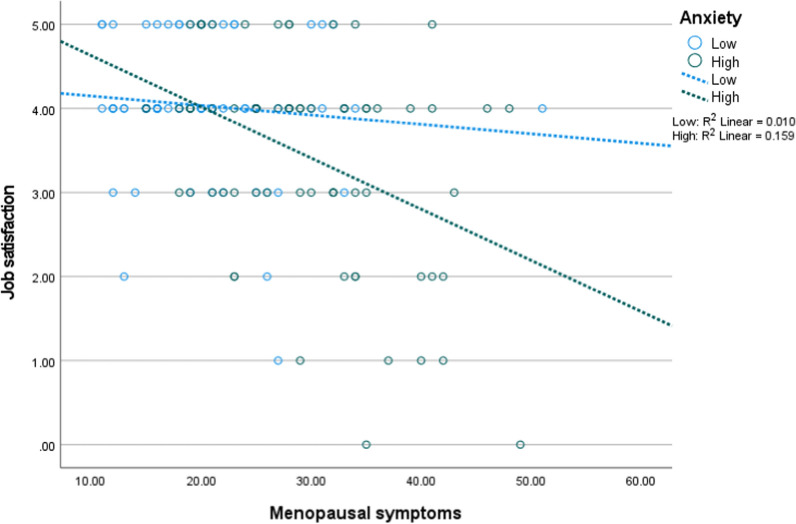
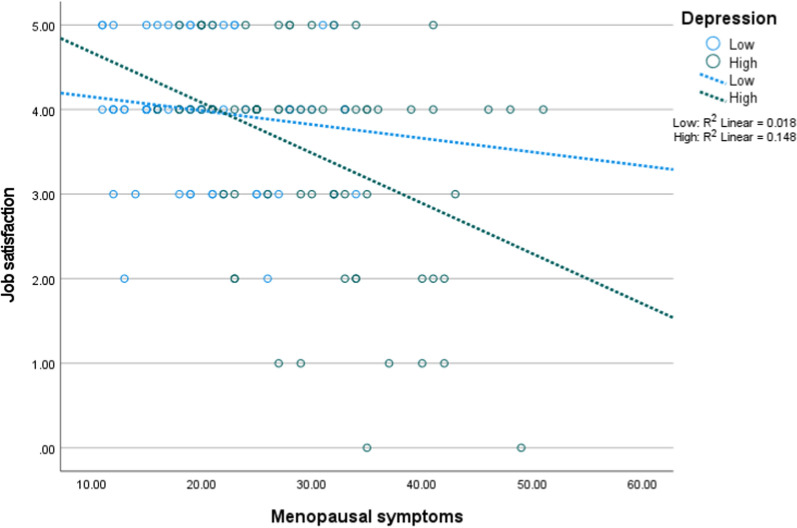
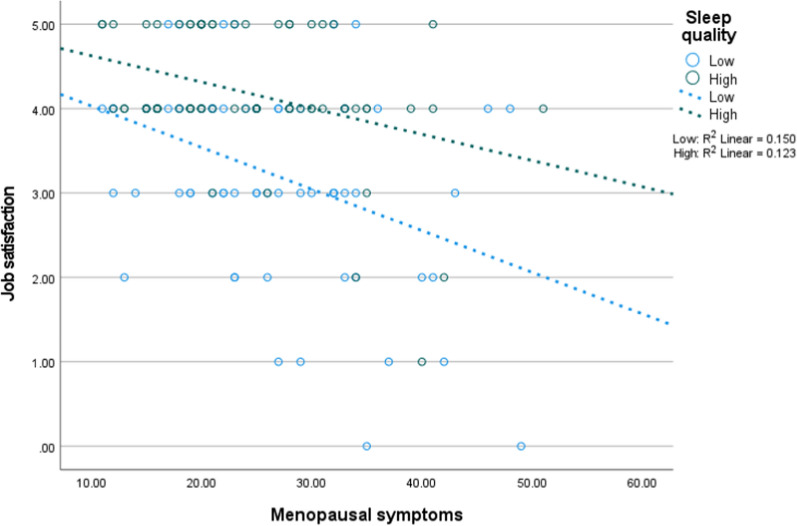
Results: There was a negative association between menopausal symptoms and job satisfaction (β = -0.38; t = -4.81, p < 0.001), but this relationship became non-significant after adjusting for work stress, self-reported health, job tenure, and resilience at work. An interaction between menopausal symptoms and the psychosomatic factors was found. The strength of the negative association between menopausal symptoms and job satisfaction was weakened by sleep quality (β = 0.05; t = 0.48; p > 0.05) but was strengthened by anxiety (β = -0.22; t = -2.28; p < 0.05) and depression (β = -0.24; t = -2.16; p < 0.05).
Conclusion: Menopausal symptoms can be directly associated with lower job satisfaction and indirectly associated with lower job satisfaction through its interaction with depression and anxiety. Menopausal symptoms can weaken the positive association between sleep quality and job satisfaction.
期刊介绍:
Human Resources for Health is an open access, peer-reviewed, online journal covering all aspects of planning, producing and managing the health workforce - all those who provide health services worldwide. Human Resources for Health aims to disseminate research on health workforce policy, the health labour market, health workforce practice, development of knowledge tools and implementation mechanisms nationally and internationally; as well as specific features of the health workforce, such as the impact of management of health workers" performance and its link with health outcomes. The journal encourages debate on health sector reforms and their link with human resources issues, a hitherto-neglected area.



 京公网安备 11010802042870号
京ICP备2023020795号-1
京公网安备 11010802042870号
京ICP备2023020795号-1

 分享
分享
 求助内容:
求助内容: 应助结果提醒方式:
 扫码关注我们
