Interleukin-10: Genetic and biochemical prediction of sepsis-induced acute kidney injury in critically ill patients in intensive care unit: A cross-sectional study.
Amr A Amin, Aseel M Ghonaim, Hiba S Al-Amodi, Mohammed H Mukhtar, Reem M Allam, Anas Dannoun, Mohamed N Eldein, Neda M Bogari
{"title":"Interleukin-10: Genetic and biochemical prediction of sepsis-induced acute kidney injury in critically ill patients in intensive care unit: A cross-sectional study.","authors":"Amr A Amin, Aseel M Ghonaim, Hiba S Al-Amodi, Mohammed H Mukhtar, Reem M Allam, Anas Dannoun, Mohamed N Eldein, Neda M Bogari","doi":"10.1097/JCMA.0000000000001165","DOIUrl":null,"url":null,"abstract":"<p><strong>Background: </strong>Sepsis is a potentially life-threatening condition that eventually causes multiorgan dysfunction in critically ill patients. Acute kidney injury (AKI) is a severe life-threatening complication of sepsis, a condition termed sepsis-induced AKI (S-AKI), with poor clinical outcomes and high mortality rates. Inflammatory and immunological responses are important variables in S-AKI. This study aimed to examine the relationship of rs1518111 polymorphism in the interleukin-10 ( IL-10 ) gene and serum/urine IL-10 levels with sepsis-induced AKI in critically ill patients in the intensive care unit (ICU).</p><p><strong>Methods: </strong>In this cross-sectional study, 310 critically ill adult patients were recruited, of whom, 197 developed S-AKI. Real-time polymerase chain reaction was performed to detect the rs1518111 polymorphism. Circulating blood and urine IL-10 levels of IL-10 were measured.</p><p><strong>Results: </strong>For rs1518111 SNP, the presence of at least one T allele increased the risk of occurrence of S-AKI (odds ratio [OR]: 1.34, 95% CI: 1.07-3.17; p < 0.001), regardless of the type of infection and severity of sepsis. Blood and urine IL-10 levels were an excellent prediction of S-AKI (area under the receiver operating characteristic curve [AUC]: 0.881 and 0.953 and sensitivity: 90.2% and 97.6% at cutoff of 133.5 and 5.67 pg/mL, respectively). Regression analysis showed that white blood cell count and increased blood and urine IL-10 levels, in addition to the presence of TT genotype, are independent risk factors for S-AKI.</p><p><strong>Conclusion: </strong>rs1518111 polymorphism in the IL-10 gene is a risk factor for sepsis-induced AKI in the ICU. Serum/urine IL-10 levels may be used as predictors of S-AKI in critically ill patients with sepsis, thereby improving early management.</p>","PeriodicalId":94115,"journal":{"name":"Journal of the Chinese Medical Association : JCMA","volume":" ","pages":"1047-1053"},"PeriodicalIF":2.4000,"publicationDate":"2024-12-01","publicationTypes":"Journal Article","fieldsOfStudy":null,"isOpenAccess":false,"openAccessPdf":"https://www.ncbi.nlm.nih.gov/pmc/articles/PMC12718952/pdf/","citationCount":"0","resultStr":null,"platform":"Semanticscholar","paperid":null,"PeriodicalName":"Journal of the Chinese Medical Association : JCMA","FirstCategoryId":"1085","ListUrlMain":"https://doi.org/10.1097/JCMA.0000000000001165","RegionNum":0,"RegionCategory":null,"ArticlePicture":[],"TitleCN":null,"AbstractTextCN":null,"PMCID":null,"EPubDate":"2024/9/13 0:00:00","PubModel":"Epub","JCR":"","JCRName":"","Score":null,"Total":0}
引用次数: 0
Abstract
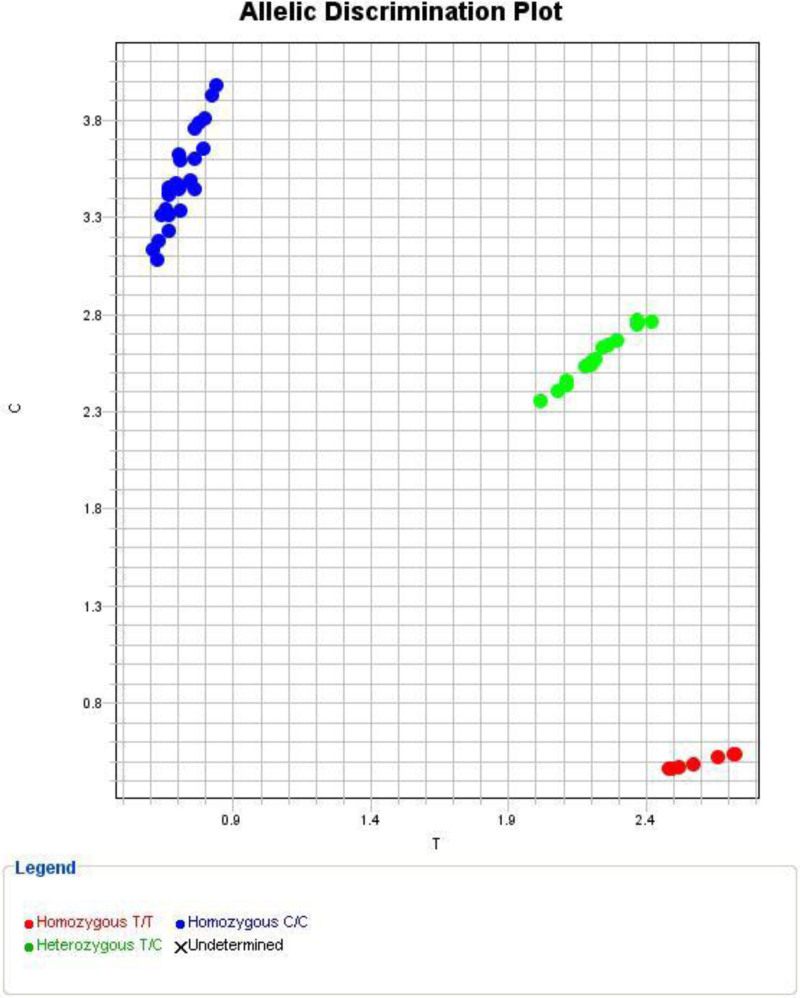
Background: Sepsis is a potentially life-threatening condition that eventually causes multiorgan dysfunction in critically ill patients. Acute kidney injury (AKI) is a severe life-threatening complication of sepsis, a condition termed sepsis-induced AKI (S-AKI), with poor clinical outcomes and high mortality rates. Inflammatory and immunological responses are important variables in S-AKI. This study aimed to examine the relationship of rs1518111 polymorphism in the interleukin-10 ( IL-10 ) gene and serum/urine IL-10 levels with sepsis-induced AKI in critically ill patients in the intensive care unit (ICU).
Methods: In this cross-sectional study, 310 critically ill adult patients were recruited, of whom, 197 developed S-AKI. Real-time polymerase chain reaction was performed to detect the rs1518111 polymorphism. Circulating blood and urine IL-10 levels of IL-10 were measured.
Results: For rs1518111 SNP, the presence of at least one T allele increased the risk of occurrence of S-AKI (odds ratio [OR]: 1.34, 95% CI: 1.07-3.17; p < 0.001), regardless of the type of infection and severity of sepsis. Blood and urine IL-10 levels were an excellent prediction of S-AKI (area under the receiver operating characteristic curve [AUC]: 0.881 and 0.953 and sensitivity: 90.2% and 97.6% at cutoff of 133.5 and 5.67 pg/mL, respectively). Regression analysis showed that white blood cell count and increased blood and urine IL-10 levels, in addition to the presence of TT genotype, are independent risk factors for S-AKI.
Conclusion: rs1518111 polymorphism in the IL-10 gene is a risk factor for sepsis-induced AKI in the ICU. Serum/urine IL-10 levels may be used as predictors of S-AKI in critically ill patients with sepsis, thereby improving early management.






 京公网安备 11010802042870号
京ICP备2023020795号-1
京公网安备 11010802042870号
京ICP备2023020795号-1

 分享
分享

 求助内容:
求助内容: 应助结果提醒方式:
 扫码关注我们
