Understanding movement patterns of rodent pests is essential for planning management strategies. Currently, for many rural village contexts, there is limited information on how rodents move between domestic and peridomestic areas, and the surrounding habitats. We investigated movement of the multimammate rat, Mastomys natalensis and the black rat, Rattus rattus in nine villages in Kilombero District, Tanzania. We used Rhodamine B (RhB) baits placed inside houses (R. rattus preferred habitat) in five villages and placed outside (M. natalensis preferred habitat) in four villages.
RESULTS
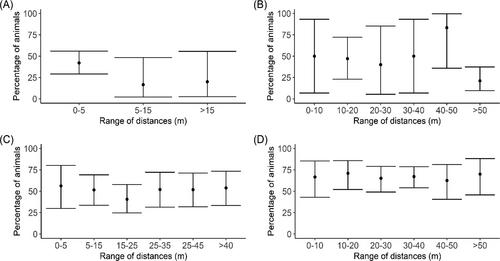
Whilst both species were rarely captured in their nonpreferred habitat (5% M. natalensis inside houses; 23% R. rattus outside houses), evidence of RhB consumption when bait was in nonpreferred habitat was high for both species (50% M. natalensis; 57% R. rattus), indicating frequent movement to nonpreferred habitats. Whilst R. rattus movement distances were consistent with previous studies (maximum 81 m), within our village context, M. natalensis moved further (maximum 132 m) compared to previous published studies. Although bait consumption rates varied seasonally, we found no evidence that utilization of nonpreferred habitat varied seasonally. M. natalensis females moved into houses more frequently than males, whilst immature R. rattus moved outside houses more than mature individuals.
期刊介绍:
Pest Management Science is the international journal of research and development in crop protection and pest control. Since its launch in 1970, the journal has become the premier forum for papers on the discovery, application, and impact on the environment of products and strategies designed for pest management.
Published for SCI by John Wiley & Sons Ltd.





 京公网安备 11010802042870号
京ICP备2023020795号-1
京公网安备 11010802042870号
京ICP备2023020795号-1

 分享
分享
 求助内容:
求助内容: 应助结果提醒方式:
 扫码关注我们
