The dimensional structure of the Positive and Negative Syndrome Scale in first-episode schizophrenia spectrum disorders: an Exploratory Graph Analysis from the OPTiMiSE trial.
Francesco Dal Santo, María Paz García-Portilla, Emilio Fernández-Egea, Leticia González-Blanco, Pilar A Sáiz, Giulia Maria Giordano, Silvana Galderisi, Julio Bobes
{"title":"The dimensional structure of the Positive and Negative Syndrome Scale in first-episode schizophrenia spectrum disorders: an Exploratory Graph Analysis from the OPTiMiSE trial.","authors":"Francesco Dal Santo, María Paz García-Portilla, Emilio Fernández-Egea, Leticia González-Blanco, Pilar A Sáiz, Giulia Maria Giordano, Silvana Galderisi, Julio Bobes","doi":"10.1038/s41537-024-00499-5","DOIUrl":null,"url":null,"abstract":"<p><p>The Positive and Negative Syndrome Scale (PANSS) is the most widely used rating scale to assess psychotic symptoms in patients with schizophrenia and other primary psychoses. However, a definitive consensus regarding its dimensional structure remains elusive. The present work aims to determine the number of dimensions of the scale through a network analysis approach in a sample of individuals experiencing first-episode schizophrenia spectrum disorder (FE-SSD) with minimal or no prior exposure to antipsychotic treatment. Baseline data of 446 participants (age 25.96 ± 5.99 years, 70% males) enrolled in the OPTiMiSE trial were analysed. Exploratory Graph Analysis (EGA) was conducted to evaluate the dimensionality of the PANSS, and a bootstrap approach (bootEGA) was employed to assess model stability. The analysis was replicated, excluding unstable items with stability values below 0.75, until a stable model was achieved. The analysis of the 30 items of the PANSS revealed inadequate structural consistency, resulting in the exclusion of 9 unstable items. The final model comprised 21 symptoms distributed across four communities (Positive, Cognitive/Disorganised, Excited/Aggressive and Negative) but lacked a depressive domain. In conclusion, we propose a concise version of the PANSS, incorporating 21 items, to better assess the core symptoms of the first episode of SSD. This revised version provides clinicians with a robust psychometric tool with reduced administration time, but the complementary administration of a dedicated instrument for evaluating affective symptoms is advisable.</p>","PeriodicalId":74758,"journal":{"name":"Schizophrenia (Heidelberg, Germany)","volume":"10 1","pages":"81"},"PeriodicalIF":4.1000,"publicationDate":"2024-09-30","publicationTypes":"Journal Article","fieldsOfStudy":null,"isOpenAccess":false,"openAccessPdf":"https://www.ncbi.nlm.nih.gov/pmc/articles/PMC11442741/pdf/","citationCount":"0","resultStr":null,"platform":"Semanticscholar","paperid":null,"PeriodicalName":"Schizophrenia (Heidelberg, Germany)","FirstCategoryId":"1085","ListUrlMain":"https://doi.org/10.1038/s41537-024-00499-5","RegionNum":0,"RegionCategory":null,"ArticlePicture":[],"TitleCN":null,"AbstractTextCN":null,"PMCID":null,"EPubDate":"","PubModel":"","JCR":"Q2","JCRName":"PSYCHIATRY","Score":null,"Total":0}
引用次数: 0
Abstract
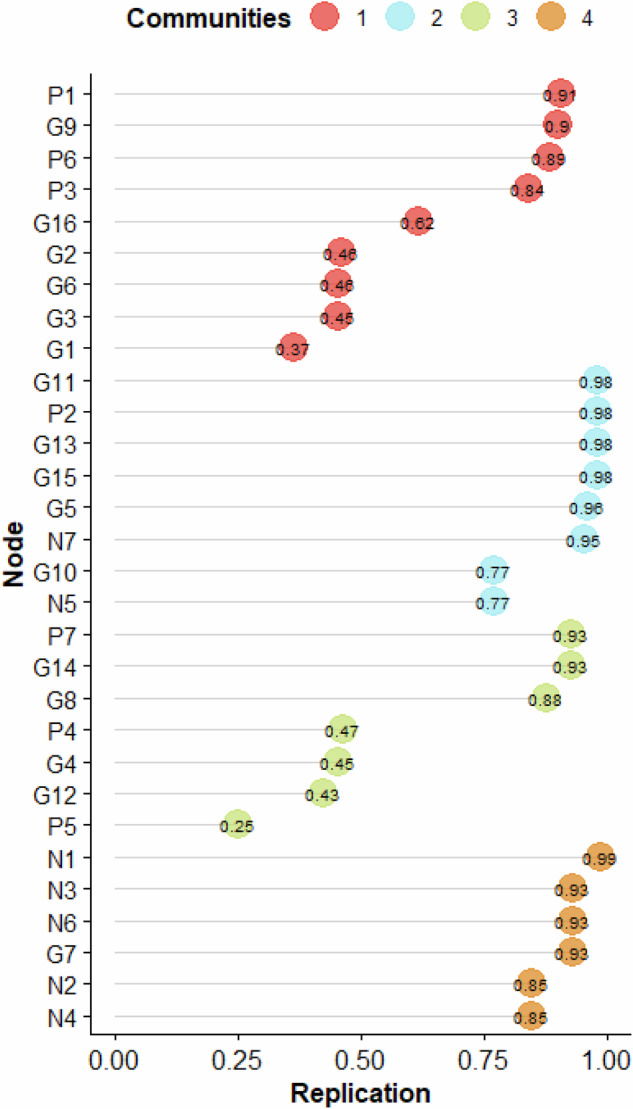
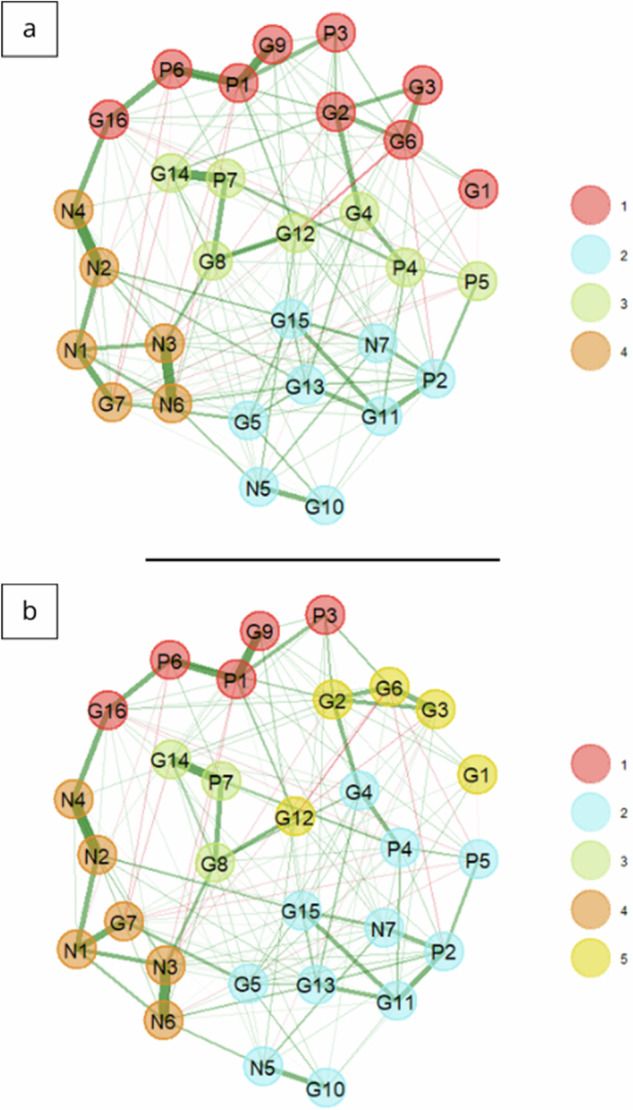
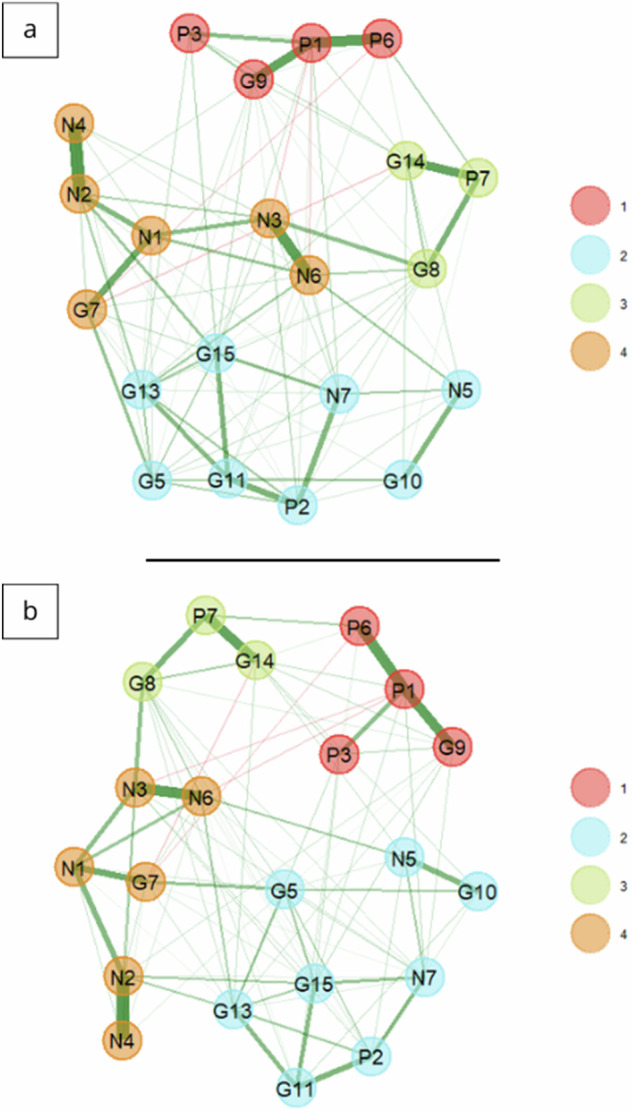
The Positive and Negative Syndrome Scale (PANSS) is the most widely used rating scale to assess psychotic symptoms in patients with schizophrenia and other primary psychoses. However, a definitive consensus regarding its dimensional structure remains elusive. The present work aims to determine the number of dimensions of the scale through a network analysis approach in a sample of individuals experiencing first-episode schizophrenia spectrum disorder (FE-SSD) with minimal or no prior exposure to antipsychotic treatment. Baseline data of 446 participants (age 25.96 ± 5.99 years, 70% males) enrolled in the OPTiMiSE trial were analysed. Exploratory Graph Analysis (EGA) was conducted to evaluate the dimensionality of the PANSS, and a bootstrap approach (bootEGA) was employed to assess model stability. The analysis was replicated, excluding unstable items with stability values below 0.75, until a stable model was achieved. The analysis of the 30 items of the PANSS revealed inadequate structural consistency, resulting in the exclusion of 9 unstable items. The final model comprised 21 symptoms distributed across four communities (Positive, Cognitive/Disorganised, Excited/Aggressive and Negative) but lacked a depressive domain. In conclusion, we propose a concise version of the PANSS, incorporating 21 items, to better assess the core symptoms of the first episode of SSD. This revised version provides clinicians with a robust psychometric tool with reduced administration time, but the complementary administration of a dedicated instrument for evaluating affective symptoms is advisable.



 京公网安备 11010802042870号
京ICP备2023020795号-1
京公网安备 11010802042870号
京ICP备2023020795号-1

 分享
分享

 求助内容:
求助内容: 应助结果提醒方式:
 扫码关注我们
