Ghodsieh Ghanbari, Jonathan Y Lam, Supreeth P Shashikumar, Linda Awdishu, Karandeep Singh, Atul Malhotra, Shamim Nemati, Zaid Yousif
{"title":"Development and validation of a deep learning algorithm for the prediction of serum creatinine in critically ill patients.","authors":"Ghodsieh Ghanbari, Jonathan Y Lam, Supreeth P Shashikumar, Linda Awdishu, Karandeep Singh, Atul Malhotra, Shamim Nemati, Zaid Yousif","doi":"10.1093/jamiaopen/ooae097","DOIUrl":null,"url":null,"abstract":"<p><strong>Objectives: </strong>Serum creatinine (SCr) is the primary biomarker for assessing kidney function; however, it may lag behind true kidney function, especially in instances of acute kidney injury (AKI). The objective of the work is to develop Nephrocast, a deep-learning model to predict next-day SCr in adult patients treated in the intensive care unit (ICU).</p><p><strong>Materials and methods: </strong>Nephrocast was trained and validated, temporally and prospectively, using electronic health record data of adult patients admitted to the ICU in the University of California San Diego Health (UCSDH) between January 1, 2016 and June 22, 2024. The model features consisted of demographics, comorbidities, vital signs and laboratory measurements, and medications. Model performance was evaluated by mean absolute error (MAE) and root-mean-square error (RMSE) and compared against the prediction day's SCr as a reference.</p><p><strong>Results: </strong>A total of 28 191 encounters met the eligibility criteria, corresponding to 105 718 patient-days. The median (interquartile range [IQR]) MAE and RMSE in the internal test set were 0.09 (0.085-0.09) mg/dL and 0.15 (0.146-0.152) mg/dL, respectively. In the prospective validation, the MAE and RMSE were 0.09 mg/dL and 0.14 mg/dL, respectively. The model's performance was superior to the reference SCr.</p><p><strong>Discussion and conclusion: </strong>Our model demonstrated good performance in predicting next-day SCr by leveraging clinical data routinely collected in the ICU. The model could aid clinicians in in identifying high-risk patients for AKI, predicting AKI trajectory, and informing the dosing of renally eliminated drugs.</p>","PeriodicalId":36278,"journal":{"name":"JAMIA Open","volume":"7 3","pages":"ooae097"},"PeriodicalIF":3.4000,"publicationDate":"2024-09-19","publicationTypes":"Journal Article","fieldsOfStudy":null,"isOpenAccess":false,"openAccessPdf":"https://www.ncbi.nlm.nih.gov/pmc/articles/PMC11421473/pdf/","citationCount":"0","resultStr":null,"platform":"Semanticscholar","paperid":null,"PeriodicalName":"JAMIA Open","FirstCategoryId":"1085","ListUrlMain":"https://doi.org/10.1093/jamiaopen/ooae097","RegionNum":0,"RegionCategory":null,"ArticlePicture":[],"TitleCN":null,"AbstractTextCN":null,"PMCID":null,"EPubDate":"2024/10/1 0:00:00","PubModel":"eCollection","JCR":"Q2","JCRName":"HEALTH CARE SCIENCES & SERVICES","Score":null,"Total":0}
引用次数: 0
Abstract
Objectives: Serum creatinine (SCr) is the primary biomarker for assessing kidney function; however, it may lag behind true kidney function, especially in instances of acute kidney injury (AKI). The objective of the work is to develop Nephrocast, a deep-learning model to predict next-day SCr in adult patients treated in the intensive care unit (ICU).
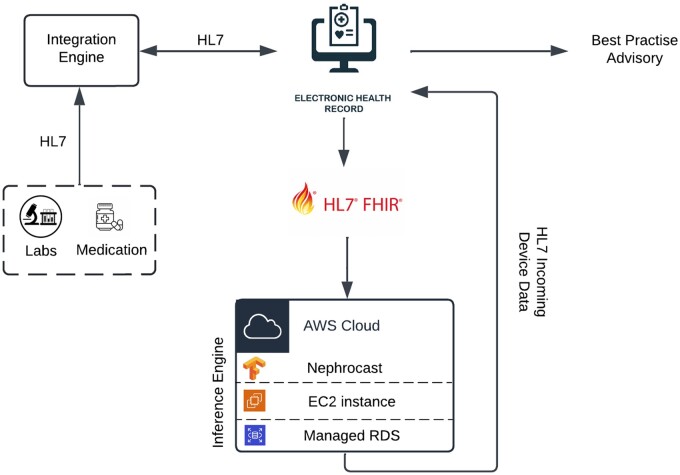
Materials and methods: Nephrocast was trained and validated, temporally and prospectively, using electronic health record data of adult patients admitted to the ICU in the University of California San Diego Health (UCSDH) between January 1, 2016 and June 22, 2024. The model features consisted of demographics, comorbidities, vital signs and laboratory measurements, and medications. Model performance was evaluated by mean absolute error (MAE) and root-mean-square error (RMSE) and compared against the prediction day's SCr as a reference.
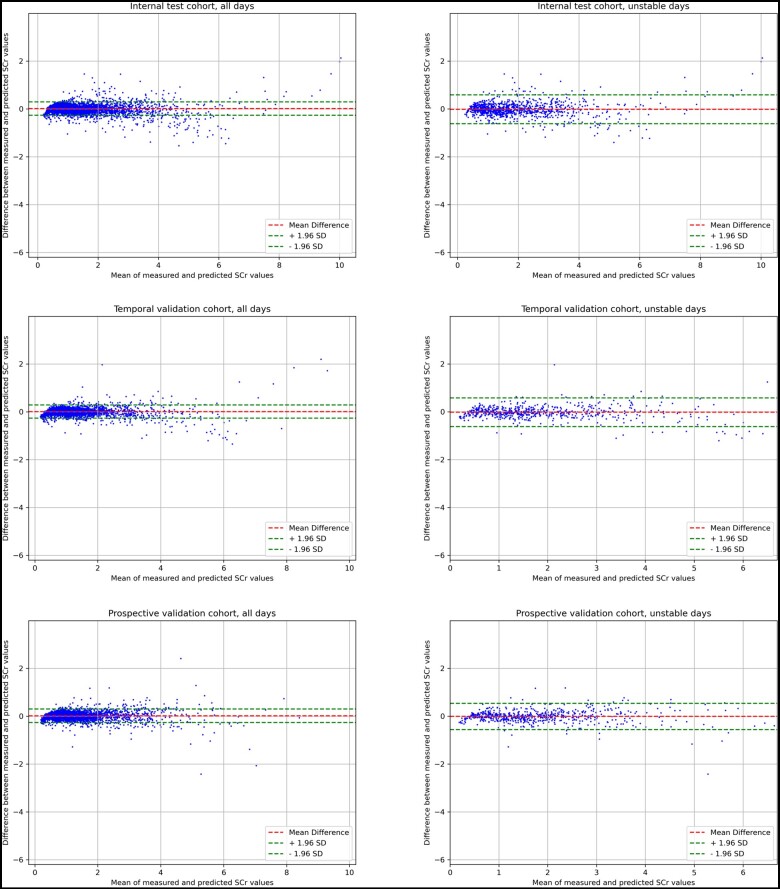
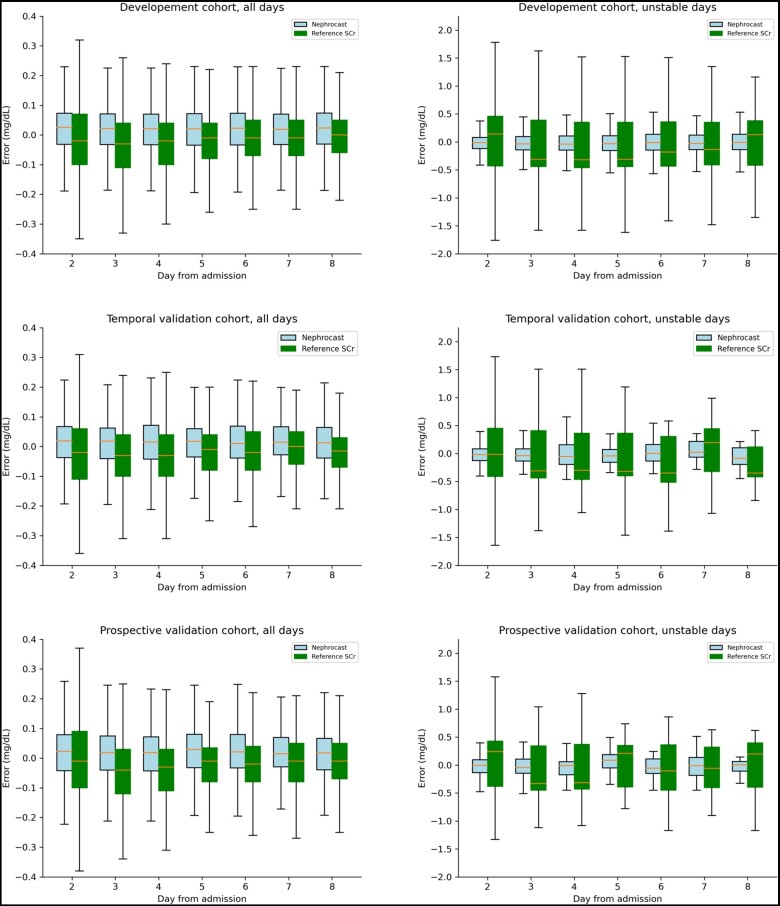
Results: A total of 28 191 encounters met the eligibility criteria, corresponding to 105 718 patient-days. The median (interquartile range [IQR]) MAE and RMSE in the internal test set were 0.09 (0.085-0.09) mg/dL and 0.15 (0.146-0.152) mg/dL, respectively. In the prospective validation, the MAE and RMSE were 0.09 mg/dL and 0.14 mg/dL, respectively. The model's performance was superior to the reference SCr.
Discussion and conclusion: Our model demonstrated good performance in predicting next-day SCr by leveraging clinical data routinely collected in the ICU. The model could aid clinicians in in identifying high-risk patients for AKI, predicting AKI trajectory, and informing the dosing of renally eliminated drugs.




 京公网安备 11010802042870号
京ICP备2023020795号-1
京公网安备 11010802042870号
京ICP备2023020795号-1

 分享
分享
 求助内容:
求助内容: 应助结果提醒方式:
 扫码关注我们
