{"title":"Chemical and electrochemical pathways to low-carbon iron and steel","authors":"Kerry Rippy, Robert T. Bell, Noemi Leick","doi":"10.1038/s44296-024-00036-6","DOIUrl":null,"url":null,"abstract":"Currently, the iron and steel industry is responsible for 7% of global CO2 emissions. In this review, we summarize the operational principles of current emissions-intensive steelmaking technologies and review emerging low- and zero-carbon technologies that could substantially reduce emissions. Current technologies that are discussed include blast furnaces, electric arc furnaces, and smelting. Promising low-carbon routes include use of alternative reductants for ore processing (hydrogen direct reduction, hydrogen plasma-smelting, hydrogen smelting, and ammonia-based reduction), electrolytic iron production (with aqueous and molten oxide electrolytes) and biocarbon-based electric arc furnace operation. Advantages of each approach are presented, and remaining research hurdles are identified.","PeriodicalId":471646,"journal":{"name":"npj Materials Sustainability","volume":" ","pages":"1-10"},"PeriodicalIF":0.0000,"publicationDate":"2024-10-01","publicationTypes":"Journal Article","fieldsOfStudy":null,"isOpenAccess":false,"openAccessPdf":"https://www.nature.com/articles/s44296-024-00036-6.pdf","citationCount":"0","resultStr":null,"platform":"Semanticscholar","paperid":null,"PeriodicalName":"npj Materials Sustainability","FirstCategoryId":"1085","ListUrlMain":"https://www.nature.com/articles/s44296-024-00036-6","RegionNum":0,"RegionCategory":null,"ArticlePicture":[],"TitleCN":null,"AbstractTextCN":null,"PMCID":null,"EPubDate":"","PubModel":"","JCR":"","JCRName":"","Score":null,"Total":0}
引用次数: 0
Abstract
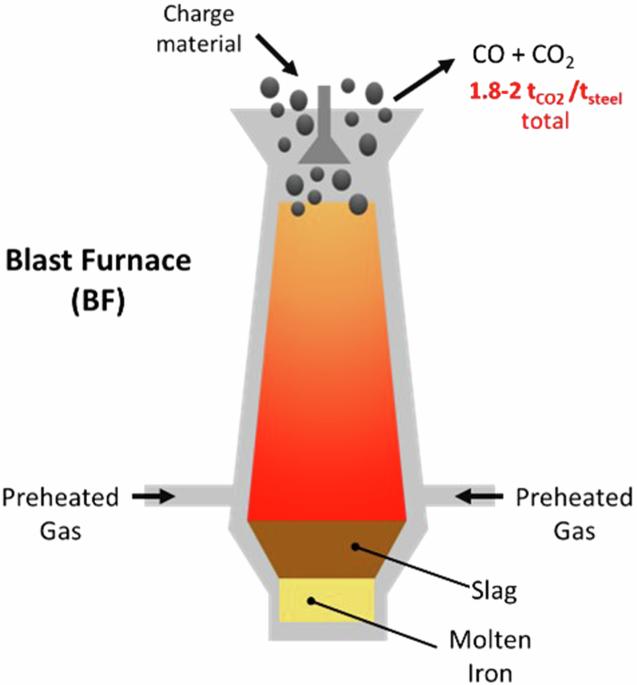
Currently, the iron and steel industry is responsible for 7% of global CO2 emissions. In this review, we summarize the operational principles of current emissions-intensive steelmaking technologies and review emerging low- and zero-carbon technologies that could substantially reduce emissions. Current technologies that are discussed include blast furnaces, electric arc furnaces, and smelting. Promising low-carbon routes include use of alternative reductants for ore processing (hydrogen direct reduction, hydrogen plasma-smelting, hydrogen smelting, and ammonia-based reduction), electrolytic iron production (with aqueous and molten oxide electrolytes) and biocarbon-based electric arc furnace operation. Advantages of each approach are presented, and remaining research hurdles are identified.



 京公网安备 11010802042870号
京ICP备2023020795号-1
京公网安备 11010802042870号
京ICP备2023020795号-1

 分享
分享

 求助内容:
求助内容: 应助结果提醒方式:
 扫码关注我们
