Clinical Outcomes and Left Ventricular Functional Remodeling after Extracorporeal Membrane Oxygenation Assisted Percutaneous Coronary Intervention in Patients with Ischemic Cardiomyopathy: A Single-Center Retrospective Observational Study of 76 Cases.
Yi Dong, Zheng Xu, Xiao-Fu Dai, Liang-Wan Chen, Zhi-Qin Lin
{"title":"Clinical Outcomes and Left Ventricular Functional Remodeling after Extracorporeal Membrane Oxygenation Assisted Percutaneous Coronary Intervention in Patients with Ischemic Cardiomyopathy: A Single-Center Retrospective Observational Study of 76 Cases.","authors":"Yi Dong, Zheng Xu, Xiao-Fu Dai, Liang-Wan Chen, Zhi-Qin Lin","doi":"10.31083/j.rcm2509317","DOIUrl":null,"url":null,"abstract":"<p><strong>Background: </strong>Ischemic cardiomyopathy (ICM) is a common condition that leads to left ventricular (LV) functional remodeling and poor prognosis. Extracorporeal membrane oxygenation (ECMO) can provide temporary circulatory support and facilitate percutaneous coronary intervention (PCI) in patients with ICM and hemodynamic instability. However, the impact of ECMO-assisted PCI on LV functional remodeling and clinical outcomes in ICM patients is unclear.</p><p><strong>Methods: </strong>We retrospectively analyzed 76 patients with ICM who underwent ECMO-assisted PCI at our institution between January 2013 and December 2022. We assessed the changes in LV functional remodeling using echocardiography at baseline and 12 months after the procedure. We also evaluated the incidence of major adverse cardiac and cerebrovascular events (MACCEs) and ECMO-related complications during hospitalization and at one-year follow-up.</p><p><strong>Results: </strong>The mean baseline left ventricular ejection fraction (LVEF) was 29.98 ± 2.65%. The rate of complete revascularization was 58%. The median duration of ECMO support was 38.99 hours. The most common ECMO-related complications were bleeding (8%) and lower extremity ischemia (5%). The one-year mortality rate was 30%. The overall freedom from MACCEs at 12 months was 59% (95% confidence interval (CI): 49-71%). LVEF increased significantly after the procedure from baseline to 6 months, yet decreased slightly at 12 months, although it was still higher than the baseline value. Wall motion score index (WMSI), end-diastolic volume index (EDVI), and end-systolic volume index (ESVI) decreased significantly from baseline to 12 months, indicating an improvement in LV function and a reduction in LV size.</p><p><strong>Conclusions: </strong>In a high-volume tertiary center with extensive experience in advanced heart failure therapies and a dedicated ECMO team, ECMO-assisted PCI demonstrated feasibility and safety in patients with ischemic cardiomyopathy. However, the rate of complete revascularization was modest at 58%. Despite the high-risk profile of the patients, ECMO-assisted PCI was associated with a significant improvement in LV functional remodeling and a favorable 12-month survival rate. Further prospective studies are needed to confirm these findings and to identify the optimal patient and device selection criteria for ECMO-assisted PCI.</p>","PeriodicalId":20989,"journal":{"name":"Reviews in cardiovascular medicine","volume":"25 9","pages":"317"},"PeriodicalIF":1.3000,"publicationDate":"2024-09-06","publicationTypes":"Journal Article","fieldsOfStudy":null,"isOpenAccess":false,"openAccessPdf":"https://www.ncbi.nlm.nih.gov/pmc/articles/PMC11440416/pdf/","citationCount":"0","resultStr":null,"platform":"Semanticscholar","paperid":null,"PeriodicalName":"Reviews in cardiovascular medicine","FirstCategoryId":"3","ListUrlMain":"https://doi.org/10.31083/j.rcm2509317","RegionNum":4,"RegionCategory":"医学","ArticlePicture":[],"TitleCN":null,"AbstractTextCN":null,"PMCID":null,"EPubDate":"2024/9/1 0:00:00","PubModel":"eCollection","JCR":"Q3","JCRName":"CARDIAC & CARDIOVASCULAR SYSTEMS","Score":null,"Total":0}
引用次数: 0
Abstract
Background: Ischemic cardiomyopathy (ICM) is a common condition that leads to left ventricular (LV) functional remodeling and poor prognosis. Extracorporeal membrane oxygenation (ECMO) can provide temporary circulatory support and facilitate percutaneous coronary intervention (PCI) in patients with ICM and hemodynamic instability. However, the impact of ECMO-assisted PCI on LV functional remodeling and clinical outcomes in ICM patients is unclear.
Methods: We retrospectively analyzed 76 patients with ICM who underwent ECMO-assisted PCI at our institution between January 2013 and December 2022. We assessed the changes in LV functional remodeling using echocardiography at baseline and 12 months after the procedure. We also evaluated the incidence of major adverse cardiac and cerebrovascular events (MACCEs) and ECMO-related complications during hospitalization and at one-year follow-up.
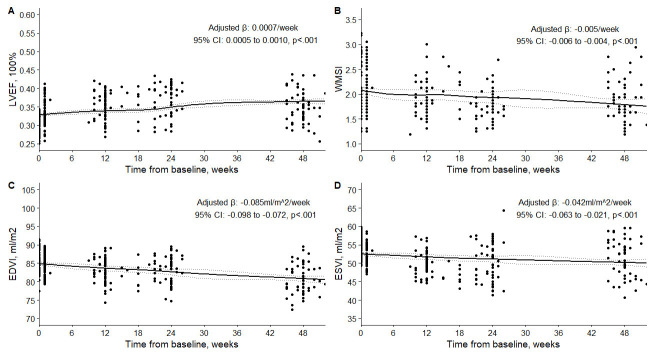
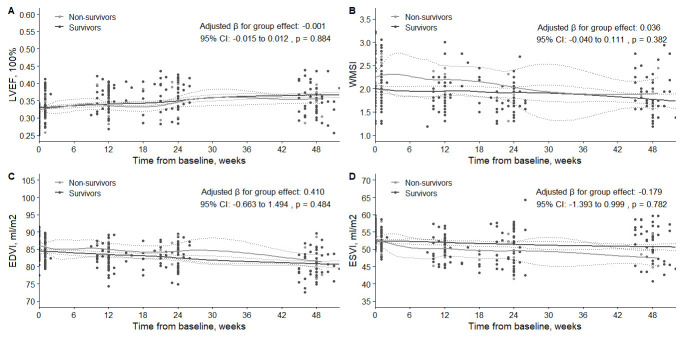
Results: The mean baseline left ventricular ejection fraction (LVEF) was 29.98 ± 2.65%. The rate of complete revascularization was 58%. The median duration of ECMO support was 38.99 hours. The most common ECMO-related complications were bleeding (8%) and lower extremity ischemia (5%). The one-year mortality rate was 30%. The overall freedom from MACCEs at 12 months was 59% (95% confidence interval (CI): 49-71%). LVEF increased significantly after the procedure from baseline to 6 months, yet decreased slightly at 12 months, although it was still higher than the baseline value. Wall motion score index (WMSI), end-diastolic volume index (EDVI), and end-systolic volume index (ESVI) decreased significantly from baseline to 12 months, indicating an improvement in LV function and a reduction in LV size.
Conclusions: In a high-volume tertiary center with extensive experience in advanced heart failure therapies and a dedicated ECMO team, ECMO-assisted PCI demonstrated feasibility and safety in patients with ischemic cardiomyopathy. However, the rate of complete revascularization was modest at 58%. Despite the high-risk profile of the patients, ECMO-assisted PCI was associated with a significant improvement in LV functional remodeling and a favorable 12-month survival rate. Further prospective studies are needed to confirm these findings and to identify the optimal patient and device selection criteria for ECMO-assisted PCI.
期刊介绍:
RCM is an international, peer-reviewed, open access journal. RCM publishes research articles, review papers and short communications on cardiovascular medicine as well as research on cardiovascular disease. We aim to provide a forum for publishing papers which explore the pathogenesis and promote the progression of cardiac and vascular diseases. We also seek to establish an interdisciplinary platform, focusing on translational issues, to facilitate the advancement of research, clinical treatment and diagnostic procedures. Heart surgery, cardiovascular imaging, risk factors and various clinical cardiac & vascular research will be considered.





 京公网安备 11010802042870号
京ICP备2023020795号-1
京公网安备 11010802042870号
京ICP备2023020795号-1

 分享
分享
 求助内容:
求助内容: 应助结果提醒方式:
 扫码关注我们
