Claire P.M. van Helsdingen, Job G.A. van Wijlick, Ralph de Vries, Nicole D. Bouvy, Mariska M.G. Leeflang, Robert Hemke, Joep P.M. Derikx
{"title":"Association of computed tomography-derived body composition and complications after colorectal cancer surgery: A systematic review and meta-analysis","authors":"Claire P.M. van Helsdingen, Job G.A. van Wijlick, Ralph de Vries, Nicole D. Bouvy, Mariska M.G. Leeflang, Robert Hemke, Joep P.M. Derikx","doi":"10.1002/jcsm.13580","DOIUrl":null,"url":null,"abstract":"<p>The prediction of the risk of developing complications after colorectal surgery for colorectal carcinoma remains imprecise. Body composition measurements on a computed tomography (CT) scan can potentially contribute to a better preoperative risk assessment. The aim of this systematic review is to evaluate the evidence for the use of body composition measurements on CT scans to predict short-term complications after colorectal cancer surgery. A literature search (in PubMed, Embase and Web of Science) was performed up to 1 August 2022. Two researchers independently screened the articles, extracted data and assessed the quality of the studies using the Quality in Prognosis Studies tool. The primary outcome measure was the occurrence of complications within 30 days after surgery. Meta-analysis was conducted using a random-effects model to synthesize a pooled odds ratio (OR). The study protocol was registered in PROSPERO (CRD42021281010). Forty-five articles with a total of 16 537 patients were included. In total, 26 body composition measures were investigated: 8 muscle-related measures, 11 adipose tissue measures, 4 combined muscle and adipose tissue measures, and 3 other measures. These were investigated as potential predictors for more than 50 differently defined postoperative complications. Meta-analysis was only possible for two measurements and showed that higher amounts of visceral fat increase the risk of developing overall complications (OR: 2.52 [1.58–4.00], <i>P</i> < 0.0001) and anastomotic leakage (OR: 1.76 [1.17–2.65], <i>P</i> = 0.006). A wide variety of body composition measurements on preoperative CT scans have been investigated as a predictive factor for postoperative complications. Visceral fat appeared to be associated with overall complications and anastomotic leakage; however, the association is weak, and its clinical relevance or applicability is questionable. The current evidence is limited by methodological heterogeneity and the risk of bias. To improve comparability of results across studies and improve decision-making, future studies should use standardized methods for measuring body composition on CT scans, outcome definitions and statistical analyses.</p>","PeriodicalId":48911,"journal":{"name":"Journal of Cachexia Sarcopenia and Muscle","volume":"15 6","pages":"2234-2269"},"PeriodicalIF":9.1000,"publicationDate":"2024-10-06","publicationTypes":"Journal Article","fieldsOfStudy":null,"isOpenAccess":false,"openAccessPdf":"https://www.ncbi.nlm.nih.gov/pmc/articles/PMC11634520/pdf/","citationCount":"0","resultStr":null,"platform":"Semanticscholar","paperid":null,"PeriodicalName":"Journal of Cachexia Sarcopenia and Muscle","FirstCategoryId":"3","ListUrlMain":"https://onlinelibrary.wiley.com/doi/10.1002/jcsm.13580","RegionNum":1,"RegionCategory":"医学","ArticlePicture":[],"TitleCN":null,"AbstractTextCN":null,"PMCID":null,"EPubDate":"","PubModel":"","JCR":"Q1","JCRName":"GERIATRICS & GERONTOLOGY","Score":null,"Total":0}
引用次数: 0
Abstract
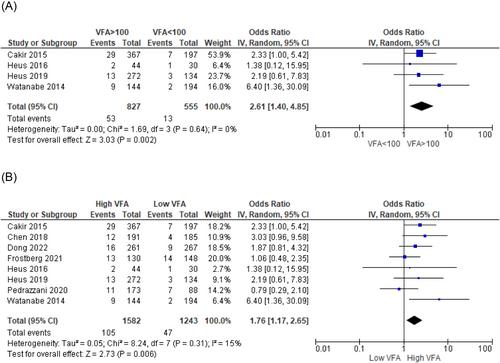
The prediction of the risk of developing complications after colorectal surgery for colorectal carcinoma remains imprecise. Body composition measurements on a computed tomography (CT) scan can potentially contribute to a better preoperative risk assessment. The aim of this systematic review is to evaluate the evidence for the use of body composition measurements on CT scans to predict short-term complications after colorectal cancer surgery. A literature search (in PubMed, Embase and Web of Science) was performed up to 1 August 2022. Two researchers independently screened the articles, extracted data and assessed the quality of the studies using the Quality in Prognosis Studies tool. The primary outcome measure was the occurrence of complications within 30 days after surgery. Meta-analysis was conducted using a random-effects model to synthesize a pooled odds ratio (OR). The study protocol was registered in PROSPERO (CRD42021281010). Forty-five articles with a total of 16 537 patients were included. In total, 26 body composition measures were investigated: 8 muscle-related measures, 11 adipose tissue measures, 4 combined muscle and adipose tissue measures, and 3 other measures. These were investigated as potential predictors for more than 50 differently defined postoperative complications. Meta-analysis was only possible for two measurements and showed that higher amounts of visceral fat increase the risk of developing overall complications (OR: 2.52 [1.58–4.00], P < 0.0001) and anastomotic leakage (OR: 1.76 [1.17–2.65], P = 0.006). A wide variety of body composition measurements on preoperative CT scans have been investigated as a predictive factor for postoperative complications. Visceral fat appeared to be associated with overall complications and anastomotic leakage; however, the association is weak, and its clinical relevance or applicability is questionable. The current evidence is limited by methodological heterogeneity and the risk of bias. To improve comparability of results across studies and improve decision-making, future studies should use standardized methods for measuring body composition on CT scans, outcome definitions and statistical analyses.
期刊介绍:
The Journal of Cachexia, Sarcopenia and Muscle is a peer-reviewed international journal dedicated to publishing materials related to cachexia and sarcopenia, as well as body composition and its physiological and pathophysiological changes across the lifespan and in response to various illnesses from all fields of life sciences. The journal aims to provide a reliable resource for professionals interested in related research or involved in the clinical care of affected patients, such as those suffering from AIDS, cancer, chronic heart failure, chronic lung disease, liver cirrhosis, chronic kidney failure, rheumatoid arthritis, or sepsis.



 京公网安备 11010802042870号
京ICP备2023020795号-1
京公网安备 11010802042870号
京ICP备2023020795号-1

 分享
分享
 求助内容:
求助内容: 应助结果提醒方式:
 扫码关注我们
