Radiographic features and subtypes of congenital thumb duplication type C3 according to Wu et al. and their potential implications for surgical management: new classification and preliminary results.
JianPing Wu, Kai Hong, Hai Zhao, ShiJie Liao, Jun Chu, ChenChen Xu, YuanXin Zhu, Ming Gong, XingQi Zhao, MingWei Zhu, JingChun Li, YiQiang Li, YuanZhong Liu, Federico Canavese, HongWen Xu
{"title":"Radiographic features and subtypes of congenital thumb duplication type C3 according to Wu et al. and their potential implications for surgical management: new classification and preliminary results.","authors":"JianPing Wu, Kai Hong, Hai Zhao, ShiJie Liao, Jun Chu, ChenChen Xu, YuanXin Zhu, Ming Gong, XingQi Zhao, MingWei Zhu, JingChun Li, YiQiang Li, YuanZhong Liu, Federico Canavese, HongWen Xu","doi":"10.1186/s12891-024-07916-x","DOIUrl":null,"url":null,"abstract":"<p><strong>Background: </strong>Wu et al. introduced a modified radiographic system that allows classification of all forms of CTD with excellent interobserver and intraobserver reliability. No study to date has evaluated the radiographic characteristics of Wu et al. type C3 CTD with osseous attachment at the level of the metacarpal.</p><p><strong>Objective: </strong>This study aimed to evaluate the radiographic features of type C3 CTD according to the system of Wu et al., to describe the different anatomical subtypes of the duplication, and to propose a categorization approach to distinguish diverse surgical strategies based on the radiographic anatomy of this specific subtype of duplication.</p><p><strong>Methods: </strong>We performed a retrospective analysis of 215 patients (221 thumbs) diagnosed with Wu et al. type C3 CTD at our Institution between 2015 and 2021. We evaluated all CTDs by examining the alignment of the interphalangeal (IP) and metacarpophalangeal (MP) joints and by assessing the presence of abnormal hypertrophic epiphysis of the primary thumb on posteroanterior (PA) radiographs. The proposed classification system has four types: Type I with good alignment of both MP and IP joints, Type II with ulnar deviation of the MP joint, Type III with radial deviation in the MP joint and Type IV with abnormal hypertrophic epiphysis of the distal phalanx of the main thumb with ulnar deviation of the IP joint with or without ulnar deviation of the MP joint.</p><p><strong>Results: </strong>There were 140 male and 75 female patients with CTD (221 thumbs). There were 65 left, 144 right and 6 bilateral forms. The right-to-left, male-to-female and unilateral-to-bilateral ratios were 2.2:1, 1.9:1 and 35.8:1 respectively. The mean age at surgery was 22.3 ± 11.8 months (range, 8-80). The proposed classification system allowed the classification of all CTDs (n = 221). Specifically, 53 fingers were classified as Type I (24%), 136 as Type II (61.5%), 21 as Type III (9.5%), and 11 as Type IV (5%).</p><p><strong>Conclusion: </strong>The proposed system is based on radiographic pathoanatomy and complements that of Wu et al. by identifying four distinct subtypes of deformity. It has the potential to improve inter-professional communication and guide surgery in patients with Wu et al. type C3 CTD. However, our results are preliminary and further research is needed to validate them.</p><p><strong>Level of evidence: </strong>III.</p>","PeriodicalId":9189,"journal":{"name":"BMC Musculoskeletal Disorders","volume":"25 1","pages":"802"},"PeriodicalIF":2.4000,"publicationDate":"2024-10-11","publicationTypes":"Journal Article","fieldsOfStudy":null,"isOpenAccess":false,"openAccessPdf":"https://www.ncbi.nlm.nih.gov/pmc/articles/PMC11468261/pdf/","citationCount":"0","resultStr":null,"platform":"Semanticscholar","paperid":null,"PeriodicalName":"BMC Musculoskeletal Disorders","FirstCategoryId":"3","ListUrlMain":"https://doi.org/10.1186/s12891-024-07916-x","RegionNum":3,"RegionCategory":"医学","ArticlePicture":[],"TitleCN":null,"AbstractTextCN":null,"PMCID":null,"EPubDate":"","PubModel":"","JCR":"Q2","JCRName":"ORTHOPEDICS","Score":null,"Total":0}
引用次数: 0
Abstract
Background: Wu et al. introduced a modified radiographic system that allows classification of all forms of CTD with excellent interobserver and intraobserver reliability. No study to date has evaluated the radiographic characteristics of Wu et al. type C3 CTD with osseous attachment at the level of the metacarpal.
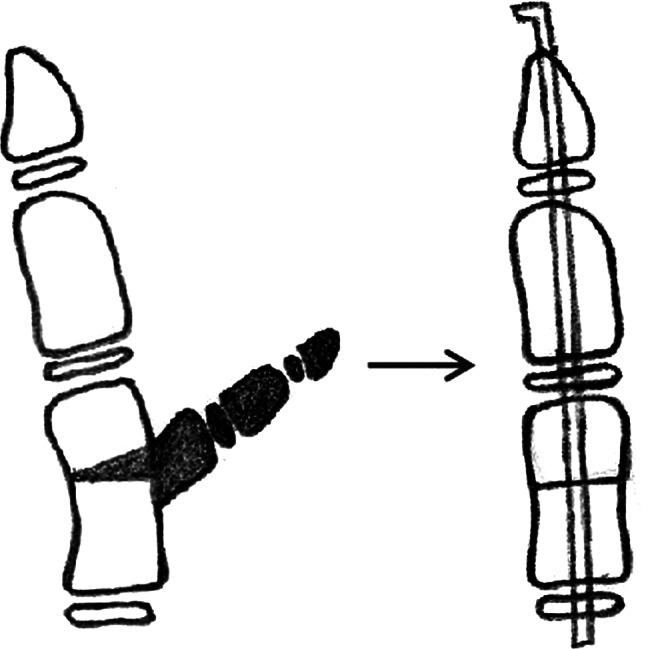
Objective: This study aimed to evaluate the radiographic features of type C3 CTD according to the system of Wu et al., to describe the different anatomical subtypes of the duplication, and to propose a categorization approach to distinguish diverse surgical strategies based on the radiographic anatomy of this specific subtype of duplication.
Methods: We performed a retrospective analysis of 215 patients (221 thumbs) diagnosed with Wu et al. type C3 CTD at our Institution between 2015 and 2021. We evaluated all CTDs by examining the alignment of the interphalangeal (IP) and metacarpophalangeal (MP) joints and by assessing the presence of abnormal hypertrophic epiphysis of the primary thumb on posteroanterior (PA) radiographs. The proposed classification system has four types: Type I with good alignment of both MP and IP joints, Type II with ulnar deviation of the MP joint, Type III with radial deviation in the MP joint and Type IV with abnormal hypertrophic epiphysis of the distal phalanx of the main thumb with ulnar deviation of the IP joint with or without ulnar deviation of the MP joint.
Results: There were 140 male and 75 female patients with CTD (221 thumbs). There were 65 left, 144 right and 6 bilateral forms. The right-to-left, male-to-female and unilateral-to-bilateral ratios were 2.2:1, 1.9:1 and 35.8:1 respectively. The mean age at surgery was 22.3 ± 11.8 months (range, 8-80). The proposed classification system allowed the classification of all CTDs (n = 221). Specifically, 53 fingers were classified as Type I (24%), 136 as Type II (61.5%), 21 as Type III (9.5%), and 11 as Type IV (5%).
Conclusion: The proposed system is based on radiographic pathoanatomy and complements that of Wu et al. by identifying four distinct subtypes of deformity. It has the potential to improve inter-professional communication and guide surgery in patients with Wu et al. type C3 CTD. However, our results are preliminary and further research is needed to validate them.
期刊介绍:
BMC Musculoskeletal Disorders is an open access, peer-reviewed journal that considers articles on all aspects of the prevention, diagnosis and management of musculoskeletal disorders, as well as related molecular genetics, pathophysiology, and epidemiology.
The scope of the Journal covers research into rheumatic diseases where the primary focus relates specifically to a component(s) of the musculoskeletal system.





 京公网安备 11010802042870号
京ICP备2023020795号-1
京公网安备 11010802042870号
京ICP备2023020795号-1

 分享
分享
 求助内容:
求助内容: 应助结果提醒方式:
 扫码关注我们
