RNA interference (RNAi) technology has been put forward as a promising method for pest control and resistance management. Mining highly efficient lethal genes and constructing stable double-stranded RNA (dsRNA) delivery systems are of great significance to improve the application potential of RNAi technology.
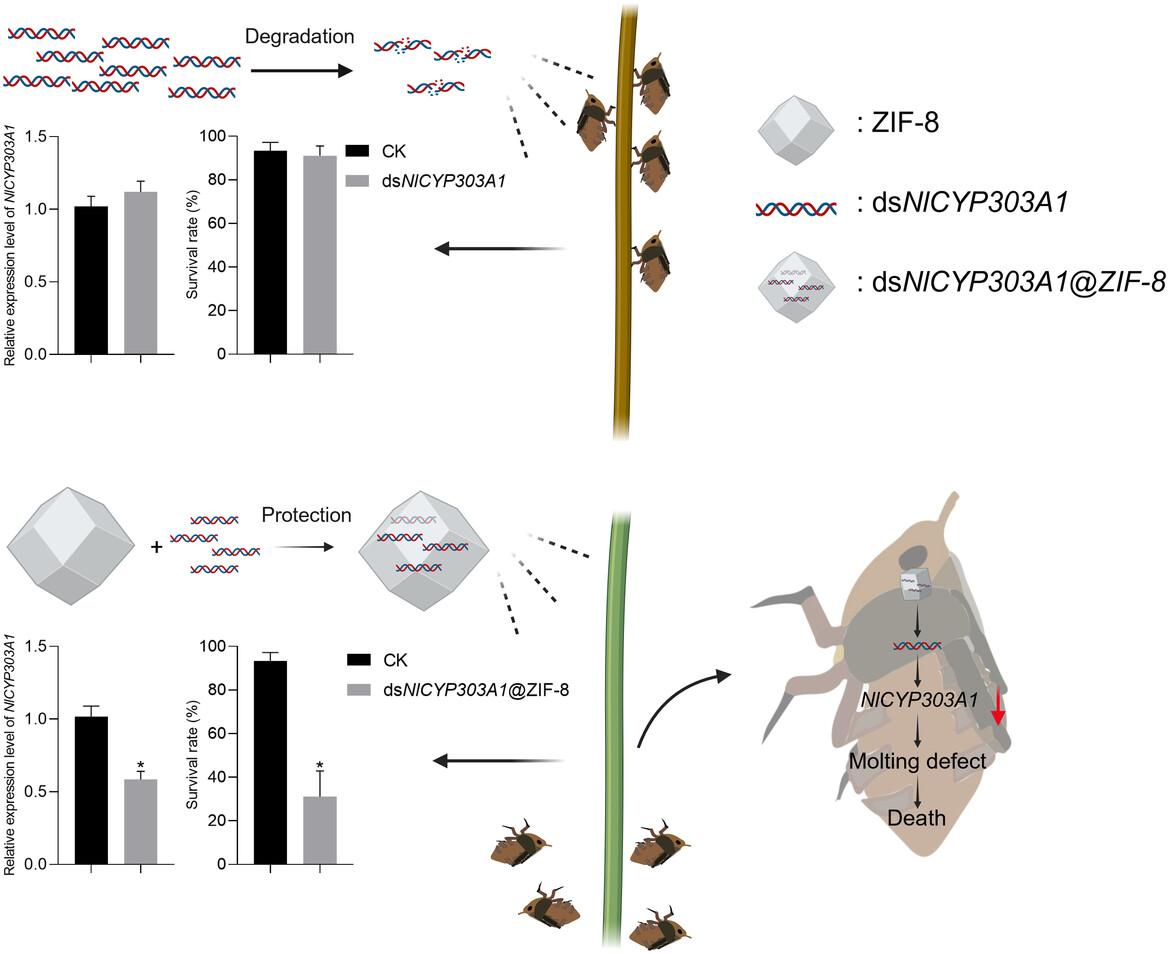
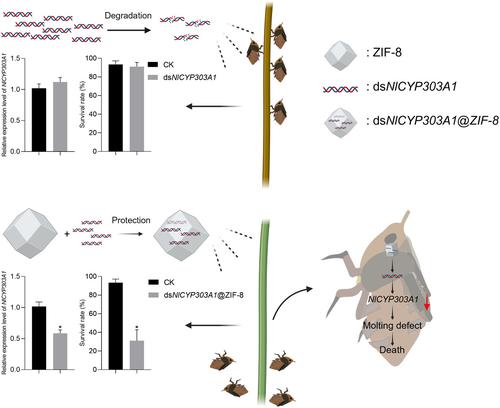
In this study, we characterized a molting-related gene, NlCYP303A1, in Nilaparvata lugens that was highly expressed in the cuticle and at the end stages of each instar in nymphs. Silencing the expression of NlCYP303A1 in N. lugens resulted in a deformed phenotype and a significant increase in mortality. Furthermore, interfering with NlCYP303A1 changed the relative expression of key genes in the chitin synthesis and degradation pathway. Finally, we used the nanocarrier zeolitic imidazolate framework-8 (ZIF-8) to load dsNlCYP303A1, forming a complex denoted as dsNlCYP303A1@ZIF-8. The results of both feeding and rice-seedling dip experiments indicated that the expression of NlCYP303A1 was dramatically and persistently suppressed by the dsNlCYP303A1@ZIF-8 treatment, compared with treatment with dsNlCYP303A1, suggesting that ZIF-8 can enhance the interference efficiency as well as the stability of dsNlCYP303A1.
Our results demonstrate that the lethal gene NlCYP303A1 can be employed as an excellent target for RNAi technology by loading onto a nano-delivery system, and provide new insights into the creation of innovative pest control approaches. © 2024 Society of Chemical Industry.






 京公网安备 11010802042870号
京ICP备2023020795号-1
京公网安备 11010802042870号
京ICP备2023020795号-1

 分享
分享
 求助内容:
求助内容: 应助结果提醒方式:
 扫码关注我们
