{"title":"Wellbeing: paved with good intentions, but the road needs fixing first","authors":"Mayur Murali, Seema Agarwal","doi":"10.1111/anae.16451","DOIUrl":null,"url":null,"abstract":"<p>During the last 10 years of austerity, chronic under-investment in the NHS has affected technology acquisition, building infrastructure, training and development of staff [<span>1</span>]. Consequently, resident doctors have seen the erosion of their working conditions and job satisfaction, with the 2024 National Trainee Survey from the General Medical Council (GMC) highlighting that 21% of resident doctors are at high risk of burnout and 52% describe their work as emotionally exhausting [<span>2</span>]. This is reflected in anaesthesia, with a high prevalence of perceived stress, burnout and depression [<span>3</span>]. Focusing on poor wellbeing is important; clinically, it is associated with impaired decision-making, poorer performance at work and an increased risk of errors [<span>4, 5</span>]; on an individual level, it can cause serious physical and mental harm [<span>6</span>]. The scoping review by Winter et al. considering factors affecting wellbeing and stress in anaesthetists in UK training posts [<span>7</span>], is therefore timely. The authors describe a conceptual framework of individual and external factors that should be addressed in practice and policy to improve working conditions (Fig. 1). Their work strikes a chord, highlighting issues that all anaesthetists in training will be familiar with, both in the UK and elsewhere [<span>5</span>]. In this editorial, we focus on wellbeing in anaesthetic training, while looking at the wider picture to discuss the historical context, and advocating for simple, achievable and sustainable change.</p><p>Winter et al. describe the challenge of defining a concept as nebulous as wellbeing, with no clear consensus in the literature [<span>7</span>]. We suggest wellbeing at work should follow the eudemonic, rather than hedonic, definition: providing the best conditions for every anaesthetist in training to achieve their full potential. The approach is necessarily holistic, taking the view that performance at work is not limited to clinical considerations, but dependent on social, cultural, political and personal factors, which cannot be considered discretely and change over time. Addressing wellbeing is, therefore, complex, multifaceted and requires regular review.</p><p>In the early 2000s, UK medical training was standardised through the introduction of the Foundation Programme and specialist training with a time-limited endpoint. The medical apprenticeship model was disrupted by the introduction of the European Working Time Directive in 2009, setting a maximum working time of 48 hours per week. The 2016 junior doctor contract improved working conditions by setting limits on hours, mandating rest periods and advocating for rest facility provision. The Future Hospital Commission [<span>8</span>] and the Shape of Training [<span>9</span>] reports called for doctors with generalist skills, able to care for complex patients with multiple comorbidities. These were followed by GMC standards for postgraduate curricula, which recommended restructuring medical training [<span>10</span>]. The 2021 UK anaesthetic training curriculum articulated the standards required for consultant anaesthetic practice, and purports to reflect the need for patient-focused generalists with flexibility in their career structure [<span>11</span>].</p><p>While the changes to training were well-meaning, some had unintended consequences. The European Working Time Directive reduced training opportunities, trainee–trainer contact and damaged continuity of care [<span>12</span>]. Coupled with the centralisation of training and the amalgamation of training regions, it led to the loss of the traditional firm structure, negatively impacting on the development of long-term working relationships, team spirit and opportunities for mentorship, feedback and experiential learning [<span>13</span>]. Structured training programmes reduce personal agency, with fewer opportunities to explore alternative career pathways or take career breaks, increasing the risk of burnout [<span>14</span>].</p><p>In anaesthetics, the introduction of the new curriculum has had some teething problems. For those doctors midway through training, the switch caused uncertainty, training extensions and the loss of previously arranged higher rotations. Entry into intermediate and higher training stopped in 2021, with a recruitment freeze in 2022; this left many anaesthetists without jobs and having to undertake an extra year outside of a training programme, causing a bottleneck for entry training in 2023. Many felt the recruitment process was unfair, negatively impacted on wellbeing, and reported feeling undervalued and abandoned [<span>15</span>]. The effects were compounded by the preceding COVID-19 pandemic, where many anaesthetists in training had been redeployed to intensive care units; the toll this had on wellbeing is well-documented [<span>16</span>]. Coupled with high-profile examination and recruitment problems, and the debate around anaesthesia associates, it is clear that anaesthetists in training have had to deal with a huge amount of external noise in addition to the stresses of the day job.</p><p>Some doctors may be at greater risk of poor wellbeing. International medical graduates are at particular risk, owing to the many and varied difficulties of relocating and practising medicine outside their country of training. These include clinical; cultural; communication (e.g. differential consultation models); practical (e.g. securing sponsorship for visa applications); and personal (e.g. being away from support networks) challenges. A recent survey showed that 58% of international medical graduates felt their induction was inadequate, reporting insufficient time for shadowing, with over 60% fearful of medicolegal issues arising [<span>17</span>]. This is sadly borne out in the statistics, with doctors from ethnic minority backgrounds, and international medical graduates in particular, at greater risk of referral to the GMC [<span>18</span>].</p><p>Differential attainment in recruitment, retention and examination performance remains a significant problem for doctors from ethnic minority backgrounds [<span>19</span>]. Women, who make up the majority of medical graduates and yet are under-represented at consultant level in anaesthesia, face challenges including gendered perceptions of how they should behave in the workplace, and health issues including menstruation, pregnancy and menopause, which can impact performance at work [<span>20</span>]. Discrimination in the workplace is depressingly rife, with female, non-heterosexual, disabled and ethnic minority colleagues more likely to hear discriminatory comments [<span>2</span>]. The anaesthetic workforce is hugely diverse, and this is a strength that should be celebrated; tackling these issues, many of which are systemic, will be key to ensuring we retain this diversity and improve working conditions for all.</p><p>So, what can we do to change the narrative? The recently published REFORM principles [<span>21</span>], act as a guide for postgraduate training leads (Box 1). We present several simple interventions that could improve anaesthetic training experience and wellbeing, which align with the frameworks from REFORM and Winter et al. Many are common sense; a general guiding principle is, “<i>Would this be considered acceptable for employees in other sectors?</i>”</p><p>First, a single lead employer model, where resident doctors stay with the same employer regardless of rotations, reducing registration paperwork, face-to-face paperwork checks and occupational health appointments. At present these checks are conducted before joining a Trust and trainees are required to attend face-to-face appointments in their own time. This becomes particularly problematic during 3-month rotational training posts. Allied to this is the experience many doctors are familiar with, namely errors in pay and inappropriate taxation. These include starting on the wrong nodal pay point; use of emergency tax codes; and a lack of awareness over the terms and conditions of contracts. A single lead employer model would also provide a single point of contact for raising concerns. This model already exists in parts of the UK and is considered the optimum employment model [<span>22</span>]. It would benefit the NHS through savings delivered by economies of scale and streamlining transactional processes.</p><p>Next, formal mentorship should be offered, with resident doctors matched to mentors of their choosing. Although the anaesthetics training programme is commended for its excellent clinical supervision, there is a lack of oversight, compounded by the move to host the annual performance reviews in absentia. The benefits of mentoring are well described and longitudinal guidance on career progression, training and resources is of great value. The goal of the relationship would be at the discretion of those involved and may change over time, from confidential dialogue and networking to coaching and role modelling, particularly for those from diverse backgrounds who may not see themselves represented in senior positions. It would also address three of the external themes identified in the conceptual framework from Winter et al. [<span>7</span>], namely support, progression and training.</p><p>We call for consistency in competency sign-off requirements. The 2021 curriculum was designed to move towards frequent, informal, formative assessment, with no minimum number of supervised learning events stipulated [<span>23</span>]. However, with many trainers uncertain on the curriculum's implementation, trainees have seen an increase in the administrative burden. We call for consistency across departments in how these assessments are used, with a reduction in the number required.</p><p>Concurrently, we call for consistency in the provision of self-development time. Resident doctors are required to complete administrative or self-development work related to training in their spare time, outside contracted working hours. Despite its benefits, self-development time has been challenging to implement, and there is variability between Trusts for doctors in the same speciality. In many cases, self-development time is not protected and resident doctors may be asked to support clinical work when departments are short-staffed. There is inequity between specialities, with some (such as emergency medicine) entitled to up to 8 hours full-time equivalent every week. We call for consistency in how self-development time is implemented in all medical specialities and across Trusts, with built-in protection to prevent resident doctors from losing this time.</p><p>Finally, and perhaps most importantly, workplace facilities. All doctors in anaesthetic training have experienced posts with no operating theatre locker provision; inadequate changing facilities; limited access to food and drink out-of-hours; exorbitant car parking charges; and the absence of or inadequate rest facilities. Sharing rooms, including with members of the opposite sex, sleeping on the floor or on chairs pushed together, or on-call rooms in which windows cannot be opened and air conditioning is unavailable, are commonplace and unacceptable. Guidance on what constitutes adequate rest facilities exists for anaesthetic departments [<span>24</span>]; given the well-known risks of fatigue [<span>25</span>], it is surprising that heterogeneity in rest space provision persists. Allied to this is poor information technology infrastructure and lack of private office space. Many resident doctors are forced to work in busy clinical areas where maintaining concentration and patient confidentiality are challenging. We call for national standards on workplace facilities to be mandated, with Trusts found in breach fined, addressing the rest and resources segments of the model from Winter et al. [<span>7</span>].</p><p>Positive changes to UK anaesthetic training are in progress. The Fellowship of the Royal College of Anaesthetists (FRCA) examination has undergone internal and independent review in response to concerns about its relevance to contemporary anaesthetic practice, and include an evaluation of the impact of gender, ethnicity and educational background on examination performance [<span>26</span>]. These changes should benefit resident doctors in the long term and address issues found in both the training and progression segments of the conceptual model from Winter et al. [<span>7</span>].</p><p>The <i>Enhancing Junior Doctors' Working Lives</i> document champions flexible working patterns, allowing doctors across all specialities to work less than full-time for individual, professional or lifestyle needs [<span>27</span>]. Addressing issues identified in the work patterns segment of the conceptual model from Winter et al. [<span>7</span>], this should offer resident doctors more autonomy and agency over their working life. In 2023, an Extraordinary General Meeting of the Royal College of Anaesthetists led to commitments in reducing short-term rotational placements, exploring regional recruitment, and undertaking a consultation to assess the impact of anaesthesia associates' recruitment on resident doctors.</p><p>These system changes are in addition to those happening at a local level in anaesthetic departments throughout the UK, from ‘coffee and a gas’ meetings to mindfulness and yoga sessions. This speaks to a hopeful future, with an incredibly engaged workforce, committed to improving working and training conditions, and to a receptive College that wants to collaborate with its members.</p>","PeriodicalId":7742,"journal":{"name":"Anaesthesia","volume":"80 2","pages":"129-133"},"PeriodicalIF":6.9000,"publicationDate":"2024-10-17","publicationTypes":"Journal Article","fieldsOfStudy":null,"isOpenAccess":false,"openAccessPdf":"https://onlinelibrary.wiley.com/doi/epdf/10.1111/anae.16451","citationCount":"0","resultStr":null,"platform":"Semanticscholar","paperid":null,"PeriodicalName":"Anaesthesia","FirstCategoryId":"3","ListUrlMain":"https://associationofanaesthetists-publications.onlinelibrary.wiley.com/doi/10.1111/anae.16451","RegionNum":1,"RegionCategory":"医学","ArticlePicture":[],"TitleCN":null,"AbstractTextCN":null,"PMCID":null,"EPubDate":"","PubModel":"","JCR":"Q1","JCRName":"ANESTHESIOLOGY","Score":null,"Total":0}
引用次数: 0
Abstract
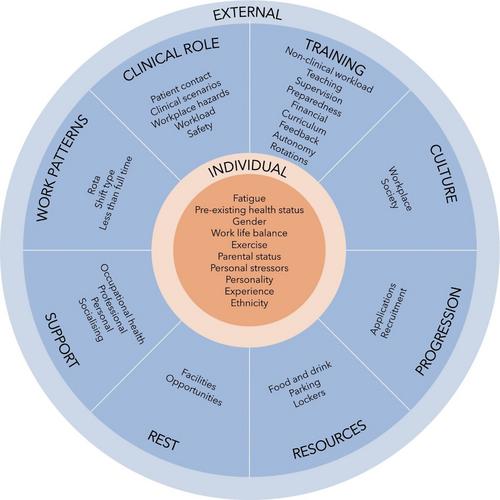
During the last 10 years of austerity, chronic under-investment in the NHS has affected technology acquisition, building infrastructure, training and development of staff [1]. Consequently, resident doctors have seen the erosion of their working conditions and job satisfaction, with the 2024 National Trainee Survey from the General Medical Council (GMC) highlighting that 21% of resident doctors are at high risk of burnout and 52% describe their work as emotionally exhausting [2]. This is reflected in anaesthesia, with a high prevalence of perceived stress, burnout and depression [3]. Focusing on poor wellbeing is important; clinically, it is associated with impaired decision-making, poorer performance at work and an increased risk of errors [4, 5]; on an individual level, it can cause serious physical and mental harm [6]. The scoping review by Winter et al. considering factors affecting wellbeing and stress in anaesthetists in UK training posts [7], is therefore timely. The authors describe a conceptual framework of individual and external factors that should be addressed in practice and policy to improve working conditions (Fig. 1). Their work strikes a chord, highlighting issues that all anaesthetists in training will be familiar with, both in the UK and elsewhere [5]. In this editorial, we focus on wellbeing in anaesthetic training, while looking at the wider picture to discuss the historical context, and advocating for simple, achievable and sustainable change.
Winter et al. describe the challenge of defining a concept as nebulous as wellbeing, with no clear consensus in the literature [7]. We suggest wellbeing at work should follow the eudemonic, rather than hedonic, definition: providing the best conditions for every anaesthetist in training to achieve their full potential. The approach is necessarily holistic, taking the view that performance at work is not limited to clinical considerations, but dependent on social, cultural, political and personal factors, which cannot be considered discretely and change over time. Addressing wellbeing is, therefore, complex, multifaceted and requires regular review.
In the early 2000s, UK medical training was standardised through the introduction of the Foundation Programme and specialist training with a time-limited endpoint. The medical apprenticeship model was disrupted by the introduction of the European Working Time Directive in 2009, setting a maximum working time of 48 hours per week. The 2016 junior doctor contract improved working conditions by setting limits on hours, mandating rest periods and advocating for rest facility provision. The Future Hospital Commission [8] and the Shape of Training [9] reports called for doctors with generalist skills, able to care for complex patients with multiple comorbidities. These were followed by GMC standards for postgraduate curricula, which recommended restructuring medical training [10]. The 2021 UK anaesthetic training curriculum articulated the standards required for consultant anaesthetic practice, and purports to reflect the need for patient-focused generalists with flexibility in their career structure [11].
While the changes to training were well-meaning, some had unintended consequences. The European Working Time Directive reduced training opportunities, trainee–trainer contact and damaged continuity of care [12]. Coupled with the centralisation of training and the amalgamation of training regions, it led to the loss of the traditional firm structure, negatively impacting on the development of long-term working relationships, team spirit and opportunities for mentorship, feedback and experiential learning [13]. Structured training programmes reduce personal agency, with fewer opportunities to explore alternative career pathways or take career breaks, increasing the risk of burnout [14].
In anaesthetics, the introduction of the new curriculum has had some teething problems. For those doctors midway through training, the switch caused uncertainty, training extensions and the loss of previously arranged higher rotations. Entry into intermediate and higher training stopped in 2021, with a recruitment freeze in 2022; this left many anaesthetists without jobs and having to undertake an extra year outside of a training programme, causing a bottleneck for entry training in 2023. Many felt the recruitment process was unfair, negatively impacted on wellbeing, and reported feeling undervalued and abandoned [15]. The effects were compounded by the preceding COVID-19 pandemic, where many anaesthetists in training had been redeployed to intensive care units; the toll this had on wellbeing is well-documented [16]. Coupled with high-profile examination and recruitment problems, and the debate around anaesthesia associates, it is clear that anaesthetists in training have had to deal with a huge amount of external noise in addition to the stresses of the day job.
Some doctors may be at greater risk of poor wellbeing. International medical graduates are at particular risk, owing to the many and varied difficulties of relocating and practising medicine outside their country of training. These include clinical; cultural; communication (e.g. differential consultation models); practical (e.g. securing sponsorship for visa applications); and personal (e.g. being away from support networks) challenges. A recent survey showed that 58% of international medical graduates felt their induction was inadequate, reporting insufficient time for shadowing, with over 60% fearful of medicolegal issues arising [17]. This is sadly borne out in the statistics, with doctors from ethnic minority backgrounds, and international medical graduates in particular, at greater risk of referral to the GMC [18].
Differential attainment in recruitment, retention and examination performance remains a significant problem for doctors from ethnic minority backgrounds [19]. Women, who make up the majority of medical graduates and yet are under-represented at consultant level in anaesthesia, face challenges including gendered perceptions of how they should behave in the workplace, and health issues including menstruation, pregnancy and menopause, which can impact performance at work [20]. Discrimination in the workplace is depressingly rife, with female, non-heterosexual, disabled and ethnic minority colleagues more likely to hear discriminatory comments [2]. The anaesthetic workforce is hugely diverse, and this is a strength that should be celebrated; tackling these issues, many of which are systemic, will be key to ensuring we retain this diversity and improve working conditions for all.
So, what can we do to change the narrative? The recently published REFORM principles [21], act as a guide for postgraduate training leads (Box 1). We present several simple interventions that could improve anaesthetic training experience and wellbeing, which align with the frameworks from REFORM and Winter et al. Many are common sense; a general guiding principle is, “Would this be considered acceptable for employees in other sectors?”
First, a single lead employer model, where resident doctors stay with the same employer regardless of rotations, reducing registration paperwork, face-to-face paperwork checks and occupational health appointments. At present these checks are conducted before joining a Trust and trainees are required to attend face-to-face appointments in their own time. This becomes particularly problematic during 3-month rotational training posts. Allied to this is the experience many doctors are familiar with, namely errors in pay and inappropriate taxation. These include starting on the wrong nodal pay point; use of emergency tax codes; and a lack of awareness over the terms and conditions of contracts. A single lead employer model would also provide a single point of contact for raising concerns. This model already exists in parts of the UK and is considered the optimum employment model [22]. It would benefit the NHS through savings delivered by economies of scale and streamlining transactional processes.
Next, formal mentorship should be offered, with resident doctors matched to mentors of their choosing. Although the anaesthetics training programme is commended for its excellent clinical supervision, there is a lack of oversight, compounded by the move to host the annual performance reviews in absentia. The benefits of mentoring are well described and longitudinal guidance on career progression, training and resources is of great value. The goal of the relationship would be at the discretion of those involved and may change over time, from confidential dialogue and networking to coaching and role modelling, particularly for those from diverse backgrounds who may not see themselves represented in senior positions. It would also address three of the external themes identified in the conceptual framework from Winter et al. [7], namely support, progression and training.
We call for consistency in competency sign-off requirements. The 2021 curriculum was designed to move towards frequent, informal, formative assessment, with no minimum number of supervised learning events stipulated [23]. However, with many trainers uncertain on the curriculum's implementation, trainees have seen an increase in the administrative burden. We call for consistency across departments in how these assessments are used, with a reduction in the number required.
Concurrently, we call for consistency in the provision of self-development time. Resident doctors are required to complete administrative or self-development work related to training in their spare time, outside contracted working hours. Despite its benefits, self-development time has been challenging to implement, and there is variability between Trusts for doctors in the same speciality. In many cases, self-development time is not protected and resident doctors may be asked to support clinical work when departments are short-staffed. There is inequity between specialities, with some (such as emergency medicine) entitled to up to 8 hours full-time equivalent every week. We call for consistency in how self-development time is implemented in all medical specialities and across Trusts, with built-in protection to prevent resident doctors from losing this time.
Finally, and perhaps most importantly, workplace facilities. All doctors in anaesthetic training have experienced posts with no operating theatre locker provision; inadequate changing facilities; limited access to food and drink out-of-hours; exorbitant car parking charges; and the absence of or inadequate rest facilities. Sharing rooms, including with members of the opposite sex, sleeping on the floor or on chairs pushed together, or on-call rooms in which windows cannot be opened and air conditioning is unavailable, are commonplace and unacceptable. Guidance on what constitutes adequate rest facilities exists for anaesthetic departments [24]; given the well-known risks of fatigue [25], it is surprising that heterogeneity in rest space provision persists. Allied to this is poor information technology infrastructure and lack of private office space. Many resident doctors are forced to work in busy clinical areas where maintaining concentration and patient confidentiality are challenging. We call for national standards on workplace facilities to be mandated, with Trusts found in breach fined, addressing the rest and resources segments of the model from Winter et al. [7].
Positive changes to UK anaesthetic training are in progress. The Fellowship of the Royal College of Anaesthetists (FRCA) examination has undergone internal and independent review in response to concerns about its relevance to contemporary anaesthetic practice, and include an evaluation of the impact of gender, ethnicity and educational background on examination performance [26]. These changes should benefit resident doctors in the long term and address issues found in both the training and progression segments of the conceptual model from Winter et al. [7].
The Enhancing Junior Doctors' Working Lives document champions flexible working patterns, allowing doctors across all specialities to work less than full-time for individual, professional or lifestyle needs [27]. Addressing issues identified in the work patterns segment of the conceptual model from Winter et al. [7], this should offer resident doctors more autonomy and agency over their working life. In 2023, an Extraordinary General Meeting of the Royal College of Anaesthetists led to commitments in reducing short-term rotational placements, exploring regional recruitment, and undertaking a consultation to assess the impact of anaesthesia associates' recruitment on resident doctors.
These system changes are in addition to those happening at a local level in anaesthetic departments throughout the UK, from ‘coffee and a gas’ meetings to mindfulness and yoga sessions. This speaks to a hopeful future, with an incredibly engaged workforce, committed to improving working and training conditions, and to a receptive College that wants to collaborate with its members.
期刊介绍:
The official journal of the Association of Anaesthetists is Anaesthesia. It is a comprehensive international publication that covers a wide range of topics. The journal focuses on general and regional anaesthesia, as well as intensive care and pain therapy. It includes original articles that have undergone peer review, covering all aspects of these fields, including research on equipment.





 京公网安备 11010802042870号
京ICP备2023020795号-1
京公网安备 11010802042870号
京ICP备2023020795号-1

 分享
分享
 求助内容:
求助内容: 应助结果提醒方式:
 扫码关注我们
