Within the framework of sustainable and effective control methods for Aedes albopictus, two different conidial suspensions, BbCS-1 and BbCS-2 (respectively without and with nutrients), were used as solvents for the biopolymers water-soluble 2-hydroxyethylcellulose (HEC) and sodium alginate (SA). In this way, two different classes of hydrogels were prepared for each polymer (previously shown to attract tiger mosquito oviposition) to produce HEC-based and SA-based Bb/Gel systems with and without nutrients. The aim was to achieve a long-lasting and cost-effective lure-and-kill oviposition substrate useful for lethal ovitraps. Beauveria bassiana (Bb) survival and growth in the different Bb/Gel systems were monitored for 24 days. Following the growth assay, 24-day-old Bb/Gel systems were tested against Ae. albopictus eggs through a hatching test to evaluate their lethal effect.
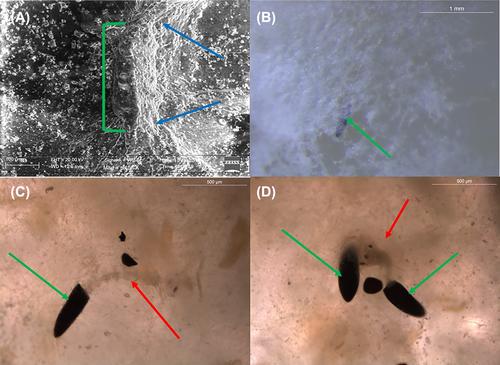
Gel systems enhance Bb's longevity (up to 24 days) more effectively than standard liquid conidial suspensions, proving that tested HEC- and SA-based hydrogels are not toxic for Bb (biocompatibility) and create a microenvironment suitable to sustain prolonged fungal growth. In particular, the results indicate that gel system based on hydroxyethylcellulose is a suitable delivery substrate for supporting the activity of Bb and is simultaneously effective against Ae. albopictus eggs through a combined mechanism of mechanical effect and fungal action (CM > 90%).
The efficacy of Bb gel systems was assessed according to its properties in favouring the growth and vitality of Bb as well as in reducing the Ae. albopictus hatching eggs rate. Further studies, in semi-field and field conditions, will be useful to evaluate the efficacy of Bb/Gel systems on adults in terms of attraction, oviposition, mortality, and potential autodissemination to propose a new tool in precision pest management. © 2024 The Author(s). Pest Management Science published by John Wiley & Sons Ltd on behalf of Society of Chemical Industry.






 京公网安备 11010802042870号
京ICP备2023020795号-1
京公网安备 11010802042870号
京ICP备2023020795号-1

 分享
分享
 求助内容:
求助内容: 应助结果提醒方式:
 扫码关注我们
