Ning Li, Jia Zhang, Yang Du, Jing Li, Anxin Wang, Xingquan Zhao
{"title":"Gait speed after mild stroke/transient ischemic attack was associated with long-term adverse outcomes: A cohort study","authors":"Ning Li, Jia Zhang, Yang Du, Jing Li, Anxin Wang, Xingquan Zhao","doi":"10.1002/acn3.52222","DOIUrl":null,"url":null,"abstract":"<div>\n \n \n <section>\n \n <h3> Objective</h3>\n \n <p>The association between gait speed and adverse outcomes after stroke has not been fully illustrated. This study aimed to explore the association of gait speed on long-term outcomes in minor stroke or transient ischemic attack (TIA).</p>\n </section>\n \n <section>\n \n <h3> Methods</h3>\n \n <p>We performed a longitudinal study with acute minor stroke or TIA based on a subgroup of the Third China National Stroke Registry data. The gait speed was evaluated using a 10-meter walking test at discharge and 3 months after the stroke onset. The primary outcomes were poor functional outcomes at 1 year, defined by a modified Rankin Score (mRS) of 2–6. Additional outcomes included all-cause death, ambulate dependency (mRS score 4–6), cognitive impairment (Montreal Cognitive Assessment <26), stroke recurrence, and composite vascular events.</p>\n </section>\n \n <section>\n \n <h3> Results</h3>\n \n <p>The study sample included a total of 1542 stroke patients with a median age of 60 (53–68). At 1-year follow-up, 140 (9.20%) patients experienced poor functional outcomes. Faster gait speed at discharge was associated with lower incidence of poor functional outcome (OR = 0.89; 95% CI, 0.84–0.94), cognitive impairment (OR = 0.93; 95% CI, 0.89–0.96), ischemic stroke recurrence (HR = 0.92; 95% CI, 0.87–0.98), and composite vascular events (HR =0.94; 95% CI, 0.89–0.99) at 1 year. Faster gait speed at 3 months was associated with lower incidence of poor functional outcome (OR = 0.90; 95% CI, 0.85–0.95), ambulate dependency (OR = 0.86; 95% CI, 0.77–0.97), and cognitive impairment (OR = 0.92; 95% CI, 0.88–0.95) at 1 year.</p>\n </section>\n \n <section>\n \n <h3> Interpretation</h3>\n \n <p>Our findings indicated that slow gait speed after minor stroke or TIA may be an independent predictor for long-term poor outcomes. Gait speed may be considered as a vital sign during follow-up in post-stroke patients.</p>\n </section>\n </div>","PeriodicalId":126,"journal":{"name":"Annals of Clinical and Translational Neurology","volume":"11 12","pages":"3163-3174"},"PeriodicalIF":3.9000,"publicationDate":"2024-10-11","publicationTypes":"Journal Article","fieldsOfStudy":null,"isOpenAccess":false,"openAccessPdf":"https://onlinelibrary.wiley.com/doi/epdf/10.1002/acn3.52222","citationCount":"0","resultStr":null,"platform":"Semanticscholar","paperid":null,"PeriodicalName":"Annals of Clinical and Translational Neurology","FirstCategoryId":"3","ListUrlMain":"https://onlinelibrary.wiley.com/doi/10.1002/acn3.52222","RegionNum":2,"RegionCategory":"医学","ArticlePicture":[],"TitleCN":null,"AbstractTextCN":null,"PMCID":null,"EPubDate":"","PubModel":"","JCR":"Q1","JCRName":"CLINICAL NEUROLOGY","Score":null,"Total":0}
引用次数: 0
Abstract
Objective
The association between gait speed and adverse outcomes after stroke has not been fully illustrated. This study aimed to explore the association of gait speed on long-term outcomes in minor stroke or transient ischemic attack (TIA).
Methods
We performed a longitudinal study with acute minor stroke or TIA based on a subgroup of the Third China National Stroke Registry data. The gait speed was evaluated using a 10-meter walking test at discharge and 3 months after the stroke onset. The primary outcomes were poor functional outcomes at 1 year, defined by a modified Rankin Score (mRS) of 2–6. Additional outcomes included all-cause death, ambulate dependency (mRS score 4–6), cognitive impairment (Montreal Cognitive Assessment <26), stroke recurrence, and composite vascular events.
Results
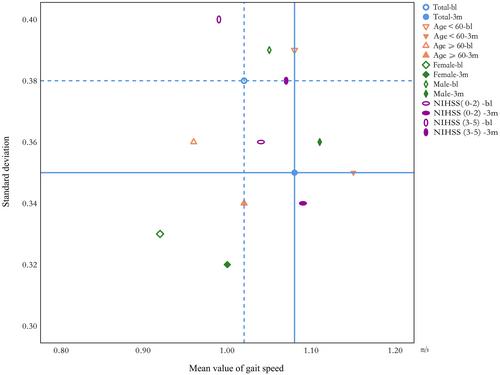
The study sample included a total of 1542 stroke patients with a median age of 60 (53–68). At 1-year follow-up, 140 (9.20%) patients experienced poor functional outcomes. Faster gait speed at discharge was associated with lower incidence of poor functional outcome (OR = 0.89; 95% CI, 0.84–0.94), cognitive impairment (OR = 0.93; 95% CI, 0.89–0.96), ischemic stroke recurrence (HR = 0.92; 95% CI, 0.87–0.98), and composite vascular events (HR =0.94; 95% CI, 0.89–0.99) at 1 year. Faster gait speed at 3 months was associated with lower incidence of poor functional outcome (OR = 0.90; 95% CI, 0.85–0.95), ambulate dependency (OR = 0.86; 95% CI, 0.77–0.97), and cognitive impairment (OR = 0.92; 95% CI, 0.88–0.95) at 1 year.
Interpretation
Our findings indicated that slow gait speed after minor stroke or TIA may be an independent predictor for long-term poor outcomes. Gait speed may be considered as a vital sign during follow-up in post-stroke patients.
期刊介绍:
Annals of Clinical and Translational Neurology is a peer-reviewed journal for rapid dissemination of high-quality research related to all areas of neurology. The journal publishes original research and scholarly reviews focused on the mechanisms and treatments of diseases of the nervous system; high-impact topics in neurologic education; and other topics of interest to the clinical neuroscience community.




 京公网安备 11010802042870号
京ICP备2023020795号-1
京公网安备 11010802042870号
京ICP备2023020795号-1

 分享
分享
 求助内容:
求助内容: 应助结果提醒方式:
 扫码关注我们
