{"title":"The good, the bad and the ugly: What do we really do when we identify the best and the worst organisations?","authors":"Gary A Abel, Denis Agniel, Marc N Elliott","doi":"10.1136/bmjqs-2023-017039","DOIUrl":null,"url":null,"abstract":"<p><p>Identifying high and poorly performing organisations is common practice in healthcare. Often this is done within a frequentist inferential framework where statistical techniques are used that acknowledge that observed performance is an imperfect measure of underlying quality. Various methods are employed for this purpose, but the influence of chance on the degree of misclassification is often underappreciated. Using simulations, we show that the distribution of underlying performance of organisations flagged as the worst performers, using current best practices, was highly dependent on the reliability of the performance measure. When reliability was low, flagged organisations were likely to have an underlying performance that was near the population average. Reliability needs to reach at least 0.7 for 50% of flagged organisations to be correctly flagged and 0.9 to nearly eliminate incorrectly flagging organisations close to the overall mean. We conclude that despite their widespread use, techniques for identifying the best and worst performing organisations do not necessarily identify truly good and bad performers and even with the best techniques, reliable data are required.</p>","PeriodicalId":9077,"journal":{"name":"BMJ Quality & Safety","volume":" ","pages":"53-61"},"PeriodicalIF":6.5000,"publicationDate":"2024-12-13","publicationTypes":"Journal Article","fieldsOfStudy":null,"isOpenAccess":false,"openAccessPdf":"https://www.ncbi.nlm.nih.gov/pmc/articles/PMC11671991/pdf/","citationCount":"0","resultStr":null,"platform":"Semanticscholar","paperid":null,"PeriodicalName":"BMJ Quality & Safety","FirstCategoryId":"3","ListUrlMain":"https://doi.org/10.1136/bmjqs-2023-017039","RegionNum":1,"RegionCategory":"医学","ArticlePicture":[],"TitleCN":null,"AbstractTextCN":null,"PMCID":null,"EPubDate":"","PubModel":"","JCR":"Q1","JCRName":"HEALTH CARE SCIENCES & SERVICES","Score":null,"Total":0}
引用次数: 0
Abstract
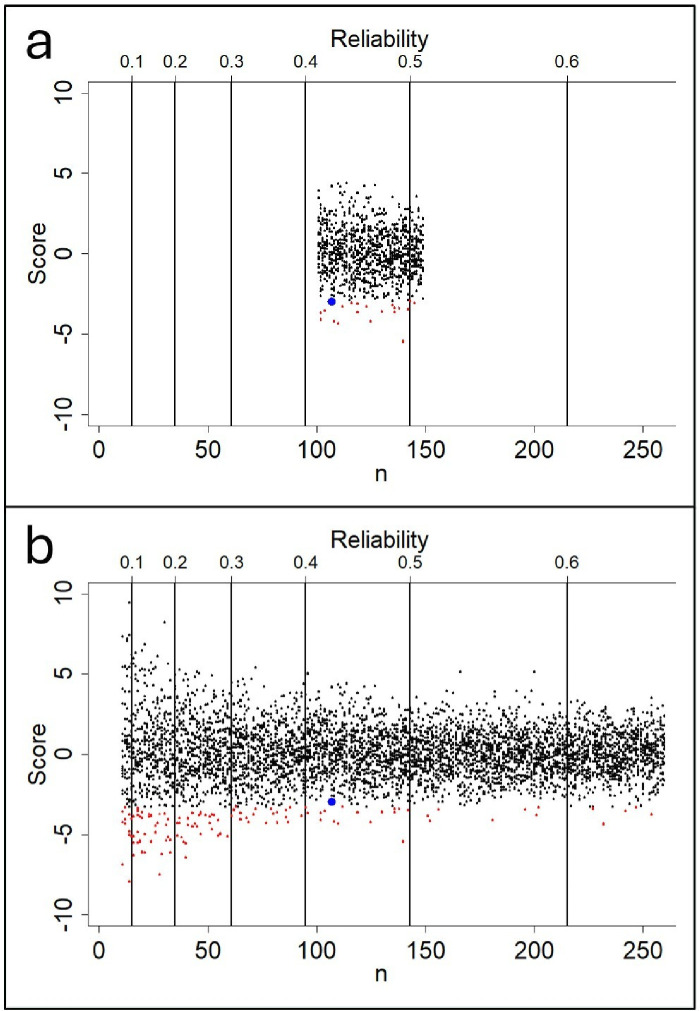
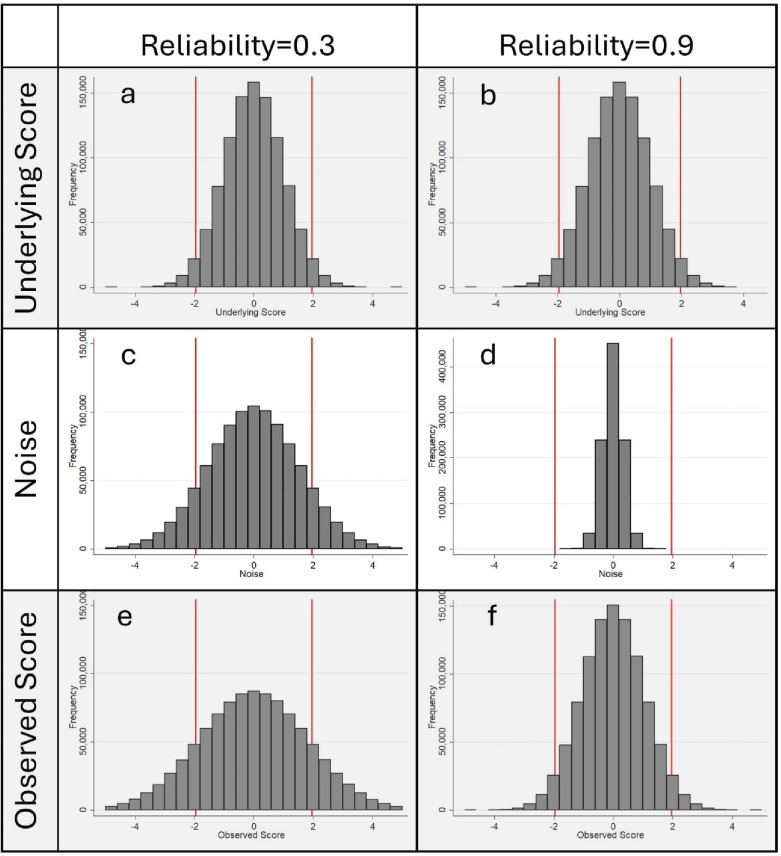
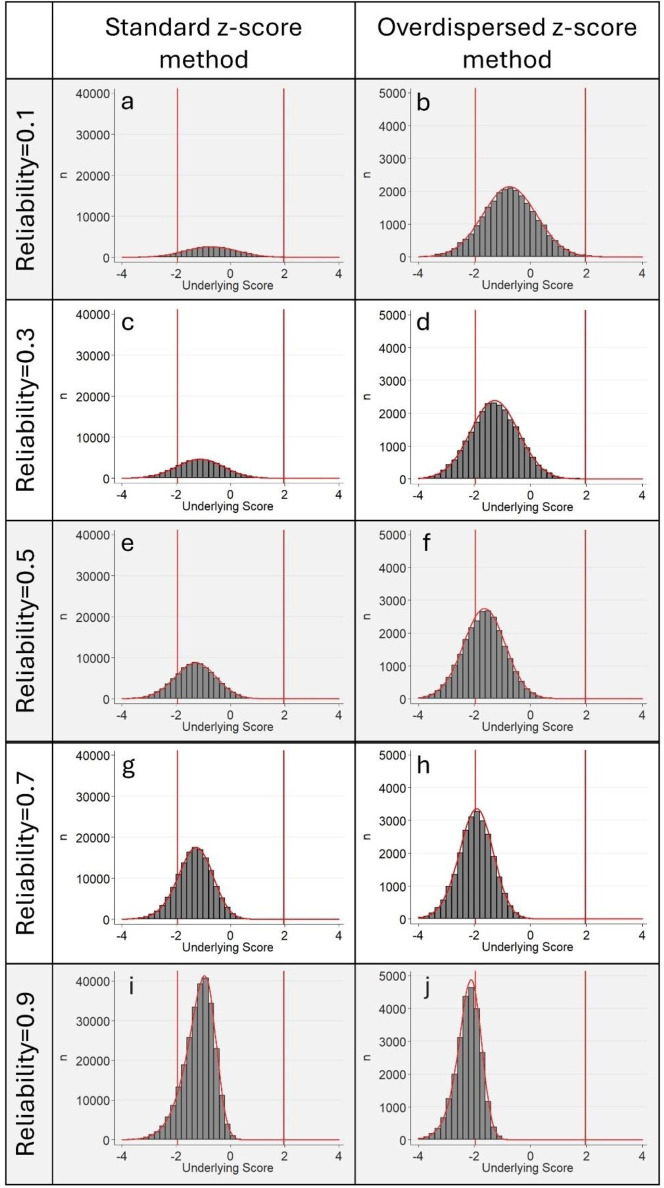
Identifying high and poorly performing organisations is common practice in healthcare. Often this is done within a frequentist inferential framework where statistical techniques are used that acknowledge that observed performance is an imperfect measure of underlying quality. Various methods are employed for this purpose, but the influence of chance on the degree of misclassification is often underappreciated. Using simulations, we show that the distribution of underlying performance of organisations flagged as the worst performers, using current best practices, was highly dependent on the reliability of the performance measure. When reliability was low, flagged organisations were likely to have an underlying performance that was near the population average. Reliability needs to reach at least 0.7 for 50% of flagged organisations to be correctly flagged and 0.9 to nearly eliminate incorrectly flagging organisations close to the overall mean. We conclude that despite their widespread use, techniques for identifying the best and worst performing organisations do not necessarily identify truly good and bad performers and even with the best techniques, reliable data are required.
期刊介绍:
BMJ Quality & Safety (previously Quality & Safety in Health Care) is an international peer review publication providing research, opinions, debates and reviews for academics, clinicians and healthcare managers focused on the quality and safety of health care and the science of improvement.
The journal receives approximately 1000 manuscripts a year and has an acceptance rate for original research of 12%. Time from submission to first decision averages 22 days and accepted articles are typically published online within 20 days. Its current impact factor is 3.281.



 京公网安备 11010802042870号
京ICP备2023020795号-1
京公网安备 11010802042870号
京ICP备2023020795号-1

 分享
分享
 求助内容:
求助内容: 应助结果提醒方式:
 扫码关注我们
