Francesca Picca, Claudia Giannotta, Jiahao Tao, Lucia Giordanengo, H M Waqas Munir, Virginia Botta, Alessandra Merlini, Andrea Mogavero, Edoardo Garbo, Stefano Poletto, Paolo Bironzo, Gabriella Doronzo, Silvia Novello, Riccardo Taulli, Francesca Bersani
{"title":"From Cancer to Immune Organoids: Innovative Preclinical Models to Dissect the Crosstalk between Cancer Cells and the Tumor Microenvironment.","authors":"Francesca Picca, Claudia Giannotta, Jiahao Tao, Lucia Giordanengo, H M Waqas Munir, Virginia Botta, Alessandra Merlini, Andrea Mogavero, Edoardo Garbo, Stefano Poletto, Paolo Bironzo, Gabriella Doronzo, Silvia Novello, Riccardo Taulli, Francesca Bersani","doi":"10.3390/ijms251910823","DOIUrl":null,"url":null,"abstract":"<p><p>Genomic-oriented oncology has improved tumor classification, treatment options, and patient outcomes. However, genetic heterogeneity, tumor cell plasticity, and the ability of cancer cells to hijack the tumor microenvironment (TME) represent a major roadblock for cancer eradication. Recent biotechnological advances in organotypic cell cultures have revolutionized biomedical research, opening new avenues to explore the use of cancer organoids in functional precision oncology, especially when genomics alone is not a determinant. Here, we outline the potential and the limitations of tumor organoids in preclinical and translational studies with a particular focus on lung cancer pathogenesis, highlighting their relevance in predicting therapy response, evaluating treatment toxicity, and designing novel anticancer strategies. Furthermore, we describe innovative organotypic coculture systems to dissect the crosstalk with the TME and to test the efficacy of different immunotherapy approaches, including adoptive cell therapy. Finally, we discuss the potential clinical relevance of microfluidic mini-organ technology, capable of reproducing tumor vasculature and the dynamics of tumor initiation and progression, as well as immunomodulatory interactions among tumor organoids, cancer-associated fibroblasts (CAFs) and immune cells, paving the way for next-generation immune precision oncology.</p>","PeriodicalId":14156,"journal":{"name":"International Journal of Molecular Sciences","volume":"25 19","pages":""},"PeriodicalIF":4.9000,"publicationDate":"2024-10-09","publicationTypes":"Journal Article","fieldsOfStudy":null,"isOpenAccess":false,"openAccessPdf":"https://www.ncbi.nlm.nih.gov/pmc/articles/PMC11476904/pdf/","citationCount":"0","resultStr":null,"platform":"Semanticscholar","paperid":null,"PeriodicalName":"International Journal of Molecular Sciences","FirstCategoryId":"99","ListUrlMain":"https://doi.org/10.3390/ijms251910823","RegionNum":2,"RegionCategory":"生物学","ArticlePicture":[],"TitleCN":null,"AbstractTextCN":null,"PMCID":null,"EPubDate":"","PubModel":"","JCR":"","JCRName":"","Score":null,"Total":0}
引用次数: 0
Abstract
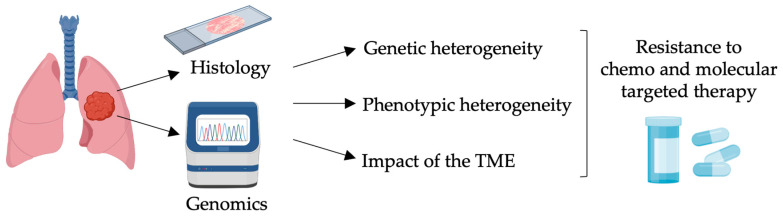
Genomic-oriented oncology has improved tumor classification, treatment options, and patient outcomes. However, genetic heterogeneity, tumor cell plasticity, and the ability of cancer cells to hijack the tumor microenvironment (TME) represent a major roadblock for cancer eradication. Recent biotechnological advances in organotypic cell cultures have revolutionized biomedical research, opening new avenues to explore the use of cancer organoids in functional precision oncology, especially when genomics alone is not a determinant. Here, we outline the potential and the limitations of tumor organoids in preclinical and translational studies with a particular focus on lung cancer pathogenesis, highlighting their relevance in predicting therapy response, evaluating treatment toxicity, and designing novel anticancer strategies. Furthermore, we describe innovative organotypic coculture systems to dissect the crosstalk with the TME and to test the efficacy of different immunotherapy approaches, including adoptive cell therapy. Finally, we discuss the potential clinical relevance of microfluidic mini-organ technology, capable of reproducing tumor vasculature and the dynamics of tumor initiation and progression, as well as immunomodulatory interactions among tumor organoids, cancer-associated fibroblasts (CAFs) and immune cells, paving the way for next-generation immune precision oncology.
期刊介绍:
The International Journal of Molecular Sciences (ISSN 1422-0067) provides an advanced forum for chemistry, molecular physics (chemical physics and physical chemistry) and molecular biology. It publishes research articles, reviews, communications and short notes. Our aim is to encourage scientists to publish their theoretical and experimental results in as much detail as possible. Therefore, there is no restriction on the length of the papers or the number of electronics supplementary files. For articles with computational results, the full experimental details must be provided so that the results can be reproduced. Electronic files regarding the full details of the calculation and experimental procedure, if unable to be published in a normal way, can be deposited as supplementary material (including animated pictures, videos, interactive Excel sheets, software executables and others).





 京公网安备 11010802042870号
京ICP备2023020795号-1
京公网安备 11010802042870号
京ICP备2023020795号-1

 分享
分享
 求助内容:
求助内容: 应助结果提醒方式:
 扫码关注我们
