{"title":"Assessment of diagnostic performance and complication rate in percutaneous lung biopsy based on target nodule size","authors":"Andrew W. Bowman, Zhuo Li","doi":"10.1007/s00261-024-04648-3","DOIUrl":null,"url":null,"abstract":"<div><h3>Purpose</h3><p>\n Percutaneous lung biopsies are a common radiologic procedure, although they are not without risk. As imaging techniques continue to increase in sophistication, referring providers may request lung biopsies on smaller and smaller targets. Our purpose is to better understand when we should expect lung biopsies to yield diagnostic results of lung nodules of varying sizes and how size impacts the complication rate of the procedure.</p><h3>Methods</h3><p>\n We retrospectively reviewed all outpatient lung biopsies performed at our institution between January 1, 2019, and June 30, 2020. For all procedures, target nodule size, location, diagnostic performance, and complication rates were recorded.</p><h3>Results</h3><p>\n We found that diagnostic yield increased with increasing nodule size, with ROC analysis indicating that the best threshold size to predict a diagnostic sample is 1.4 cm. Pneumothorax rate significantly increased with decreasing target size, but there was no significant association between target size and the need for either chest tube placement or hospital admission.</p><h3>Conclusion</h3><p>\n The smaller a lung nodule is, the harder it is to obtain a diagnostic sample, and the more likely it is to develop a post-biopsy pneumothorax. However, smaller target size is not associated with an increased risk of chest tube placement or hospital admission.</p></div>","PeriodicalId":7126,"journal":{"name":"Abdominal Radiology","volume":"50 5","pages":"2286 - 2293"},"PeriodicalIF":2.2000,"publicationDate":"2024-10-28","publicationTypes":"Journal Article","fieldsOfStudy":null,"isOpenAccess":false,"openAccessPdf":"","citationCount":"0","resultStr":null,"platform":"Semanticscholar","paperid":null,"PeriodicalName":"Abdominal Radiology","FirstCategoryId":"3","ListUrlMain":"https://link.springer.com/article/10.1007/s00261-024-04648-3","RegionNum":3,"RegionCategory":"医学","ArticlePicture":[],"TitleCN":null,"AbstractTextCN":null,"PMCID":null,"EPubDate":"","PubModel":"","JCR":"Q2","JCRName":"RADIOLOGY, NUCLEAR MEDICINE & MEDICAL IMAGING","Score":null,"Total":0}
引用次数: 0
Abstract
Purpose
Percutaneous lung biopsies are a common radiologic procedure, although they are not without risk. As imaging techniques continue to increase in sophistication, referring providers may request lung biopsies on smaller and smaller targets. Our purpose is to better understand when we should expect lung biopsies to yield diagnostic results of lung nodules of varying sizes and how size impacts the complication rate of the procedure.
Methods
We retrospectively reviewed all outpatient lung biopsies performed at our institution between January 1, 2019, and June 30, 2020. For all procedures, target nodule size, location, diagnostic performance, and complication rates were recorded.
Results
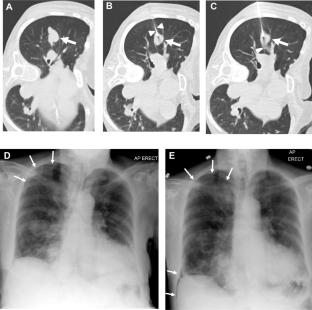
We found that diagnostic yield increased with increasing nodule size, with ROC analysis indicating that the best threshold size to predict a diagnostic sample is 1.4 cm. Pneumothorax rate significantly increased with decreasing target size, but there was no significant association between target size and the need for either chest tube placement or hospital admission.
Conclusion
The smaller a lung nodule is, the harder it is to obtain a diagnostic sample, and the more likely it is to develop a post-biopsy pneumothorax. However, smaller target size is not associated with an increased risk of chest tube placement or hospital admission.
期刊介绍:
Abdominal Radiology seeks to meet the professional needs of the abdominal radiologist by publishing clinically pertinent original, review and practice related articles on the gastrointestinal and genitourinary tracts and abdominal interventional and radiologic procedures. Case reports are generally not accepted unless they are the first report of a new disease or condition, or part of a special solicited section.
Reasons to Publish Your Article in Abdominal Radiology:
· Official journal of the Society of Abdominal Radiology (SAR)
· Published in Cooperation with:
European Society of Gastrointestinal and Abdominal Radiology (ESGAR)
European Society of Urogenital Radiology (ESUR)
Asian Society of Abdominal Radiology (ASAR)
· Efficient handling and Expeditious review
· Author feedback is provided in a mentoring style
· Global readership
· Readers can earn CME credits



 京公网安备 11010802042870号
京ICP备2023020795号-1
京公网安备 11010802042870号
京ICP备2023020795号-1

 分享
分享
 求助内容:
求助内容: 应助结果提醒方式:
 扫码关注我们
