Mandar T. Naik , Nandita Naik , Camy C.-H. Kung , Tai-Huang Huang
{"title":"NMR residual dipolar couplings investigation in the topology of house dust mite Group V allergens","authors":"Mandar T. Naik , Nandita Naik , Camy C.-H. Kung , Tai-Huang Huang","doi":"10.1016/j.jsb.2024.108138","DOIUrl":null,"url":null,"abstract":"<div><div>Blo t 5 is an important major allergen protein from <em>Blomia tropicalis</em> mites, which are prevalent in tropical and subtropical regions, including Taiwan. It is a coiled-coil triple helical bundle, but there currently is ambiguity around its structural fold and packing of the three helices. We have relied on NMR residual dipolar coupling data collected from four different alignment media to confirm that Blo t 5 has left-handed helical topology and further used that data to refine its solution structure. Earlier we had described conformational epitope for a detection monoclonal antibody by exclusive use of TROSY NMR experiments that studied Blo t 5 binding with the antibody FAB’ fragment. Here, we confirm those findings with an extensive mutagenesis and biophysical study to validate the NMR epitope mapping approach proposed by us.</div></div>","PeriodicalId":17074,"journal":{"name":"Journal of structural biology","volume":"216 4","pages":"Article 108138"},"PeriodicalIF":2.7000,"publicationDate":"2024-12-01","publicationTypes":"Journal Article","fieldsOfStudy":null,"isOpenAccess":false,"openAccessPdf":"","citationCount":"0","resultStr":null,"platform":"Semanticscholar","paperid":null,"PeriodicalName":"Journal of structural biology","FirstCategoryId":"99","ListUrlMain":"https://www.sciencedirect.com/science/article/pii/S1047847724000789","RegionNum":3,"RegionCategory":"生物学","ArticlePicture":[],"TitleCN":null,"AbstractTextCN":null,"PMCID":null,"EPubDate":"2024/10/22 0:00:00","PubModel":"Epub","JCR":"Q3","JCRName":"BIOCHEMISTRY & MOLECULAR BIOLOGY","Score":null,"Total":0}
引用次数: 0
Abstract
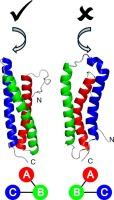
Blo t 5 is an important major allergen protein from Blomia tropicalis mites, which are prevalent in tropical and subtropical regions, including Taiwan. It is a coiled-coil triple helical bundle, but there currently is ambiguity around its structural fold and packing of the three helices. We have relied on NMR residual dipolar coupling data collected from four different alignment media to confirm that Blo t 5 has left-handed helical topology and further used that data to refine its solution structure. Earlier we had described conformational epitope for a detection monoclonal antibody by exclusive use of TROSY NMR experiments that studied Blo t 5 binding with the antibody FAB’ fragment. Here, we confirm those findings with an extensive mutagenesis and biophysical study to validate the NMR epitope mapping approach proposed by us.
期刊介绍:
Journal of Structural Biology (JSB) has an open access mirror journal, the Journal of Structural Biology: X (JSBX), sharing the same aims and scope, editorial team, submission system and rigorous peer review. Since both journals share the same editorial system, you may submit your manuscript via either journal homepage. You will be prompted during submission (and revision) to choose in which to publish your article. The editors and reviewers are not aware of the choice you made until the article has been published online. JSB and JSBX publish papers dealing with the structural analysis of living material at every level of organization by all methods that lead to an understanding of biological function in terms of molecular and supermolecular structure.
Techniques covered include:
• Light microscopy including confocal microscopy
• All types of electron microscopy
• X-ray diffraction
• Nuclear magnetic resonance
• Scanning force microscopy, scanning probe microscopy, and tunneling microscopy
• Digital image processing
• Computational insights into structure



 京公网安备 11010802042870号
京ICP备2023020795号-1
京公网安备 11010802042870号
京ICP备2023020795号-1

 分享
分享
 求助内容:
求助内容: 应助结果提醒方式:
 扫码关注我们
