{"title":"Impact of microvascular invasion risk on tumor progression of hepatocellular carcinoma after conventional transarterial chemoembolization.","authors":"Guanhua Yang, Yuxin Chen, Minglei Wang, Hongfang Wang, Yong Chen","doi":"10.1093/oncolo/oyae286","DOIUrl":null,"url":null,"abstract":"<p><strong>Objective: </strong>To assess tumor progression in patients with hepatocellular carcinoma (HCC) without macrovascular invasion who underwent treatment with conventional transarterial chemoembolization (cTACE) based on microvascular invasion (MVI) risk within 2 years.</p><p><strong>Methods: </strong>This retrospective investigation comprised adult patients with HCC who had either liver resection or cTACE as their first treatment from January 2016 to December 2021. A predictive model for MVI was developed and validated using preoperative clinical and MRI data from patients with HCC treated with liver resection. The MVI predictive model was applied to patients with HCC receiving cTACE, and differences in tumor progression between the MVI high- and low-risk groups were examined throughout 2 years.</p><p><strong>Results: </strong>The MVI prediction model incorporated nonsmooth margin, intratumoral artery, incomplete or absent tumor capsule, and tumor DWI/T2WI mismatch. The area under the receiver operating characteristic curve (AUC) for the prediction model, in the training cohort, was determined to be 0.904 (95% CI, 0.862-0.946), while in the validation cohort, it was 0.888 (0.782-0.994). Among patients with HCC undergoing cTACE, those classified as high risk for MVI possessed a lower rate of achieving a complete response after the first tumor therapy and a higher risk of tumor progression within 2 years.</p><p><strong>Conclusions: </strong>The MVI prediction model developed in this study demonstrates a considerable degree of accuracy. Patients at high risk for MVI who underwent cTACE treatment exhibited a higher risk of tumor progression within 2 years.</p>","PeriodicalId":54686,"journal":{"name":"Oncologist","volume":" ","pages":""},"PeriodicalIF":4.2000,"publicationDate":"2025-02-06","publicationTypes":"Journal Article","fieldsOfStudy":null,"isOpenAccess":false,"openAccessPdf":"https://www.ncbi.nlm.nih.gov/pmc/articles/PMC11884753/pdf/","citationCount":"0","resultStr":null,"platform":"Semanticscholar","paperid":null,"PeriodicalName":"Oncologist","FirstCategoryId":"3","ListUrlMain":"https://doi.org/10.1093/oncolo/oyae286","RegionNum":2,"RegionCategory":"医学","ArticlePicture":[],"TitleCN":null,"AbstractTextCN":null,"PMCID":null,"EPubDate":"","PubModel":"","JCR":"Q1","JCRName":"ONCOLOGY","Score":null,"Total":0}
引用次数: 0
Abstract
Objective: To assess tumor progression in patients with hepatocellular carcinoma (HCC) without macrovascular invasion who underwent treatment with conventional transarterial chemoembolization (cTACE) based on microvascular invasion (MVI) risk within 2 years.
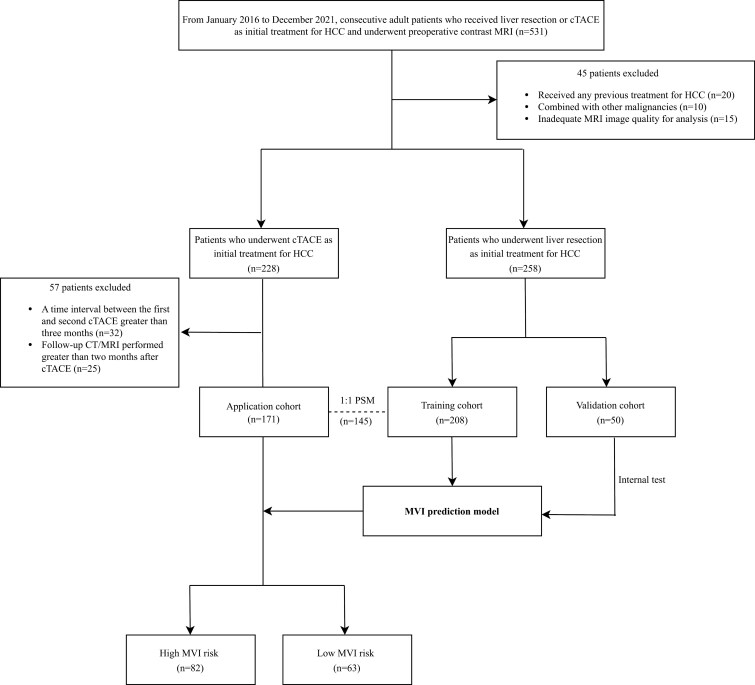
Methods: This retrospective investigation comprised adult patients with HCC who had either liver resection or cTACE as their first treatment from January 2016 to December 2021. A predictive model for MVI was developed and validated using preoperative clinical and MRI data from patients with HCC treated with liver resection. The MVI predictive model was applied to patients with HCC receiving cTACE, and differences in tumor progression between the MVI high- and low-risk groups were examined throughout 2 years.
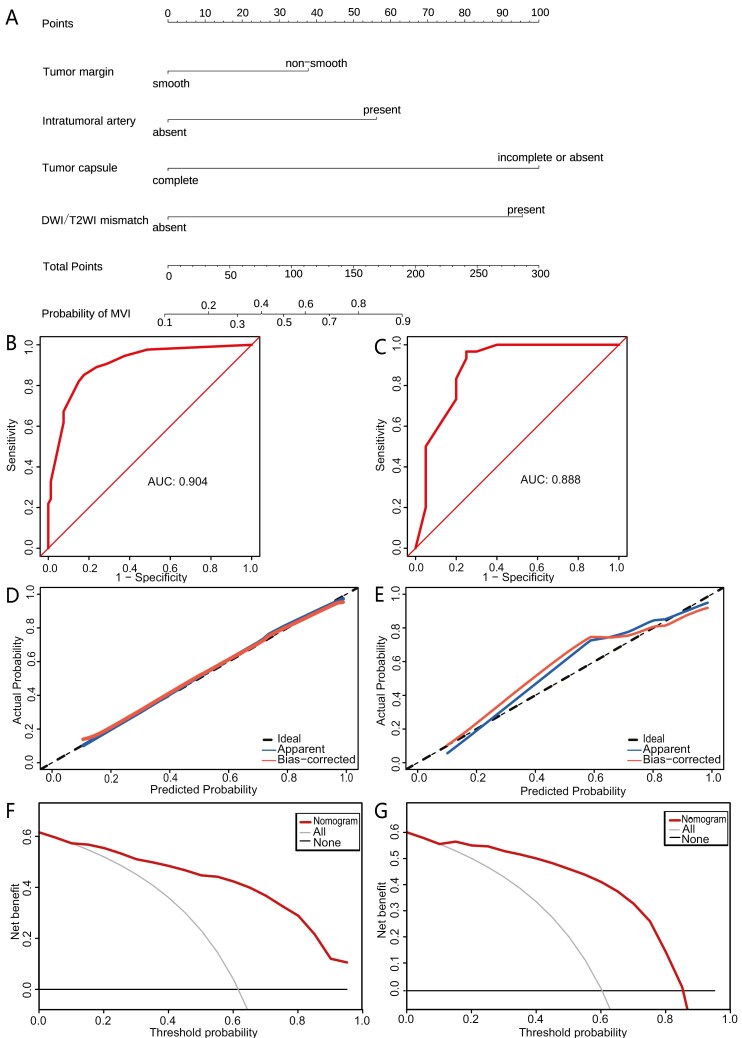
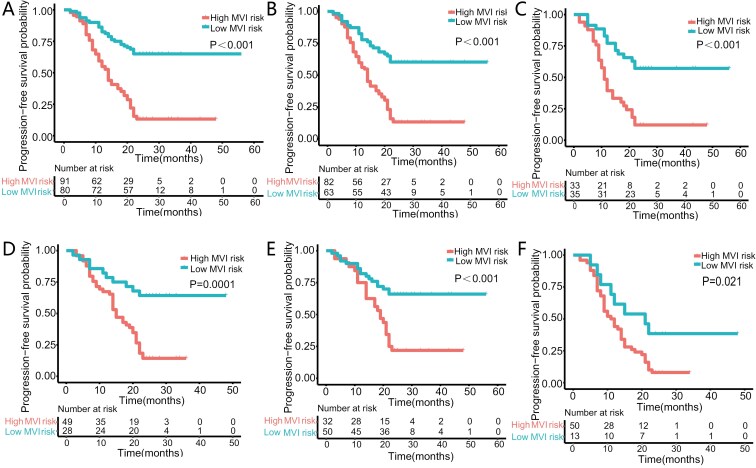
Results: The MVI prediction model incorporated nonsmooth margin, intratumoral artery, incomplete or absent tumor capsule, and tumor DWI/T2WI mismatch. The area under the receiver operating characteristic curve (AUC) for the prediction model, in the training cohort, was determined to be 0.904 (95% CI, 0.862-0.946), while in the validation cohort, it was 0.888 (0.782-0.994). Among patients with HCC undergoing cTACE, those classified as high risk for MVI possessed a lower rate of achieving a complete response after the first tumor therapy and a higher risk of tumor progression within 2 years.
Conclusions: The MVI prediction model developed in this study demonstrates a considerable degree of accuracy. Patients at high risk for MVI who underwent cTACE treatment exhibited a higher risk of tumor progression within 2 years.
期刊介绍:
The Oncologist® is dedicated to translating the latest research developments into the best multidimensional care for cancer patients. Thus, The Oncologist is committed to helping physicians excel in this ever-expanding environment through the publication of timely reviews, original studies, and commentaries on important developments. We believe that the practice of oncology requires both an understanding of a range of disciplines encompassing basic science related to cancer, translational research, and clinical practice, but also the socioeconomic and psychosocial factors that determine access to care and quality of life and function following cancer treatment.




 京公网安备 11010802042870号
京ICP备2023020795号-1
京公网安备 11010802042870号
京ICP备2023020795号-1

 分享
分享
 求助内容:
求助内容: 应助结果提醒方式:
 扫码关注我们
