{"title":"Diagnostic Value of Magnetocardiography to Detect Abnormal Myocardial Perfusion: A Pilot Study.","authors":"Huan Zhang, Zhao Ma, Hongzhi Mi, Jian Jiao, Wei Dong, Shuwen Yang, Linqi Liu, Shu Zhou, Lanxin Feng, Xin Zhao, Xueyao Yang, Chenchen Tu, Xiantao Song, Hongjia Zhang","doi":"10.31083/j.rcm2510379","DOIUrl":null,"url":null,"abstract":"<p><strong>Background: </strong>Magnetocardiography (MCG) is a novel non-invasive technique that detects subtle magnetic fields generated by cardiomyocyte electrical activity, offering sensitive detection of myocardial ischemia. This study aimed to assess the ability of MCG to predict impaired myocardial perfusion using single-photon emission computed tomography (SPECT).</p><p><strong>Methods: </strong>A total of 112 patients with chest pain underwent SPECT and MCG scans, from which 65 MCG output parameters were analyzed. Using least absolute shrinkage and selection operator (LASSO) regression to screen for significant MCG variables, three machine learning models were established to detect impaired myocardial perfusion: random forest (RF), decision tree (DT), and support vector machine (SVM). The diagnostic performance was evaluated based on the sensitivity, specificity, accuracy, positive predictive value (PPV), negative predictive value (NPV), and area under the receiver operating characteristic curve (AUC).</p><p><strong>Results: </strong>Five variables, the ratio of magnetic field amplitude at R-peak and positive T-peak (RoART+), R and T-peak magnetic field angle (RTA), maximum magnetic field angle (MAmax), maximum change in current angle (CCAmax), and change positive pole point area between the T-wave beginning and peak (CPPPATbp), were selected from 65 automatic output parameters. RTA emerged as the most critical variable in the RF, DT, and SVM models. All three models exhibited excellent diagnostic performance, with AUCs of 0.796, 0.780, and 0.804, respectively. While all models showed high sensitivity (RF = 0.870, DT = 0.826, SVM = 0.913), their specificity was comparatively lower (RF = 0.500, DT = 0.300, SVM = 0.100).</p><p><strong>Conclusions: </strong>Machine learning models utilizing five key MCG variables successfully predicted impaired myocardial perfusion, as confirmed by SPECT. These findings underscore the potential of MCG as a promising future screening tool for detecting impaired myocardial perfusion.</p><p><strong>Clinical trial registration: </strong>ChiCTR2200066942, https://www.chictr.org.cn/showproj.html?proj=187904.</p>","PeriodicalId":20989,"journal":{"name":"Reviews in cardiovascular medicine","volume":"25 10","pages":"379"},"PeriodicalIF":1.3000,"publicationDate":"2024-10-23","publicationTypes":"Journal Article","fieldsOfStudy":null,"isOpenAccess":false,"openAccessPdf":"https://www.ncbi.nlm.nih.gov/pmc/articles/PMC11522775/pdf/","citationCount":"0","resultStr":null,"platform":"Semanticscholar","paperid":null,"PeriodicalName":"Reviews in cardiovascular medicine","FirstCategoryId":"3","ListUrlMain":"https://doi.org/10.31083/j.rcm2510379","RegionNum":4,"RegionCategory":"医学","ArticlePicture":[],"TitleCN":null,"AbstractTextCN":null,"PMCID":null,"EPubDate":"2024/10/1 0:00:00","PubModel":"eCollection","JCR":"Q3","JCRName":"CARDIAC & CARDIOVASCULAR SYSTEMS","Score":null,"Total":0}
引用次数: 0
Abstract
Background: Magnetocardiography (MCG) is a novel non-invasive technique that detects subtle magnetic fields generated by cardiomyocyte electrical activity, offering sensitive detection of myocardial ischemia. This study aimed to assess the ability of MCG to predict impaired myocardial perfusion using single-photon emission computed tomography (SPECT).
Methods: A total of 112 patients with chest pain underwent SPECT and MCG scans, from which 65 MCG output parameters were analyzed. Using least absolute shrinkage and selection operator (LASSO) regression to screen for significant MCG variables, three machine learning models were established to detect impaired myocardial perfusion: random forest (RF), decision tree (DT), and support vector machine (SVM). The diagnostic performance was evaluated based on the sensitivity, specificity, accuracy, positive predictive value (PPV), negative predictive value (NPV), and area under the receiver operating characteristic curve (AUC).
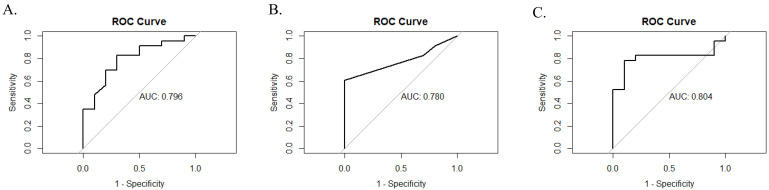
Results: Five variables, the ratio of magnetic field amplitude at R-peak and positive T-peak (RoART+), R and T-peak magnetic field angle (RTA), maximum magnetic field angle (MAmax), maximum change in current angle (CCAmax), and change positive pole point area between the T-wave beginning and peak (CPPPATbp), were selected from 65 automatic output parameters. RTA emerged as the most critical variable in the RF, DT, and SVM models. All three models exhibited excellent diagnostic performance, with AUCs of 0.796, 0.780, and 0.804, respectively. While all models showed high sensitivity (RF = 0.870, DT = 0.826, SVM = 0.913), their specificity was comparatively lower (RF = 0.500, DT = 0.300, SVM = 0.100).
Conclusions: Machine learning models utilizing five key MCG variables successfully predicted impaired myocardial perfusion, as confirmed by SPECT. These findings underscore the potential of MCG as a promising future screening tool for detecting impaired myocardial perfusion.
期刊介绍:
RCM is an international, peer-reviewed, open access journal. RCM publishes research articles, review papers and short communications on cardiovascular medicine as well as research on cardiovascular disease. We aim to provide a forum for publishing papers which explore the pathogenesis and promote the progression of cardiac and vascular diseases. We also seek to establish an interdisciplinary platform, focusing on translational issues, to facilitate the advancement of research, clinical treatment and diagnostic procedures. Heart surgery, cardiovascular imaging, risk factors and various clinical cardiac & vascular research will be considered.






 京公网安备 11010802042870号
京ICP备2023020795号-1
京公网安备 11010802042870号
京ICP备2023020795号-1

 分享
分享
 求助内容:
求助内容: 应助结果提醒方式:
 扫码关注我们
