{"title":"Efficacy and Safety of Chlortalidone and Hydrochlorothiazide in Prevention of Cardiovascular Diseases.","authors":"Xiang-Ning Song, Liang Wang, Zhu-Jun Shen","doi":"10.31083/j.rcm2510380","DOIUrl":null,"url":null,"abstract":"<p><strong>Background: </strong>The variance between guideline recommendations and real-world usage might stem from the perception that chlorthalidone poses a higher risk of adverse effects, although there is no clear evidence of disparities in cardiovascular outcomes. It is crucial to assess both the clinical cardiovascular effects and adverse reactions of both drugs for clinical guidance. In this study, we present a comprehensive and updated analysis comparing the efficacy and safety of chlorthalidone (CHLOR) versus hydrochlorothiazide (HCTZ) for the prevention of cardiovascular diseases through lower the blood pressure.</p><p><strong>Methods: </strong>We conducted a systematic literature search using reputable databases including PubMed, Embase, Cochrane, and Web of Science up to April 2023, to identify studies that compared the efficacy and safety of CHLOR versus HCTZ for the long term prognosis of cardiovascular disease. This analysis represents the most up-to-date and systematic evidence on the comparative efficacy and safety of CHLOR and HCTZ for cardiovascular diseases.</p><p><strong>Results: </strong>Our review included a total of 6 eligible articles with a cohort of 368,066 patients, of which 36,999 were treated with CHLOR and 331,067 were treated with HCTZ. The primary diagnosis studied in six articles was hypertension. Initial features between the two different groups were comparable across every possible outcome. These papers followed patients using the two drugs over a long period of time to compare the differences in the occurrence of cardiovascular disease, and the results were as follows, the confidence interval is described in square brackets, followed by the <i>p</i>-value: We measured the outcomes of myocardial infarction with an odds ratio (OR) of 0.80 [0.56, 1.14], <i>p</i> = 0.41, heart failure with an OR of 0.86 [0.64, 1.14], <i>p</i> = 0.05, cardiovascular events with an OR of 1.85 [0.53, 6.44], <i>p</i> = 0.34, non-cancer-related death with an OR of 1.02 [0.56, 1.85], <i>p</i> = 0.45, death from any cause with an OR of 1.95 [0.52, 7.28], <i>p</i> = 0.32, complication rate, stroke with an OR of 0.94 [0.80, 1.10], <i>p</i> = 0.45, hospitalization for acute kidney injury with an OR of 1.38 [0.40, 4.78], <i>p</i> = 0.61 and hypokalemia with an OR of 2.10 [1.15, 3.84], <i>p</i> = 0.01. Pooled analyses of the data revealed that CHLOR was associated with a higher incidence of hypokalemia compared to HCTZ and the results were statistically significant.</p><p><strong>Conclusions: </strong>CHLOR and HCTZ are comparable in efficacy for prevention cardiovascular diseases, with the only difference being a higher incidence of hypokalemia in patients using CHLOR compared to those using HCTZ. Considering the potential heterogeneity and bias in the analytical studies, these results should be interpreted with caution.</p>","PeriodicalId":20989,"journal":{"name":"Reviews in cardiovascular medicine","volume":"25 10","pages":"380"},"PeriodicalIF":1.3000,"publicationDate":"2024-10-24","publicationTypes":"Journal Article","fieldsOfStudy":null,"isOpenAccess":false,"openAccessPdf":"https://www.ncbi.nlm.nih.gov/pmc/articles/PMC11522762/pdf/","citationCount":"0","resultStr":null,"platform":"Semanticscholar","paperid":null,"PeriodicalName":"Reviews in cardiovascular medicine","FirstCategoryId":"3","ListUrlMain":"https://doi.org/10.31083/j.rcm2510380","RegionNum":4,"RegionCategory":"医学","ArticlePicture":[],"TitleCN":null,"AbstractTextCN":null,"PMCID":null,"EPubDate":"2024/10/1 0:00:00","PubModel":"eCollection","JCR":"Q3","JCRName":"CARDIAC & CARDIOVASCULAR SYSTEMS","Score":null,"Total":0}
引用次数: 0
Abstract
Background: The variance between guideline recommendations and real-world usage might stem from the perception that chlorthalidone poses a higher risk of adverse effects, although there is no clear evidence of disparities in cardiovascular outcomes. It is crucial to assess both the clinical cardiovascular effects and adverse reactions of both drugs for clinical guidance. In this study, we present a comprehensive and updated analysis comparing the efficacy and safety of chlorthalidone (CHLOR) versus hydrochlorothiazide (HCTZ) for the prevention of cardiovascular diseases through lower the blood pressure.
Methods: We conducted a systematic literature search using reputable databases including PubMed, Embase, Cochrane, and Web of Science up to April 2023, to identify studies that compared the efficacy and safety of CHLOR versus HCTZ for the long term prognosis of cardiovascular disease. This analysis represents the most up-to-date and systematic evidence on the comparative efficacy and safety of CHLOR and HCTZ for cardiovascular diseases.
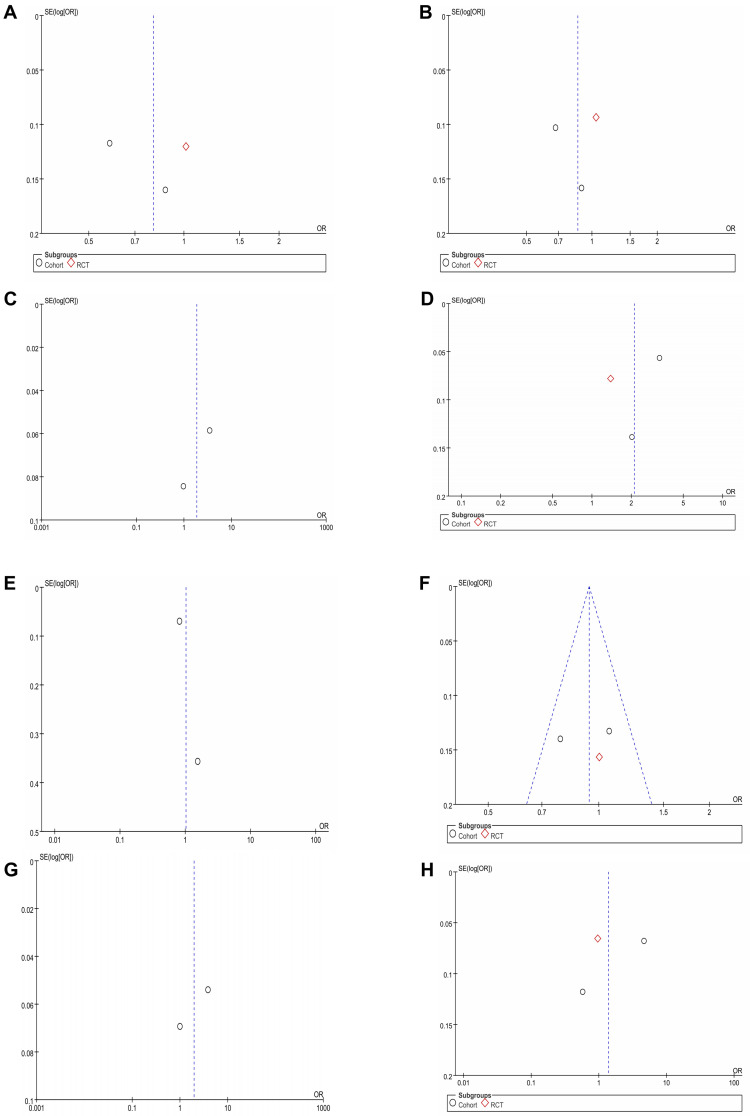
Results: Our review included a total of 6 eligible articles with a cohort of 368,066 patients, of which 36,999 were treated with CHLOR and 331,067 were treated with HCTZ. The primary diagnosis studied in six articles was hypertension. Initial features between the two different groups were comparable across every possible outcome. These papers followed patients using the two drugs over a long period of time to compare the differences in the occurrence of cardiovascular disease, and the results were as follows, the confidence interval is described in square brackets, followed by the p-value: We measured the outcomes of myocardial infarction with an odds ratio (OR) of 0.80 [0.56, 1.14], p = 0.41, heart failure with an OR of 0.86 [0.64, 1.14], p = 0.05, cardiovascular events with an OR of 1.85 [0.53, 6.44], p = 0.34, non-cancer-related death with an OR of 1.02 [0.56, 1.85], p = 0.45, death from any cause with an OR of 1.95 [0.52, 7.28], p = 0.32, complication rate, stroke with an OR of 0.94 [0.80, 1.10], p = 0.45, hospitalization for acute kidney injury with an OR of 1.38 [0.40, 4.78], p = 0.61 and hypokalemia with an OR of 2.10 [1.15, 3.84], p = 0.01. Pooled analyses of the data revealed that CHLOR was associated with a higher incidence of hypokalemia compared to HCTZ and the results were statistically significant.
Conclusions: CHLOR and HCTZ are comparable in efficacy for prevention cardiovascular diseases, with the only difference being a higher incidence of hypokalemia in patients using CHLOR compared to those using HCTZ. Considering the potential heterogeneity and bias in the analytical studies, these results should be interpreted with caution.
期刊介绍:
RCM is an international, peer-reviewed, open access journal. RCM publishes research articles, review papers and short communications on cardiovascular medicine as well as research on cardiovascular disease. We aim to provide a forum for publishing papers which explore the pathogenesis and promote the progression of cardiac and vascular diseases. We also seek to establish an interdisciplinary platform, focusing on translational issues, to facilitate the advancement of research, clinical treatment and diagnostic procedures. Heart surgery, cardiovascular imaging, risk factors and various clinical cardiac & vascular research will be considered.






 京公网安备 11010802042870号
京ICP备2023020795号-1
京公网安备 11010802042870号
京ICP备2023020795号-1

 分享
分享
 求助内容:
求助内容: 应助结果提醒方式:
 扫码关注我们
