Huaming Zhong, Xuan Shao, Jing Cao, Jie Huang, Jing Wang, Nuo Yang, Baodong Yuan
{"title":"Comparison of the Distribution Patterns of Microsatellites Across the Genomes of Reptiles","authors":"Huaming Zhong, Xuan Shao, Jing Cao, Jie Huang, Jing Wang, Nuo Yang, Baodong Yuan","doi":"10.1002/ece3.70458","DOIUrl":null,"url":null,"abstract":"<p>Microsatellites or simple sequence repeats (SSRs) are prevalent across various organisms' genomes. However, their distribution patterns and evolutionary dynamics in reptile genomes are rarely studied systematically. We herein conducted a comprehensive analysis of SSRs in the genomes of 36 reptile species. Our findings revealed that the total number of SSRs ranged from 1,840,965 to 7,664,452, accounting for 2.16%–8.19% of the genomes analyzed. The relative density ranged from 21,567.82 to 81,889.41 bp per megabase (Mbp). The abundance of different SSR categories followed the pattern of imperfect SSR (I-SSR) > perfect SSR (P-SSR) > compound SSR (C-SSR). A significant positive correlation was observed between the number of SSRs and genome size (<i>p</i> = 0.0034), whereas SSR frequency (<i>p</i> = 0.013) or density (<i>p</i> = 0.0099) showed a negative correlation with genome size. Furthermore, no correlation was found between SSR length and genome size. Mononucleotide repeats were the most common P-SSRs in crocodilians and turtles, whereas mononucleotides, trinucleotides, or tetranucleotides were the most common P-SSRs in snakes, lizards, and tuatara. P-SSRs of varying motif sizes showed nonrandom distribution across different genic regions, with AT-rich repeats being predominant. The genomic SSR content of the squamate lineage ranked the highest in abundance and variability, whereas crocodilians and turtles showed a slowly evolving and reduced microsatellite landscape. Gene ontology enrichment and Kyoto Encyclopedia of Genes and Genomes pathway analyses indicated that genes harboring P-SSRs in the coding DNA sequence regions were primarily involved in the regulation of transcription and translation processes. The SSR dataset generated in this study provides potential candidates for functional analysis and calls for broader-scale analyses across the evolutionary spectrum.</p>","PeriodicalId":11467,"journal":{"name":"Ecology and Evolution","volume":"14 11","pages":""},"PeriodicalIF":2.3000,"publicationDate":"2024-11-03","publicationTypes":"Journal Article","fieldsOfStudy":null,"isOpenAccess":false,"openAccessPdf":"https://onlinelibrary.wiley.com/doi/epdf/10.1002/ece3.70458","citationCount":"0","resultStr":null,"platform":"Semanticscholar","paperid":null,"PeriodicalName":"Ecology and Evolution","FirstCategoryId":"99","ListUrlMain":"https://onlinelibrary.wiley.com/doi/10.1002/ece3.70458","RegionNum":2,"RegionCategory":"生物学","ArticlePicture":[],"TitleCN":null,"AbstractTextCN":null,"PMCID":null,"EPubDate":"","PubModel":"","JCR":"Q2","JCRName":"ECOLOGY","Score":null,"Total":0}
引用次数: 0
Abstract
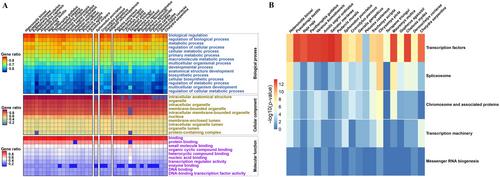
Microsatellites or simple sequence repeats (SSRs) are prevalent across various organisms' genomes. However, their distribution patterns and evolutionary dynamics in reptile genomes are rarely studied systematically. We herein conducted a comprehensive analysis of SSRs in the genomes of 36 reptile species. Our findings revealed that the total number of SSRs ranged from 1,840,965 to 7,664,452, accounting for 2.16%–8.19% of the genomes analyzed. The relative density ranged from 21,567.82 to 81,889.41 bp per megabase (Mbp). The abundance of different SSR categories followed the pattern of imperfect SSR (I-SSR) > perfect SSR (P-SSR) > compound SSR (C-SSR). A significant positive correlation was observed between the number of SSRs and genome size (p = 0.0034), whereas SSR frequency (p = 0.013) or density (p = 0.0099) showed a negative correlation with genome size. Furthermore, no correlation was found between SSR length and genome size. Mononucleotide repeats were the most common P-SSRs in crocodilians and turtles, whereas mononucleotides, trinucleotides, or tetranucleotides were the most common P-SSRs in snakes, lizards, and tuatara. P-SSRs of varying motif sizes showed nonrandom distribution across different genic regions, with AT-rich repeats being predominant. The genomic SSR content of the squamate lineage ranked the highest in abundance and variability, whereas crocodilians and turtles showed a slowly evolving and reduced microsatellite landscape. Gene ontology enrichment and Kyoto Encyclopedia of Genes and Genomes pathway analyses indicated that genes harboring P-SSRs in the coding DNA sequence regions were primarily involved in the regulation of transcription and translation processes. The SSR dataset generated in this study provides potential candidates for functional analysis and calls for broader-scale analyses across the evolutionary spectrum.
期刊介绍:
Ecology and Evolution is the peer reviewed journal for rapid dissemination of research in all areas of ecology, evolution and conservation science. The journal gives priority to quality research reports, theoretical or empirical, that develop our understanding of organisms and their diversity, interactions between them, and the natural environment.
Ecology and Evolution gives prompt and equal consideration to papers reporting theoretical, experimental, applied and descriptive work in terrestrial and aquatic environments. The journal will consider submissions across taxa in areas including but not limited to micro and macro ecological and evolutionary processes, characteristics of and interactions between individuals, populations, communities and the environment, physiological responses to environmental change, population genetics and phylogenetics, relatedness and kin selection, life histories, systematics and taxonomy, conservation genetics, extinction, speciation, adaption, behaviour, biodiversity, species abundance, macroecology, population and ecosystem dynamics, and conservation policy.



 京公网安备 11010802042870号
京ICP备2023020795号-1
京公网安备 11010802042870号
京ICP备2023020795号-1

 分享
分享
 求助内容:
求助内容: 应助结果提醒方式:
 扫码关注我们
