Yafeng Tan, Wei Xia, Fenglan Sun, Bing Mei, Yaoling Ouyang, Linyun Li, Zhenxia Chen, Song Wu, Jufang Tan, Zhaxi Pubu, Bu Sang, Tao Jiang
{"title":"Development and Validation of a Blood-Biomarker-Based Predictive Model for HBV-Associated Hepatocellular Carcinoma.","authors":"Yafeng Tan, Wei Xia, Fenglan Sun, Bing Mei, Yaoling Ouyang, Linyun Li, Zhenxia Chen, Song Wu, Jufang Tan, Zhaxi Pubu, Bu Sang, Tao Jiang","doi":"10.1177/10760296241298230","DOIUrl":null,"url":null,"abstract":"<p><strong>Objective: </strong>This study aims to explore the optimal predictors of HBV-associated HCC using Lasso, and establish a prediction model.</p><p><strong>Methods: </strong>A retrospective analysis was conducted on patients who underwent CBC and CRP testing between January 2016 and March 2024. The study population comprised 5441 cases divided into three cohorts: non-HBV-infected (1333 cases), HBV-infected (1023 cases), and HBV-associated HCC (3085 cases). A value of CRP <10 mg/L was used to exclude cases of acute bacterial infections. Baseline data and blood parameters were compared across the three groups (control group (n = 1049), the HBV-infected group (n = 789), and the HBV-associated HCC group (n = 1367)). HBV-infected group and the HBV-associated HCC group were used as modeling subjects which 70% were classified as training set (n = 1512) and 30% were classified as validation set (n = 644). Lasso regression and logistic regression were employed to identify the most effective predictors of HBV-associated HCC, which were subsequently incorporated into a predictive model by training set.</p><p><strong>Results: </strong>Significant variations in age, gender, and blood parameter indices were observed between individuals with acute bacterial infections and non-infections in the study population, and also between three groups. The optimal predictors identified for HBV-associated HCC included gender, age, MONO, EO%, MCHC, MPV, and PCT.</p><p><strong>Conclusions: </strong>The study highlights the significant impact of acute bacterial infections on immune status, erythrocyte system, and platelet system. After excluding acute bacterial infections, factors such as gender, age, MONO, EO%, MCHC, MPV, and PCT are effective predictors for clinical prediction of HCC development in HBV-infected patients.</p>","PeriodicalId":10335,"journal":{"name":"Clinical and Applied Thrombosis/Hemostasis","volume":"30 ","pages":"10760296241298230"},"PeriodicalIF":2.0000,"publicationDate":"2024-01-01","publicationTypes":"Journal Article","fieldsOfStudy":null,"isOpenAccess":false,"openAccessPdf":"https://www.ncbi.nlm.nih.gov/pmc/articles/PMC11539192/pdf/","citationCount":"0","resultStr":null,"platform":"Semanticscholar","paperid":null,"PeriodicalName":"Clinical and Applied Thrombosis/Hemostasis","FirstCategoryId":"3","ListUrlMain":"https://doi.org/10.1177/10760296241298230","RegionNum":4,"RegionCategory":"医学","ArticlePicture":[],"TitleCN":null,"AbstractTextCN":null,"PMCID":null,"EPubDate":"","PubModel":"","JCR":"Q2","JCRName":"HEMATOLOGY","Score":null,"Total":0}
引用次数: 0
Abstract
Objective: This study aims to explore the optimal predictors of HBV-associated HCC using Lasso, and establish a prediction model.
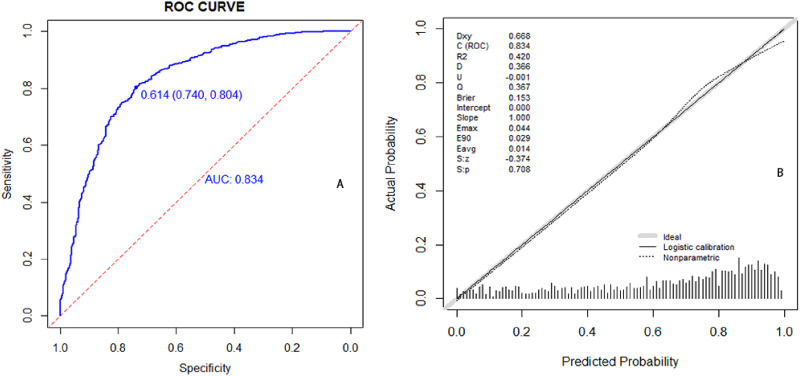
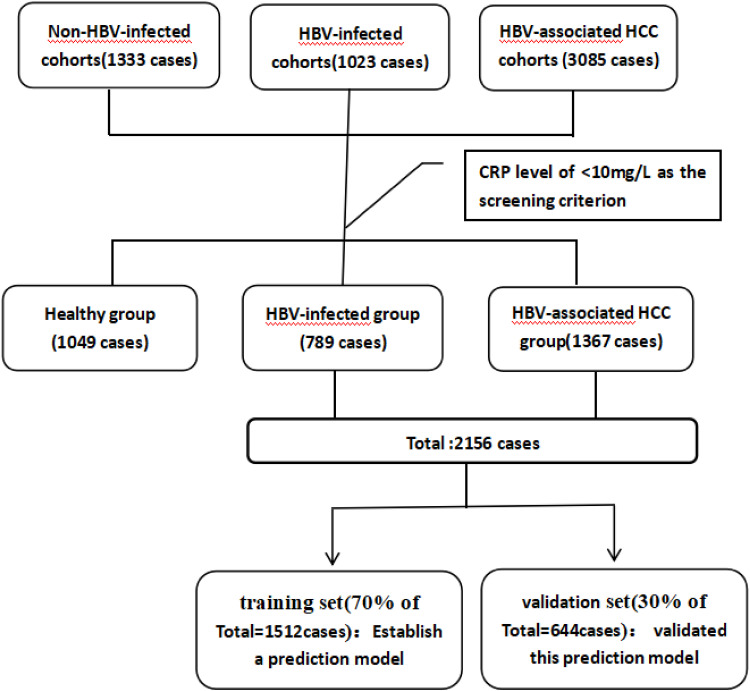
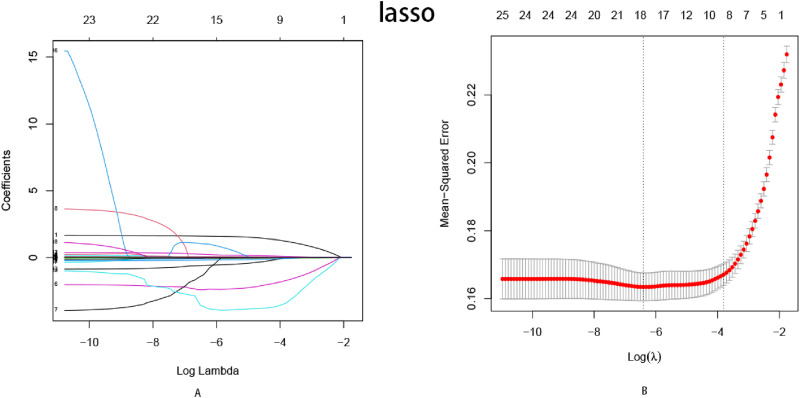
Methods: A retrospective analysis was conducted on patients who underwent CBC and CRP testing between January 2016 and March 2024. The study population comprised 5441 cases divided into three cohorts: non-HBV-infected (1333 cases), HBV-infected (1023 cases), and HBV-associated HCC (3085 cases). A value of CRP <10 mg/L was used to exclude cases of acute bacterial infections. Baseline data and blood parameters were compared across the three groups (control group (n = 1049), the HBV-infected group (n = 789), and the HBV-associated HCC group (n = 1367)). HBV-infected group and the HBV-associated HCC group were used as modeling subjects which 70% were classified as training set (n = 1512) and 30% were classified as validation set (n = 644). Lasso regression and logistic regression were employed to identify the most effective predictors of HBV-associated HCC, which were subsequently incorporated into a predictive model by training set.
Results: Significant variations in age, gender, and blood parameter indices were observed between individuals with acute bacterial infections and non-infections in the study population, and also between three groups. The optimal predictors identified for HBV-associated HCC included gender, age, MONO, EO%, MCHC, MPV, and PCT.
Conclusions: The study highlights the significant impact of acute bacterial infections on immune status, erythrocyte system, and platelet system. After excluding acute bacterial infections, factors such as gender, age, MONO, EO%, MCHC, MPV, and PCT are effective predictors for clinical prediction of HCC development in HBV-infected patients.
期刊介绍:
CATH is a peer-reviewed bi-monthly journal that addresses the practical clinical and laboratory issues involved in managing bleeding and clotting disorders, especially those related to thrombosis, hemostasis, and vascular disorders. CATH covers clinical trials, studies on etiology, pathophysiology, diagnosis and treatment of thrombohemorrhagic disorders.



 京公网安备 11010802042870号
京ICP备2023020795号-1
京公网安备 11010802042870号
京ICP备2023020795号-1

 分享
分享
 求助内容:
求助内容: 应助结果提醒方式:
 扫码关注我们
