Yuanzheng Yue, Yingyu Huang, Wei Liu, Xiulian Yang, Lianggui Wang
{"title":"Predicting the Global Potential Suitable Areas of Sweet Osmanthus (Osmanthus fragrans) Under Current and Future Climate Scenarios","authors":"Yuanzheng Yue, Yingyu Huang, Wei Liu, Xiulian Yang, Lianggui Wang","doi":"10.1002/ece3.70435","DOIUrl":null,"url":null,"abstract":"<p><i>Osmanthus fragrans</i> is a valuable landscaping tree that is appreciated worldwide. However, the optimal environmental conditions for <i>O</i>. <i>fragrans</i> cultivation have yet to be studied in detail, which hinders the preservation of wild resources of this plant and its commercial exploitation. The maximum entropy model was applied to assess the significance of environment variables influencing <i>O</i>. <i>fragrans</i> distribution. Combining data from 629 global distribution points for <i>O</i>. <i>fragrans</i>, predictions were made on the potential effects of climate change on the geographical distribution of suitable habitats for this species in the present and the future. The results indicated that <i>O</i>. <i>fragrans</i> preferred a warm and humid growing environment. Under the current climatic conditions, the potential habitats for <i>O</i>. <i>fragrans</i> were mostly located in the eastern coastal areas of the continents at medium and low latitudes. The main environmental variables that affected its distribution were the precipitation during the warmest quarter, the temperature seasonality, and the mean temperature of the warmest quarter. The analysis indicated that the continuation of current trends in climate change will result in the further reduction of suitable habitats for <i>O</i>. <i>fragrans</i> growth, and the global centroid will shift to the southeast. These findings provided insight into the impact of climate change on <i>O</i>. <i>fragrans</i> habitats, as well as provide guidance for the conservation of wild resources of this species and the breeding of more climate change-resistant varieties for the future.</p>","PeriodicalId":11467,"journal":{"name":"Ecology and Evolution","volume":"14 11","pages":""},"PeriodicalIF":2.3000,"publicationDate":"2024-11-05","publicationTypes":"Journal Article","fieldsOfStudy":null,"isOpenAccess":false,"openAccessPdf":"https://www.ncbi.nlm.nih.gov/pmc/articles/PMC11537704/pdf/","citationCount":"0","resultStr":null,"platform":"Semanticscholar","paperid":null,"PeriodicalName":"Ecology and Evolution","FirstCategoryId":"99","ListUrlMain":"https://onlinelibrary.wiley.com/doi/10.1002/ece3.70435","RegionNum":2,"RegionCategory":"生物学","ArticlePicture":[],"TitleCN":null,"AbstractTextCN":null,"PMCID":null,"EPubDate":"","PubModel":"","JCR":"Q2","JCRName":"ECOLOGY","Score":null,"Total":0}
引用次数: 0
Abstract
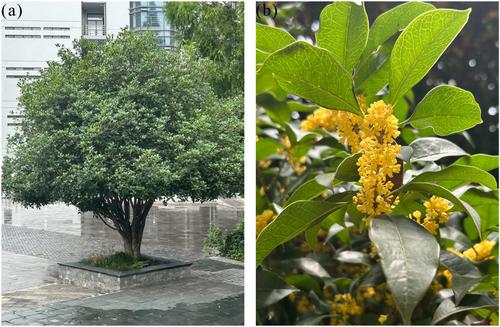
Osmanthus fragrans is a valuable landscaping tree that is appreciated worldwide. However, the optimal environmental conditions for O. fragrans cultivation have yet to be studied in detail, which hinders the preservation of wild resources of this plant and its commercial exploitation. The maximum entropy model was applied to assess the significance of environment variables influencing O. fragrans distribution. Combining data from 629 global distribution points for O. fragrans, predictions were made on the potential effects of climate change on the geographical distribution of suitable habitats for this species in the present and the future. The results indicated that O. fragrans preferred a warm and humid growing environment. Under the current climatic conditions, the potential habitats for O. fragrans were mostly located in the eastern coastal areas of the continents at medium and low latitudes. The main environmental variables that affected its distribution were the precipitation during the warmest quarter, the temperature seasonality, and the mean temperature of the warmest quarter. The analysis indicated that the continuation of current trends in climate change will result in the further reduction of suitable habitats for O. fragrans growth, and the global centroid will shift to the southeast. These findings provided insight into the impact of climate change on O. fragrans habitats, as well as provide guidance for the conservation of wild resources of this species and the breeding of more climate change-resistant varieties for the future.
期刊介绍:
Ecology and Evolution is the peer reviewed journal for rapid dissemination of research in all areas of ecology, evolution and conservation science. The journal gives priority to quality research reports, theoretical or empirical, that develop our understanding of organisms and their diversity, interactions between them, and the natural environment.
Ecology and Evolution gives prompt and equal consideration to papers reporting theoretical, experimental, applied and descriptive work in terrestrial and aquatic environments. The journal will consider submissions across taxa in areas including but not limited to micro and macro ecological and evolutionary processes, characteristics of and interactions between individuals, populations, communities and the environment, physiological responses to environmental change, population genetics and phylogenetics, relatedness and kin selection, life histories, systematics and taxonomy, conservation genetics, extinction, speciation, adaption, behaviour, biodiversity, species abundance, macroecology, population and ecosystem dynamics, and conservation policy.



 京公网安备 11010802042870号
京ICP备2023020795号-1
京公网安备 11010802042870号
京ICP备2023020795号-1

 分享
分享
 求助内容:
求助内容: 应助结果提醒方式:
 扫码关注我们
