{"title":"Scoring System to Personalize Management of Emphysematous Pyelonephritis.","authors":"Ankur Mittal, Deepak Kumar, Vikas Kumar Panwar, Rohit Ranjan, Shiv Charan Navriya, Akshay Upadhyaya, Harshit Agarwal, Gautam Shubhankar, Arup Kumar Mandal","doi":"10.5152/tud.2024.23165","DOIUrl":null,"url":null,"abstract":"<p><strong>Objective: </strong>Emphysematous pyelonephritis (EPN) is a life-threatening condition that requires prompt diagnosis and treatment. The prognosis of EPN is variable, and there is no single treatment that is universally effective.</p><p><strong>Materials and methods: </strong>In this study, we developed a scoring system to predict the prognosis of EPN and to guide management. The scoring system was developed based on a retrospective analysis of 91 patients with EPN. Nineteen risk factors for emphysematous pyelonephritis were assessed with univariate and multivariate analysis.</p><p><strong>Results: </strong>Seven factors were found significant on analysis. The scoring system was developed by including these 7 risk factors: renal stone disease, leukocytosis, raised creatinine, EPN grade, and septic shock. The score ranged from 1 to 18, with a higher score indicating a worse prognosis. The scoring system was able to stratify patients into three risk groups: good risk, intermediate risk, and poor risk. The scoring system can be used to personalize the management of EPN. Patients in the good-risk group may be managed with conservative treatment, while patients in the intermediate-risk and poor-risk groups may require intervention, such as DJ stenting, percutaneous nephrolithotomy or nephrectomy. The scoring system is a valuable tool for predicting the prognosis of EPN and guiding management. It can help clinicians to tailor treatment to the individual patient and to improve outcomes.</p><p><strong>Conclusion: </strong>The prognostic score helps identify patients who are at high risk. This score helps in the selection of appropriate management options.</p>","PeriodicalId":101337,"journal":{"name":"Urology research & practice","volume":"50 3","pages":"193-197"},"PeriodicalIF":1.1000,"publicationDate":"2024-10-21","publicationTypes":"Journal Article","fieldsOfStudy":null,"isOpenAccess":false,"openAccessPdf":"https://www.ncbi.nlm.nih.gov/pmc/articles/PMC11562922/pdf/","citationCount":"0","resultStr":null,"platform":"Semanticscholar","paperid":null,"PeriodicalName":"Urology research & practice","FirstCategoryId":"1085","ListUrlMain":"https://doi.org/10.5152/tud.2024.23165","RegionNum":0,"RegionCategory":null,"ArticlePicture":[],"TitleCN":null,"AbstractTextCN":null,"PMCID":null,"EPubDate":"","PubModel":"","JCR":"0","JCRName":"UROLOGY & NEPHROLOGY","Score":null,"Total":0}
引用次数: 0
Abstract
Objective: Emphysematous pyelonephritis (EPN) is a life-threatening condition that requires prompt diagnosis and treatment. The prognosis of EPN is variable, and there is no single treatment that is universally effective.
Materials and methods: In this study, we developed a scoring system to predict the prognosis of EPN and to guide management. The scoring system was developed based on a retrospective analysis of 91 patients with EPN. Nineteen risk factors for emphysematous pyelonephritis were assessed with univariate and multivariate analysis.
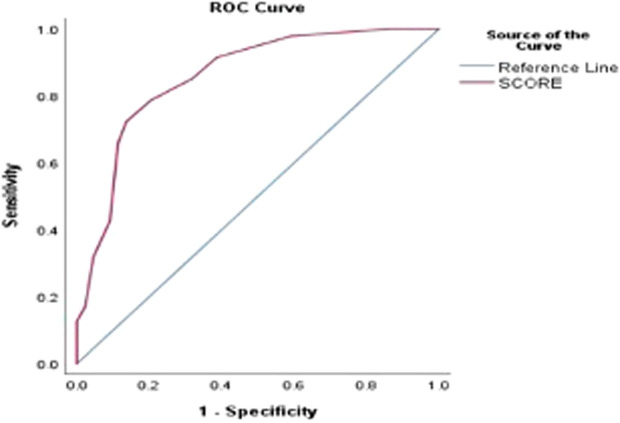
Results: Seven factors were found significant on analysis. The scoring system was developed by including these 7 risk factors: renal stone disease, leukocytosis, raised creatinine, EPN grade, and septic shock. The score ranged from 1 to 18, with a higher score indicating a worse prognosis. The scoring system was able to stratify patients into three risk groups: good risk, intermediate risk, and poor risk. The scoring system can be used to personalize the management of EPN. Patients in the good-risk group may be managed with conservative treatment, while patients in the intermediate-risk and poor-risk groups may require intervention, such as DJ stenting, percutaneous nephrolithotomy or nephrectomy. The scoring system is a valuable tool for predicting the prognosis of EPN and guiding management. It can help clinicians to tailor treatment to the individual patient and to improve outcomes.
Conclusion: The prognostic score helps identify patients who are at high risk. This score helps in the selection of appropriate management options.




 京公网安备 11010802042870号
京ICP备2023020795号-1
京公网安备 11010802042870号
京ICP备2023020795号-1

 分享
分享

 求助内容:
求助内容: 应助结果提醒方式:
 扫码关注我们
