A comparative study of two different doses of dexmedetomedine as an adjuvant to lignocaine in infiltration block for tympanoplasty: a triple-blinded, prospective, randomized controlled trial.
Richa Singh, Annu Choudhary, Swati Singh, Harsh Kumar
{"title":"A comparative study of two different doses of dexmedetomedine as an adjuvant to lignocaine in infiltration block for tympanoplasty: a triple-blinded, prospective, randomized controlled trial.","authors":"Richa Singh, Annu Choudhary, Swati Singh, Harsh Kumar","doi":"10.17085/apm.24105","DOIUrl":null,"url":null,"abstract":"<p><strong>Background: </strong>The ideal anesthetic drug choice for local infiltration anesthesia under monitored anesthesia care must provide analgesia and patients' comfort along with a bloodless surgical field for patients. We hypothesized that dexemedetomidine can provide better visibility of the surgical field at a higher dose of 1 µg/kg than 0.5 µg/kg, along with providing sedation and analgesia.</p><p><strong>Methods: </strong>After institutional ethics committee clearance and written informed consent, this prospective, randomized, triple blind study was conducted on ninety patients, between 18- 65 years who were scheduled for tympanoplasty. The patients were randomly assigned to either the dexmedetomidine (DEX) 0.5 group or the DEX 1.0 group, and received 10 ml solution containing 2% lignocaine with 0.5 µg/kg dexmedetomidine, or the 1 µg/kg dexmedetomidine. The operative surgeon performed local infiltration using standardized 5-point infiltration technique around the auricle. The primary objective was to compare the intraoperative bleeding at the surgical site. The comparison of normally distributed variables was conducted using the Student's t-test, whereas non-normally distributed variables was compared using the Mann-Whitney U test. The analysis of qualitative data was conducted using the chisquare/Fisher's exact test. A P value less than 0.05 was considered statistically significant.</p><p><strong>Results: </strong>The overall bleeding score was significantly higher in the DEX 0.5 group (3.21 ± 0.727) than the DEX 1.0 group (1.43 ± 0.661) (P value < 0.001). The time to first analgesic requirement and surgeon satisfaction score were also significantly higher in the DEX 1.0 group.</p><p><strong>Conclusions: </strong>Combining dexmedetomidine at a dose of 1 µg/kg with 2% lignocaine for infiltration provided improved analgesia and improved the surgical field during tympanoplasty performed under monitored anesthesia care.</p>","PeriodicalId":101360,"journal":{"name":"Anesthesia and pain medicine","volume":"19 4","pages":"310-319"},"PeriodicalIF":3.2000,"publicationDate":"2024-10-01","publicationTypes":"Journal Article","fieldsOfStudy":null,"isOpenAccess":false,"openAccessPdf":"https://www.ncbi.nlm.nih.gov/pmc/articles/PMC11558052/pdf/","citationCount":"0","resultStr":null,"platform":"Semanticscholar","paperid":null,"PeriodicalName":"Anesthesia and pain medicine","FirstCategoryId":"1085","ListUrlMain":"https://doi.org/10.17085/apm.24105","RegionNum":0,"RegionCategory":null,"ArticlePicture":[],"TitleCN":null,"AbstractTextCN":null,"PMCID":null,"EPubDate":"2024/10/31 0:00:00","PubModel":"Epub","JCR":"","JCRName":"","Score":null,"Total":0}
引用次数: 0
Abstract
Background: The ideal anesthetic drug choice for local infiltration anesthesia under monitored anesthesia care must provide analgesia and patients' comfort along with a bloodless surgical field for patients. We hypothesized that dexemedetomidine can provide better visibility of the surgical field at a higher dose of 1 µg/kg than 0.5 µg/kg, along with providing sedation and analgesia.
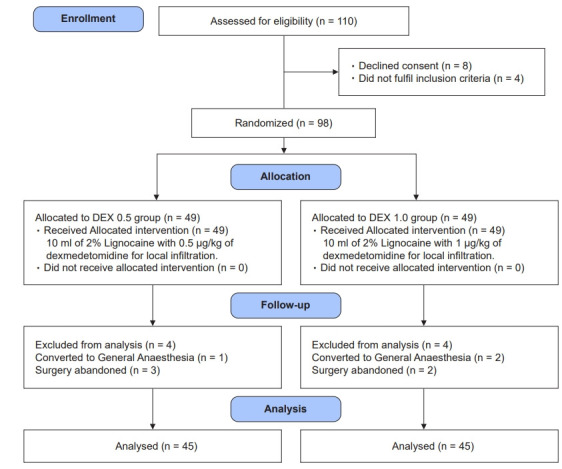
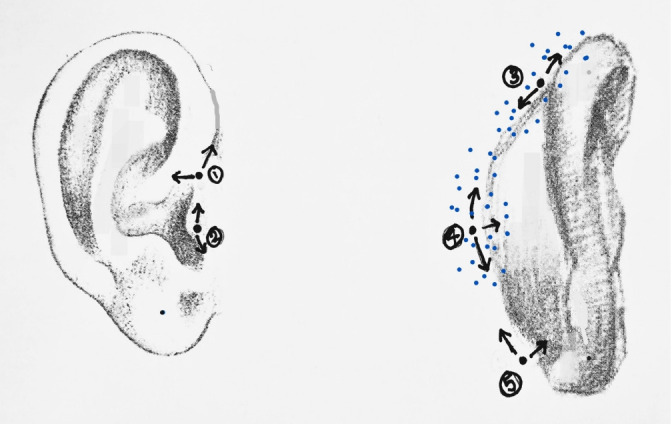
Methods: After institutional ethics committee clearance and written informed consent, this prospective, randomized, triple blind study was conducted on ninety patients, between 18- 65 years who were scheduled for tympanoplasty. The patients were randomly assigned to either the dexmedetomidine (DEX) 0.5 group or the DEX 1.0 group, and received 10 ml solution containing 2% lignocaine with 0.5 µg/kg dexmedetomidine, or the 1 µg/kg dexmedetomidine. The operative surgeon performed local infiltration using standardized 5-point infiltration technique around the auricle. The primary objective was to compare the intraoperative bleeding at the surgical site. The comparison of normally distributed variables was conducted using the Student's t-test, whereas non-normally distributed variables was compared using the Mann-Whitney U test. The analysis of qualitative data was conducted using the chisquare/Fisher's exact test. A P value less than 0.05 was considered statistically significant.
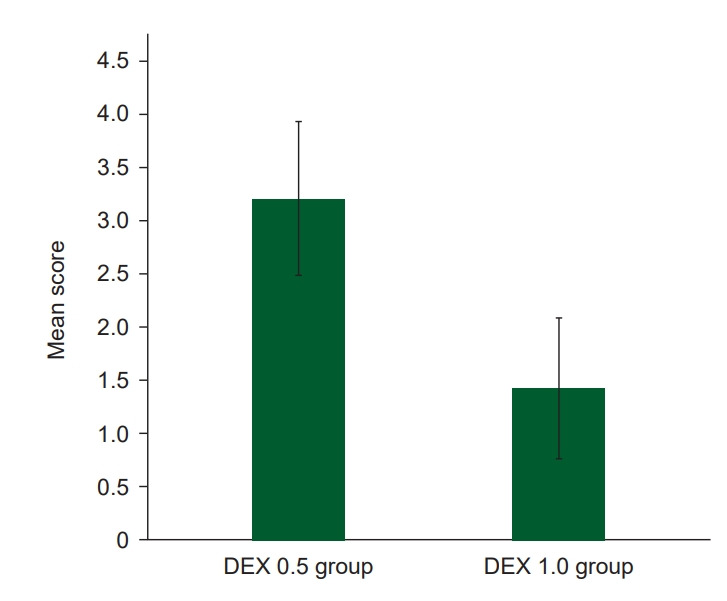
Results: The overall bleeding score was significantly higher in the DEX 0.5 group (3.21 ± 0.727) than the DEX 1.0 group (1.43 ± 0.661) (P value < 0.001). The time to first analgesic requirement and surgeon satisfaction score were also significantly higher in the DEX 1.0 group.
Conclusions: Combining dexmedetomidine at a dose of 1 µg/kg with 2% lignocaine for infiltration provided improved analgesia and improved the surgical field during tympanoplasty performed under monitored anesthesia care.




 京公网安备 11010802042870号
京ICP备2023020795号-1
京公网安备 11010802042870号
京ICP备2023020795号-1

 分享
分享

 求助内容:
求助内容: 应助结果提醒方式:
 扫码关注我们
