{"title":"Artificial intelligence assisted nanogenerator applications","authors":"Shumao Xu, Farid Manshaii, Xiao Xiao and Jun Chen","doi":"10.1039/D4TA07127A","DOIUrl":null,"url":null,"abstract":"<p >Piezoelectric and triboelectric nanogenerators are at the forefront of converting ambient mechanical energy into electricity. These devices have experienced significant advancements in functionality and autonomy through integration with artificial intelligence (AI). This integration not only enhances their performance in autonomous operations by improving mechanical-to-electrical energy conversion efficiency, but also forges new pathways in robotics and intelligent systems. By increasing responsiveness and adaptability, these innovations expand the potential applications of nanogenerators. Looking ahead, the combination of nanogenerators with AI is poised to play a crucial role in developing sustainable, eco-friendly energy solutions. Their dual impact in advancing intelligent systems and promoting environmental sustainability signifies a significant milestone in nanogenerator technology for robotics. This review highlights the essential role of AI in refining nanogenerators, charting a path toward energy autonomy and sustainability.</p>","PeriodicalId":82,"journal":{"name":"Journal of Materials Chemistry A","volume":" 2","pages":" 832-854"},"PeriodicalIF":9.5000,"publicationDate":"2024-11-14","publicationTypes":"Journal Article","fieldsOfStudy":null,"isOpenAccess":false,"openAccessPdf":"","citationCount":"0","resultStr":null,"platform":"Semanticscholar","paperid":null,"PeriodicalName":"Journal of Materials Chemistry A","FirstCategoryId":"88","ListUrlMain":"https://pubs.rsc.org/en/content/articlelanding/2025/ta/d4ta07127a","RegionNum":2,"RegionCategory":"材料科学","ArticlePicture":[],"TitleCN":null,"AbstractTextCN":null,"PMCID":null,"EPubDate":"","PubModel":"","JCR":"Q1","JCRName":"CHEMISTRY, PHYSICAL","Score":null,"Total":0}
引用次数: 0
Abstract
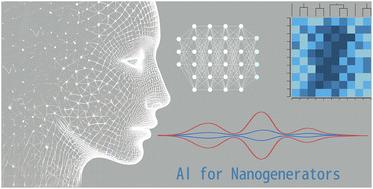
Piezoelectric and triboelectric nanogenerators are at the forefront of converting ambient mechanical energy into electricity. These devices have experienced significant advancements in functionality and autonomy through integration with artificial intelligence (AI). This integration not only enhances their performance in autonomous operations by improving mechanical-to-electrical energy conversion efficiency, but also forges new pathways in robotics and intelligent systems. By increasing responsiveness and adaptability, these innovations expand the potential applications of nanogenerators. Looking ahead, the combination of nanogenerators with AI is poised to play a crucial role in developing sustainable, eco-friendly energy solutions. Their dual impact in advancing intelligent systems and promoting environmental sustainability signifies a significant milestone in nanogenerator technology for robotics. This review highlights the essential role of AI in refining nanogenerators, charting a path toward energy autonomy and sustainability.
期刊介绍:
The Journal of Materials Chemistry A, B & C covers a wide range of high-quality studies in the field of materials chemistry, with each section focusing on specific applications of the materials studied. Journal of Materials Chemistry A emphasizes applications in energy and sustainability, including topics such as artificial photosynthesis, batteries, and fuel cells. Journal of Materials Chemistry B focuses on applications in biology and medicine, while Journal of Materials Chemistry C covers applications in optical, magnetic, and electronic devices. Example topic areas within the scope of Journal of Materials Chemistry A include catalysis, green/sustainable materials, sensors, and water treatment, among others.



 京公网安备 11010802042870号
京ICP备2023020795号-1
京公网安备 11010802042870号
京ICP备2023020795号-1

 分享
分享
 求助内容:
求助内容: 应助结果提醒方式:
 扫码关注我们
