Jessica Conway, Erica N. De Jong, Andrea J. White, Ben Dugan, Nia Paddison Rees, Sonia M. Parnell, Lisa E. Lamberte, Archana Sharma-Oates, Jack Sullivan, Claudio Mauro, Willem van Schaik, Graham Anderson, Dawn M. E. Bowdish, Niharika A. Duggal
{"title":"Age-related loss of intestinal barrier integrity plays an integral role in thymic involution and T cell ageing","authors":"Jessica Conway, Erica N. De Jong, Andrea J. White, Ben Dugan, Nia Paddison Rees, Sonia M. Parnell, Lisa E. Lamberte, Archana Sharma-Oates, Jack Sullivan, Claudio Mauro, Willem van Schaik, Graham Anderson, Dawn M. E. Bowdish, Niharika A. Duggal","doi":"10.1111/acel.14401","DOIUrl":null,"url":null,"abstract":"<p>The intestinal epithelium serves as a physical and functional barrier against harmful substances, preventing their entry into the circulation and subsequent induction of a systemic immune response. Gut barrier dysfunction has recently emerged as a feature of ageing linked to declining health, and increased intestinal membrane permeability has been shown to promote heightened systemic inflammation in aged hosts. Concurrent with age-related changes in the gut microbiome, the thymic microenvironment undergoes a series of morphological, phenotypical and architectural alterations with age, including disorganisation of the corticomedullary junction, increased fibrosis, increased thymic adiposity and the accumulation of senescent cells. However, a direct link between gut barrier dysbiosis and thymic involution leading to features of immune ageing has not been explored thus far. Herein, we reveal strong associations between enhanced microbial translocation and the peripheral accumulation of terminally differentiated, senescent and exhausted T cells and the compensatory expansion of regulatory T cells in older adults. Crucially, we demonstrate that aged germ-free mice are protected from age-related increases in intestinal permeability, highlighting the direct impact of mucosal permeability on thymic ageing. Together, these findings establish a novel mechanism by which gut barrier dysfunction drives systemic activation of the immune system during ageing through thymic involution. This enhances our understanding of drivers of T cell ageing and opens up the possibility for the use of microbiome-based interventions to restore immune homeostasis and promote healthy ageing in older adults.</p>","PeriodicalId":55543,"journal":{"name":"Aging Cell","volume":"24 3","pages":""},"PeriodicalIF":7.1000,"publicationDate":"2024-11-15","publicationTypes":"Journal Article","fieldsOfStudy":null,"isOpenAccess":false,"openAccessPdf":"https://onlinelibrary.wiley.com/doi/epdf/10.1111/acel.14401","citationCount":"0","resultStr":null,"platform":"Semanticscholar","paperid":null,"PeriodicalName":"Aging Cell","FirstCategoryId":"99","ListUrlMain":"https://onlinelibrary.wiley.com/doi/10.1111/acel.14401","RegionNum":1,"RegionCategory":"医学","ArticlePicture":[],"TitleCN":null,"AbstractTextCN":null,"PMCID":null,"EPubDate":"","PubModel":"","JCR":"Q1","JCRName":"Biochemistry, Genetics and Molecular Biology","Score":null,"Total":0}
引用次数: 0
Abstract
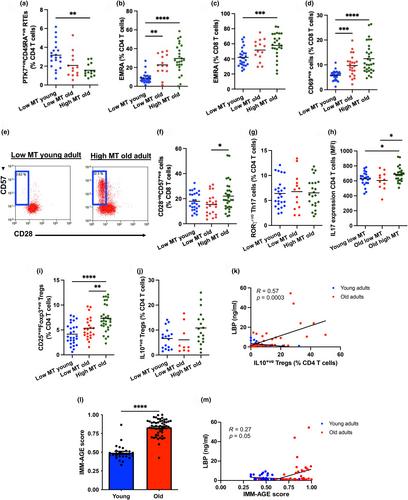
The intestinal epithelium serves as a physical and functional barrier against harmful substances, preventing their entry into the circulation and subsequent induction of a systemic immune response. Gut barrier dysfunction has recently emerged as a feature of ageing linked to declining health, and increased intestinal membrane permeability has been shown to promote heightened systemic inflammation in aged hosts. Concurrent with age-related changes in the gut microbiome, the thymic microenvironment undergoes a series of morphological, phenotypical and architectural alterations with age, including disorganisation of the corticomedullary junction, increased fibrosis, increased thymic adiposity and the accumulation of senescent cells. However, a direct link between gut barrier dysbiosis and thymic involution leading to features of immune ageing has not been explored thus far. Herein, we reveal strong associations between enhanced microbial translocation and the peripheral accumulation of terminally differentiated, senescent and exhausted T cells and the compensatory expansion of regulatory T cells in older adults. Crucially, we demonstrate that aged germ-free mice are protected from age-related increases in intestinal permeability, highlighting the direct impact of mucosal permeability on thymic ageing. Together, these findings establish a novel mechanism by which gut barrier dysfunction drives systemic activation of the immune system during ageing through thymic involution. This enhances our understanding of drivers of T cell ageing and opens up the possibility for the use of microbiome-based interventions to restore immune homeostasis and promote healthy ageing in older adults.
肠道上皮细胞是抵御有害物质的物理和功能屏障,防止有害物质进入血液循环,进而诱发全身免疫反应。肠道屏障功能失调是最近出现的一种与健康状况下降有关的老龄化特征,肠道膜通透性的增加已被证明会促进老龄宿主全身炎症的加剧。在肠道微生物组发生与年龄有关的变化的同时,胸腺微环境也会随着年龄的增长而发生一系列形态、表型和结构上的改变,包括皮质髓质交界处的紊乱、纤维化的增加、胸腺脂肪的增加和衰老细胞的堆积。然而,肠道屏障菌群失调与胸腺内陷导致免疫老化特征之间的直接联系迄今尚未得到探讨。在这里,我们揭示了微生物转运增强与终末分化、衰老和衰竭 T 细胞的外周积累以及老年人调节性 T 细胞的代偿性扩增之间的密切联系。最重要的是,我们证明了老年无菌小鼠可免受与年龄相关的肠道通透性增加的影响,这凸显了粘膜通透性对胸腺衰老的直接影响。这些发现共同建立了一种新的机制,即在衰老过程中,肠道屏障功能障碍通过胸腺内陷驱动免疫系统的系统激活。这加深了我们对 T 细胞老化驱动因素的理解,并为使用基于微生物的干预措施来恢复免疫平衡和促进老年人健康老化提供了可能性。
期刊介绍:
Aging Cell, an Open Access journal, delves into fundamental aspects of aging biology. It comprehensively explores geroscience, emphasizing research on the mechanisms underlying the aging process and the connections between aging and age-related diseases.



 京公网安备 11010802042870号
京ICP备2023020795号-1
京公网安备 11010802042870号
京ICP备2023020795号-1

 分享
分享
 求助内容:
求助内容: 应助结果提醒方式:
 扫码关注我们
