{"title":"Incidence and risk factors of new-onset diabetes mellitus: A five-year follow-up study in solid organ transplant recipients in Germany","authors":"Theresia Sarabhai MD, Karel Kostev MSc","doi":"10.1111/dom.16072","DOIUrl":null,"url":null,"abstract":"<p>Solid organ transplantation (SOT) is a life-saving procedure for patients with end-stage organ failure, significantly improving both survival rates and quality of life. However, the development of new-onset diabetes mellitus after transplantation (NODAT) is a serious complication, associated with an increased risk of cardiovascular events, infection and reduced graft and patient survival, making early diagnosis and management in the post-transplant period critical.<span><sup>1</sup></span> The reported incidence of NODAT varies widely, ranging from 10% to 40% in SOT recipients.<span><sup>1</sup></span> NODAT is of multifactorial origin, including insulin resistance and immunosuppressive-induced β-cell dysfunction, obesity, male sex and magnesium deficiency.<span><sup>1</sup></span> Early post-transplant hyperglycaemia, which may normalize within weeks, is common in SOT, but the possible persistence with development of NODAT and its risk factors appears to vary widely between transplanted organs.<span><sup>1, 2</sup></span> Detailed epidemiological and prognostic data on NODAT in a homogeneous cohort comparing different solid organ transplants, remain limited. This study aims to (i) assess the cumulative incidence and time to onset of NODAT up to 5 years in a large nationwide cohort of kidney, liver, heart and lung transplant recipients in Germany. In addition, this study will (ii) identify key demographic and clinical factors to offer a comprehensive understanding of the epidemiology of NODAT and associated risk factors. This research seeks to provide more effective future strategies for early diagnosis and management of NODAT, ultimately improving long-term outcomes for SOT recipients.</p><p>This retrospective five-year cohort study evaluated the incidence of and factors associated with new-onset DM in 1517 solid organ transplant recipients from 1293 general German practices. Our study included four different types of organ transplants: kidney, heart, lung and liver. The results revealed a mean incidence of 13.4% for all organ types and a median onset after 426 days of NODAT. Significant factors associated with NODAT development, included age between 51 and 60 years, a history of COPD or undergoing lung transplantation, and pre-existing metabolic disorders such as dyslipidaemia or hyperuricemia. This study reports a cumulative incidence of 13.9% for NODAT over 5 years, with the highest rate of 18.2% after kidney, 16% after lung and 13.6% after heart transplants, is consistent with previously described findings.<span><sup>5, 6</sup></span> However, we observed a lower prevalence of NODAT after liver transplantation (11.2%), compared with the previously reported 35%, likely due to the exclusion of patients with pre-existing DM.<span><sup>1, 7</sup></span> NODAT poses serious risks for transplant recipients, including increased cardiovascular events, as long-term hyperglycaemia worsens cardiovascular risk factors, like hypertension or dyslipidaemia.<span><sup>6</sup></span> Our findings of a high prevalence of hypertension (47.4%) and dyslipidaemia (23.1%) before transplantation underline the importance of regular metabolic risk management. As one significant risk factor for NODAT, age was identified, with the highest cumulative incidence occurring in the 51–60-year age group (18.6%), probably due to age-related declines in insulin sensitivity and ß-cell function.<span><sup>6, 7</sup></span> The mean time from transplantation to NODAT diagnosis was 426 days, with notable variations across organ types, challenging the conventional belief that NODAT primarily occurs in the immediate post-transplant period.<span><sup>6</sup></span> The delayed onset of NODAT in lung transplant recipients may be due to factors, like immunosuppressants, weight gain and age-related insulin resistance.<span><sup>8</sup></span> COPD-related inflammation and corticosteroid use may contribute to pre-transplant insulin resistance, highlighting the unique challenges faced by lung transplant patients.<span><sup>8</sup></span> Dyslipidaemia, a risk factors for NODAT, plays an established role in the metabolic syndrome.<span><sup>1, 6</sup></span> The use of immunosuppressants, particularly corticosteroids, is known to exacerbate dyslipidaemia and increase the risk of NODAT.<span><sup>7</sup></span> Another risk factor identified was purine and pyrimidine metabolism disorders, suggesting that elevated uric acid levels may contribute to insulin resistance, possibly through hyperuricemia-induced oxidative stress impairing insulin signalling.<span><sup>9</sup></span> However, investigation of pathophysiology goes beyond the scope of this study.</p><p>It is novel that the present study did not find an association between male sex and NODAT, in contrast to established guidelines, which suggested sex-specific differences in NODAT development, with men being more prone to insulin resistance and women to ß-cell dysfunction.<span><sup>1, 10</sup></span> However, previous studies were often limited by small numbers and unequal sex ratios, which may have biased the results.<span><sup>11</sup></span> Also, surprisingly, obesity was reported in only 5.9% of the cohort, which seems low compared with 19% in the German population.<span><sup>12</sup></span> However, DM was an exclusion criterion in our study, and as obesity is closely associated with DM, this might explain the low prevalence of obese patients. Several limitations should be acknowledged: As a retrospective cohort study, it is subject to potential selection bias and cannot establish causality. The reliance on ICD-10 codes may vary in accuracy across practices, and some cases may not have been coded. The five-year follow-up period may not capture very late-onset NODAT cases. The generalizability to other organ transplants may be limited. Additionally, we did not account for factors like immunosuppressive regimens, genetics, ethnicity or family history of DM, and the study does not address the impact of NODAT on long-term outcomes.</p><p>Our five-year cohort analysis provides novel insights into on status quo and risk factors of NODAT in different solid organ transplant types in Germany. Our results emphasize the need for a personalized long-term follow-up in DM screening in transplant recipients. Integrating these findings to clinical practice will refine screening protocols and help to develop targeted prevention and management strategies crucial for improving long-term outcomes for transplant recipients.</p><p>This research did not receive any specific grant from funding agencies in the public, commercial or not-for-profit sectors.</p><p>The authors declare no conflict of interest regarding the actual study.</p><p>Ethical review and approval were waived for this study, because the database used for analysis contains anonymized electronic patient records. Patient data were analysed in aggregated form without individual data being available.</p><p>Individual consent forms were not required or obtained, in accordance with national and European legislation.</p>","PeriodicalId":158,"journal":{"name":"Diabetes, Obesity & Metabolism","volume":"27 2","pages":"1001-1004"},"PeriodicalIF":5.7000,"publicationDate":"2024-11-18","publicationTypes":"Journal Article","fieldsOfStudy":null,"isOpenAccess":false,"openAccessPdf":"https://onlinelibrary.wiley.com/doi/epdf/10.1111/dom.16072","citationCount":"0","resultStr":null,"platform":"Semanticscholar","paperid":null,"PeriodicalName":"Diabetes, Obesity & Metabolism","FirstCategoryId":"3","ListUrlMain":"https://dom-pubs.onlinelibrary.wiley.com/doi/10.1111/dom.16072","RegionNum":2,"RegionCategory":"医学","ArticlePicture":[],"TitleCN":null,"AbstractTextCN":null,"PMCID":null,"EPubDate":"","PubModel":"","JCR":"Q1","JCRName":"ENDOCRINOLOGY & METABOLISM","Score":null,"Total":0}
引用次数: 0
Abstract
Solid organ transplantation (SOT) is a life-saving procedure for patients with end-stage organ failure, significantly improving both survival rates and quality of life. However, the development of new-onset diabetes mellitus after transplantation (NODAT) is a serious complication, associated with an increased risk of cardiovascular events, infection and reduced graft and patient survival, making early diagnosis and management in the post-transplant period critical.1 The reported incidence of NODAT varies widely, ranging from 10% to 40% in SOT recipients.1 NODAT is of multifactorial origin, including insulin resistance and immunosuppressive-induced β-cell dysfunction, obesity, male sex and magnesium deficiency.1 Early post-transplant hyperglycaemia, which may normalize within weeks, is common in SOT, but the possible persistence with development of NODAT and its risk factors appears to vary widely between transplanted organs.1, 2 Detailed epidemiological and prognostic data on NODAT in a homogeneous cohort comparing different solid organ transplants, remain limited. This study aims to (i) assess the cumulative incidence and time to onset of NODAT up to 5 years in a large nationwide cohort of kidney, liver, heart and lung transplant recipients in Germany. In addition, this study will (ii) identify key demographic and clinical factors to offer a comprehensive understanding of the epidemiology of NODAT and associated risk factors. This research seeks to provide more effective future strategies for early diagnosis and management of NODAT, ultimately improving long-term outcomes for SOT recipients.
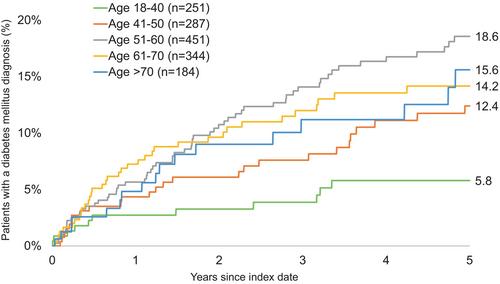
This retrospective five-year cohort study evaluated the incidence of and factors associated with new-onset DM in 1517 solid organ transplant recipients from 1293 general German practices. Our study included four different types of organ transplants: kidney, heart, lung and liver. The results revealed a mean incidence of 13.4% for all organ types and a median onset after 426 days of NODAT. Significant factors associated with NODAT development, included age between 51 and 60 years, a history of COPD or undergoing lung transplantation, and pre-existing metabolic disorders such as dyslipidaemia or hyperuricemia. This study reports a cumulative incidence of 13.9% for NODAT over 5 years, with the highest rate of 18.2% after kidney, 16% after lung and 13.6% after heart transplants, is consistent with previously described findings.5, 6 However, we observed a lower prevalence of NODAT after liver transplantation (11.2%), compared with the previously reported 35%, likely due to the exclusion of patients with pre-existing DM.1, 7 NODAT poses serious risks for transplant recipients, including increased cardiovascular events, as long-term hyperglycaemia worsens cardiovascular risk factors, like hypertension or dyslipidaemia.6 Our findings of a high prevalence of hypertension (47.4%) and dyslipidaemia (23.1%) before transplantation underline the importance of regular metabolic risk management. As one significant risk factor for NODAT, age was identified, with the highest cumulative incidence occurring in the 51–60-year age group (18.6%), probably due to age-related declines in insulin sensitivity and ß-cell function.6, 7 The mean time from transplantation to NODAT diagnosis was 426 days, with notable variations across organ types, challenging the conventional belief that NODAT primarily occurs in the immediate post-transplant period.6 The delayed onset of NODAT in lung transplant recipients may be due to factors, like immunosuppressants, weight gain and age-related insulin resistance.8 COPD-related inflammation and corticosteroid use may contribute to pre-transplant insulin resistance, highlighting the unique challenges faced by lung transplant patients.8 Dyslipidaemia, a risk factors for NODAT, plays an established role in the metabolic syndrome.1, 6 The use of immunosuppressants, particularly corticosteroids, is known to exacerbate dyslipidaemia and increase the risk of NODAT.7 Another risk factor identified was purine and pyrimidine metabolism disorders, suggesting that elevated uric acid levels may contribute to insulin resistance, possibly through hyperuricemia-induced oxidative stress impairing insulin signalling.9 However, investigation of pathophysiology goes beyond the scope of this study.
It is novel that the present study did not find an association between male sex and NODAT, in contrast to established guidelines, which suggested sex-specific differences in NODAT development, with men being more prone to insulin resistance and women to ß-cell dysfunction.1, 10 However, previous studies were often limited by small numbers and unequal sex ratios, which may have biased the results.11 Also, surprisingly, obesity was reported in only 5.9% of the cohort, which seems low compared with 19% in the German population.12 However, DM was an exclusion criterion in our study, and as obesity is closely associated with DM, this might explain the low prevalence of obese patients. Several limitations should be acknowledged: As a retrospective cohort study, it is subject to potential selection bias and cannot establish causality. The reliance on ICD-10 codes may vary in accuracy across practices, and some cases may not have been coded. The five-year follow-up period may not capture very late-onset NODAT cases. The generalizability to other organ transplants may be limited. Additionally, we did not account for factors like immunosuppressive regimens, genetics, ethnicity or family history of DM, and the study does not address the impact of NODAT on long-term outcomes.
Our five-year cohort analysis provides novel insights into on status quo and risk factors of NODAT in different solid organ transplant types in Germany. Our results emphasize the need for a personalized long-term follow-up in DM screening in transplant recipients. Integrating these findings to clinical practice will refine screening protocols and help to develop targeted prevention and management strategies crucial for improving long-term outcomes for transplant recipients.
This research did not receive any specific grant from funding agencies in the public, commercial or not-for-profit sectors.
The authors declare no conflict of interest regarding the actual study.
Ethical review and approval were waived for this study, because the database used for analysis contains anonymized electronic patient records. Patient data were analysed in aggregated form without individual data being available.
Individual consent forms were not required or obtained, in accordance with national and European legislation.
期刊介绍:
Diabetes, Obesity and Metabolism is primarily a journal of clinical and experimental pharmacology and therapeutics covering the interrelated areas of diabetes, obesity and metabolism. The journal prioritises high-quality original research that reports on the effects of new or existing therapies, including dietary, exercise and lifestyle (non-pharmacological) interventions, in any aspect of metabolic and endocrine disease, either in humans or animal and cellular systems. ‘Metabolism’ may relate to lipids, bone and drug metabolism, or broader aspects of endocrine dysfunction. Preclinical pharmacology, pharmacokinetic studies, meta-analyses and those addressing drug safety and tolerability are also highly suitable for publication in this journal. Original research may be published as a main paper or as a research letter.





 京公网安备 11010802042870号
京ICP备2023020795号-1
京公网安备 11010802042870号
京ICP备2023020795号-1

 分享
分享
 求助内容:
求助内容: 应助结果提醒方式:
 扫码关注我们
